

It’s not just guns, bombs, or foreign funding — it’s our divided outrage, our shifting definitions, and the hollow victories we claim in diplomatic circles while the reality on the ground stays the same.
At the recent Shanghai Cooperation Organisation (SCO) summit, Pakistan’s diplomats and strategists rejoiced as India’s attempt to paint Pakistan as the pivot of the Pahalgam attack fell flat. India left the summit empty-handed; the final declaration did not endorse its allegations, and Islamabad’s narrative on Balochistan took centre stage instead. For many in Pakistan’s official circles, this was framed as a diplomatic triumph. But if we look at the numbers — and the graves — what exactly are we celebrating?
Since the unprecedented Jaffar Express hijacking in March, Pakistan has lost more than 600 lives to terrorism and counterterror operations — ordinary citizens, security personnel, local workers — killed by groups that do not hide their names or aims (Table 01).
Table 1 — Fatalities from Terrorism & Counterterrorism (Apr–Jun 2025)
| Province | April | May | June | Total |
| AJK | 0 | 6 | 0 | 6 |
| Balochistan | 60 | 79 | 49 | 188 |
| Capital | 0 | 0 | 1 | 1 |
| KP | 184 | 82 | 114 | 380 |
| Punjab | 12 | 5 | 4 | 21 |
| Sindh | 2 | 3 | 3 | 8 |
| Total | 258 | 175 | 171 | 604 |
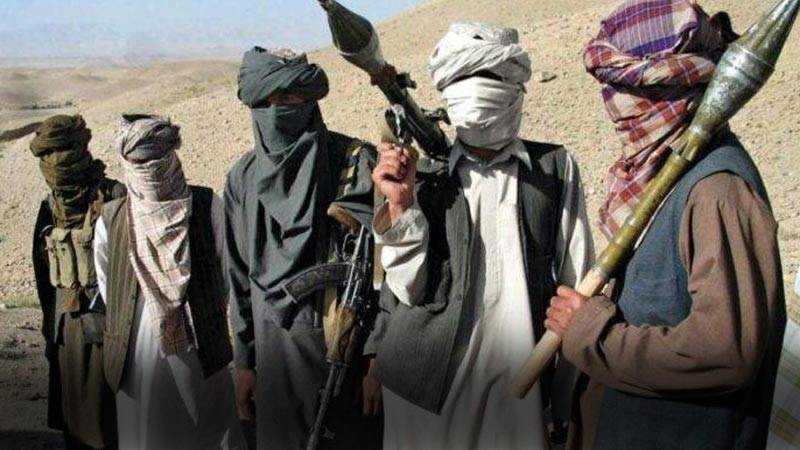
The Baloch separatists — BLA, BLF, BRAS — openly claim they have killed at least 50 people since April. Jihadi outfits — TTP, ISKP, ISPP — add at least 80 more deaths to this grim tally. From hijacked trains to ambushed security posts, the pattern repeats: violence thriving on blurred lines, safe havens, and convenient denials.
Table 2 — Claimed Fatalities by Groups (Apr–Jun 2025)
| Claimant | April | May | June | Total |
| Baloch Separatists | ||||
| BLA | 2 | 8 | 4 | 14 |
| BLA-Fitna | — | 5 | — | 5 |
| BLF | 3 | 3 | — | 6 |
| BRAS | 1 | — | — | 1 |
| BRG | — | — | — | — |
| Total Separatists | 6 | 16 | 4 | 26 |
| Jihadi Militants | ||||
| ISKP | — | 2 | — | 2 |
| ISKP (Suspected) | — | — | — | — |
| ISPP | 3 | — | — | 3 |
| TLP | 1 | — | — | 1 |
| TTP | 8 | 10 | — | 18 |
| TTP-GB Group | — | — | — | — |
| Total Militants | 12 | 12 | — | 24 |
| Grand Total | 18 | 28 | 4 | 50 |
The numbers are grim — and they tell only part of the story.
Worse, the threat is evolving. Militants are now deploying modern weapons and expanding their reach into Punjab too. In April, the TTP abducted two security personnel in Taunsa Sharif. On 26 June, Sardar Meer Badshah Qaisrani convened a grand jirga in Taunsa to publicly denounce the banned TTP after rising local violence. Syed Ali, DPO of Dera Ghazi Khan, confirmed the threat: “We’ve had over 30 TTP attacks in the region. Our forces killed 18 TTP militants in various encounters, including a senior commander. It was a significant blow.”
If we reduce the horror of terrorism to a diplomatic football, we risk celebrating hollow victories while the real threat remains alive
Yet the blows keep coming. On 29 June, a suicide bomber rammed an explosive-laden vehicle into a Mine-Resistant Ambush Protected (MRAP) convoy — an armoured unit designed to withstand IEDs and ambushes — belonging to a bomb disposal team in North Waziristan. Thirteen security personnel were martyred and sixteen others wounded in this brazen strike, which pierced through layers of protection built precisely to stop such tactics. It shows how militants are not only overcoming reinforced armour and counter-IED measures, but adapting with lethal precision.
So far this year, nearly 111 vehicles belonging to security forces and private businesses have been destroyed in terrorist attacks. This raises an uncomfortable question: how are militants securing supply chains, acquiring explosives, vehicles, and inside intelligence to plan strikes that defeat sophisticated defences? Afghanistan and India may help finance these networks — but the bomb-makers, handlers, and inside leaks that make such attacks possible often lie much closer to home. Until these blind spots are confronted honestly, each so-called victory will rest on fragile ground.
The militants’ innovation extends to drone warfare too. This year alone, a quadcopter packed with explosives struck a security post in Sararogha, South Waziristan. Another drone hit the solar panels atop Miryan Police Station in Bannu. Drone strikes in North Waziristan have missed targets and killed civilians, fuelling suspicion and fear. These attacks prove the battleground is not static — it adapts.
On paper, Pakistan scored a point at the SCO. India failed to get its version rubber-stamped, and the focus stayed on Chinese and Pakistani stakes in Balochistan. But the deeper threat did not vanish with that communiqué — it festers in our mountains, cities, and borderlands. For every narrative point scored, real lives are still lost.
Pakistan’s leadership rightly reminds the world that the freedom struggle in Kashmir cannot be reduced to a crime scene for India’s domestic politics. Field Marshal Asim Munir has called it what it is: a legal struggle for rights, not terrorism. Yet here lies the contradiction: the Baloch separatists also describe their fight as a freedom struggle — but they are labelled terrorists. Where does one struggle end and another crime begin? And who decides?
We speak of foreign conspiracies too, tangled in half-truths. After the Jaffar Express hijacking, the DG ISPR stated that “these terrorists were in contact with their supporters and masterminds in Afghanistan via satellite phone.” No mention of India. Yet the Minister of State for Interior pointed directly to India, saying, “Our enemy India will definitely support this.” Meanwhile, Afghanistan flatly denies any such support. The truth remains buried under claims and counterclaims — while the violence rolls on.
This selective outrage is not unique to South Asia. Israeli bombings in Gaza kill hundreds in days, yet the world’s moral outrage is rationed by power and alliances. There too, terror has many names — “security operations,” “self-defence,” “counterterrorism” — but the victims are equally dead.
So the contradiction at the SCO matters. If India’s claims about Pahalgam were found baseless, the SCO committee should have reiterated Pakistan’s long-standing demand for an impartial probe. If Balochistan’s armed attacks are terrorism, why hesitate to call hostage-taking on a passenger train exactly what it is? If we condemn the TTP for cross-border sanctuaries, do we really control who hides where in our own borderlands?
As Pakistan’s former foreign minister rightly said: truth is the strongest shield against disinformation. That principle must apply to every victim — whether in a Baloch village, a Kashmiri town, a hijacked railcar, or a bombed hospital in Gaza. Terrorism is terrorism when innocent lives are taken for political aims — no matter the flag, the slogan, or the justification.
Pakistan’s official position remains clear: the world must recognise our sacrifices and our struggle. But that alone is not enough. If we reduce the horror of terrorism to a diplomatic football, we risk celebrating hollow victories while the real threat remains alive.
The real victory is not a line in a summit declaration — nor India’s embarrassment — nor our applause at a conference table. It will be the day no proxy group finds a safe haven, no narrative twists a massacre into “resistance,” and no government’s interest overshadows a mother’s grief.
Half-victories may silence a rival’s claim, but they will never silence the bombs in our valleys. Only the whole truth can.