

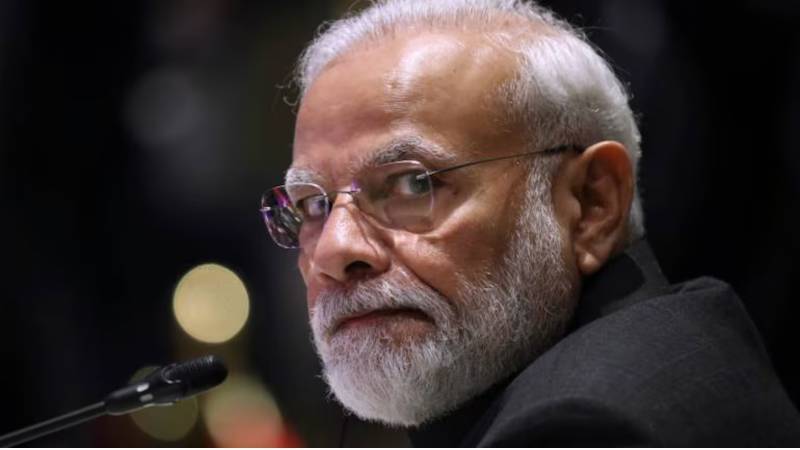
India’s reputation as the world’s largest democracy has been at stake since Narendra Modi’s entry into mainstream national politics. For the ninth consecutive year, Sweden’s V-Dem Institute has labelled India an “electoral autocracy.” Its Democracy Report 2025 warns of shrinking free expression, growing repression of civil society, and deepening polarisation. Some of the key indicators of India’s democratic backsliding under the Modi regime include systematic crackdown on dissent, erosion of civil liberties, and persecution of religious and ethnic minorities, including Muslims, Christians, Sikhs, Dalits, Adivasis, and other caste minorities.
Since coming to power, the ruling Bharatiya Janata Party (BJP) has increasingly relied on draconian laws, such as the Unlawful Activities Prevention Act (UAPA), Foreign Contribution Regulation Act (FCRA), and National Security Act (NSA), to suppress dissent. According to Human Rights Watch (HRW), these laws are frequently misused to criminalise protests and stifle criticism. The discrimination against religious and ethnic minorities has become institutionalised, and authorities often ignore attacks or fail to prosecute the perpetrators. In many regions, demands for constitutional protection are crushed through curfew, internet blackouts, legal intimidation, and brute force.
According to the Hate Crime Report (2024–2025) of the Association for Protection of Civil Rights (APCR), “a total of 947 hate crime incidents took place in the first year of Modi’s third regime. Of these 947 hate crimes, 345 were hate speeches and 602 were hate crimes. Out of the 602 hate crimes, 173 involved physical violence targeted at minorities. In 25 of these, the victim died. All victims were Muslims.” Muslim-owned homes, businesses, and even mosques have frequently been demolished under anti-encroachment drives, often under vague claims of illegality or unauthorised construction.
The Global Torture Index 2025 has ranked India as “a high-risk country.” Minorities in India have seen a disturbing pattern of beatings, forced confessions, and custodial deaths. A report titled Status of Policing in India Report 2025: Police Torture and (Un)Accountability by Common Cause found that “Muslims, along with Dalits and Adivasis, are affected by custodial torture.”
Manipur has seen violence, widespread displacement, destruction of infrastructure, and numerous deaths. Manipur has become a stain on India’s already dismal record of minority protection and civil peace. According to HRW, “from 2023 to 2025, over 260 people have been killed in the ongoing violence. Hundreds of individuals have been injured, and approximately 60,000 people have been displaced from their homes.” According to the US Commission on International Religious Freedom (USCIRF), “more than 500 churches and two synagogues” have been destroyed during clashes in Manipur state. The Modi government’s response has been heavy-handed. Authorities imposed curfew, deployed central paramilitary forces, and enforced repeated, indefinite internet shutdowns, effectively cutting off communication in Manipur. The state today stands not merely as a conflict zone but as an example of how minority rights are trampled under the weight of a majoritarian and nationalist agenda.
The USCIRF has recommended sanctions against India’s external spy agency for its involvement in plots to assassinate Sikh activists. India, therefore, has been exposed at the international level as a state-sponsoring terrorism
In the northern part of the country, Ladakh has become the latest flashpoint in India’s deepening crisis of democracy. Since the revocation of Articles 370 and 35A in 2019, Ladakh has been administered directly by New Delhi. However, in September 2025, protesters in Leh demanded statehood. According to HRW, police opened fire on protesters, killing four people and injuring dozens. At least 50 people were arrested. The administration imposed curfew and suspended mobile service and internet in several areas to suppress reporting. Police operations involved lethal force, mass arrests, and property damage.
The Indian Home Ministry swiftly revoked the licence of Sonam Wangchuk’s NGO Students’ Educational and Cultural Movement of Ladakh (SECMOL), cutting off legal and financial protection for dissent. The authorities blamed Wangchuk, the leading voice of the protest, accusing him of inciting violence and promoting a “Gen Z revolution.” His supporters, however, argue that youth frustration, unmet promises, unemployment, and ecological peril were the true flashpoints.
India’s pattern of human rights abuses has extended beyond its borders, reaching targets abroad. In July 2025, the UK declassified a report highlighting that India engaged in “coordinated harassment and intimidation” of Sikh activists abroad. The report revealed a “hit-list,” monitoring of Sikh institutions, and diplomatic pressure on host countries to curb Sikh dissent. In January 2025, the UAPA Tribunal confirmed India’s five-year ban on the Khalistani group Sikhs for Justice (SFJ).
US federal prosecutors have accused Indian Research and Analysis Wing (R&AW) agent Nikhil Gupta of conspiring with a former Indian intelligence officer, Vikash Yadav, to carry out a series of international assassinations in the US, Nepal, and Pakistan. Gupta attempted to hire a hitman, who turned out to be an undercover US Drug Enforcement Administration (DEA) agent, to kill a US-based Sikh activist, Gurpatwant Singh Pannun. He agreed to pay him USD 100,000 for the murder and gave him an initial payment of USD 15,000. The investigation is also linked to the June 2023 killing of Sikh leader Hardeep Singh Nijjar in Canada, indicating a broader and coordinated Indian government campaign against Sikh activists abroad. The US Federal Bureau of Investigation (FBI) has placed Vikash Yadav on its wanted list.
On 17 October 2025, the Indian government suddenly changed lawyers and sought to delay Nikhil Gupta’s trial in the US Department of Justice on 3 November 2025. The trial could reveal direct evidence linking Modi’s office and National Security Advisor Ajit Doval’s role in a plan to kill Sikh activist Gurpatwant Singh Pannun, exposing the operational chain of command behind R&AW’s global assassination programme.
In October 2024, Canada expelled six Indian diplomats, including High Commissioner Sanjay Kumar Verma, for involvement in the murder of a Sikh national, Hardeep Singh Nijjar, in Canada. Canada’s national police department concluded that the Indian Ambassador had links to murders, threats of death, and intimidation in Canada. Canadian authorities revealed that Indian Home Minister Amit Shah had authorised attacks against Sikhs in Canada. In 2024, a New York District Court had also issued summonses to many Indian government officials, including Ajit Doval.
Owing to these developments, the USCIRF has recommended sanctions against India’s external spy agency for its involvement in plots to assassinate Sikh activists. India, therefore, has been exposed at the international level as a state-sponsoring terrorism. The international community must take note of India’s reprehensible actions, as they pose a serious threat to international and regional peace and security.