

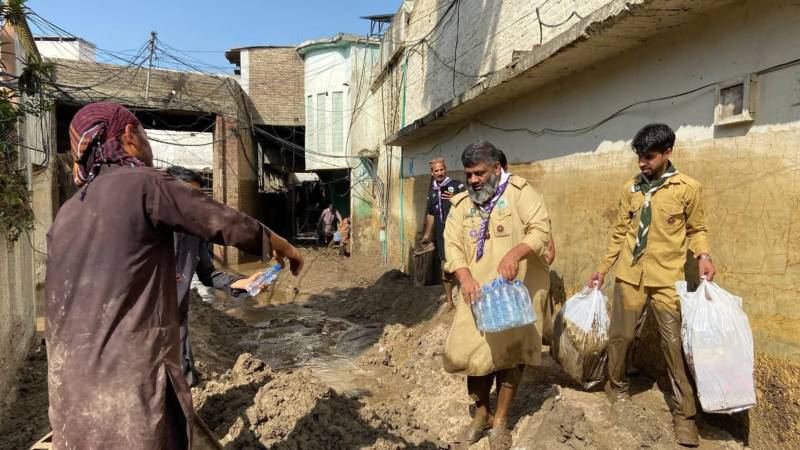
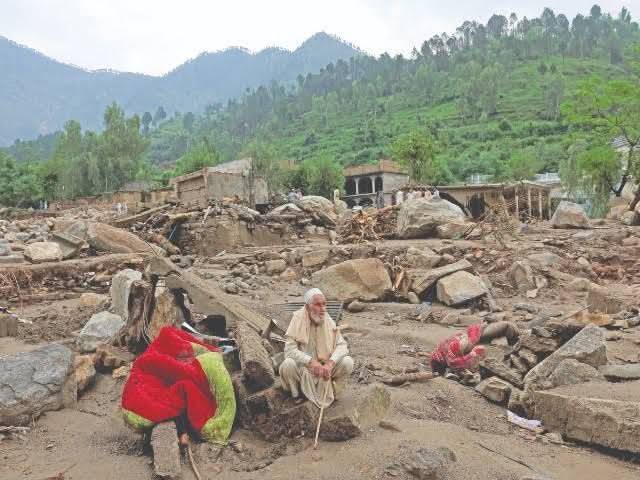
The morning had just begun in Mingora on 15 August. Around eight to ten o’clock, children were in their classrooms, shopkeepers were unlocking shutters, and farmers were tending their fields when the roar of water came crashing down. Within minutes, torrents tore through the city and surrounding villages, sweeping away homes, shops, and livestock. Families fled in panic, some clutching children, others climbing to rooftops for safety. By midday, entire neighbourhoods lay buried under mud and debris. Twenty-five people lost their lives that morning in Mingora and nearby valleys, more than 90 were injured, hundreds of houses and shops were destroyed, and thousands displaced. What looked like just another flood on television was, in reality, a human tragedy that swallowed lives, dreams, and generations of hard work in a single morning.
When floods strike Swat, the world sees collapsed bridges, drowned villages, and families fleeing with nothing but the clothes on their backs. But the true devastation runs deeper, for these disasters shake the very foundations of education, culture, livelihoods, and governance. Each flood is not only an environmental calamity; it is a mirror reflecting how fragile our social systems remain.
In the flash flood, a school principal in Swat managed to evacuate nearly nine hundred students just minutes before raging waters tore down half the building. Lives were saved by courage, but the incident showed how close children come to tragedy every monsoon. The broader picture is even more alarming. In Khyber Pakhtunkhwa alone, more than two hundred schools were directly damaged in recent floods, while at the provincial level over eleven hundred schools have been destroyed or partially ruined. Across the country, the 2022 floods devastated more than twenty-six thousand schools, disrupting the education of three and a half million children. For months, more than seven thousand schools were converted into temporary shelters for displaced families, forcing classrooms to become refugee camps. Education, the hope for future resilience, keeps washing away with the floodwaters.
Floods do not affect everyone equally. In Swat’s rural valleys, women shoulder the hidden cost: kitchens lost to the waters, firewood scarce, clean drinking water gone, and rising risks of disease. Yet with proper support, they could become leaders in recovery. Training in kitchen gardening, safe fuel alternatives, and disaster preparedness could transform women into the backbone of climate resilience.
These glaciers, once a reliable source of water for agriculture, now feed sudden torrents that overwhelm rivers and dams. Combined with erratic monsoon patterns and cloudbursts, they make floods more frequent and more destructive than ever before
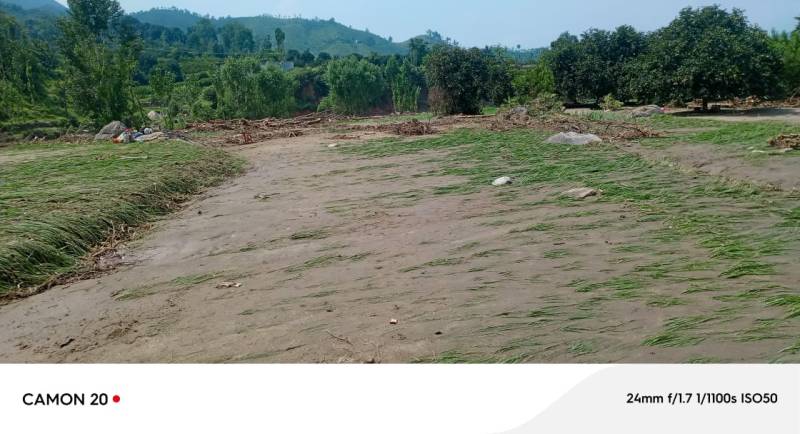
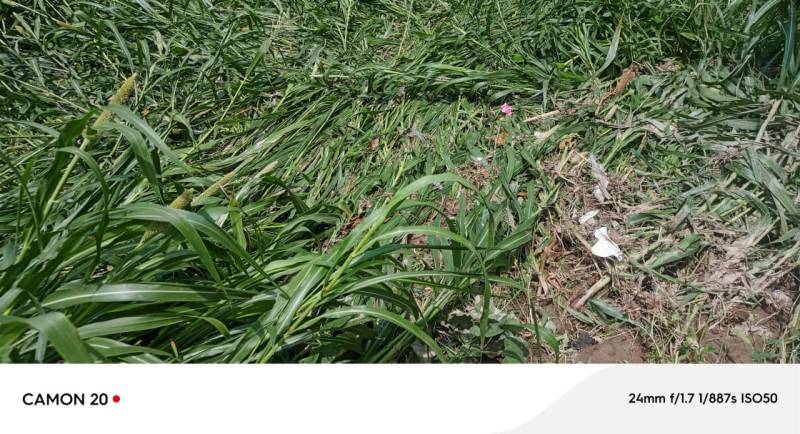
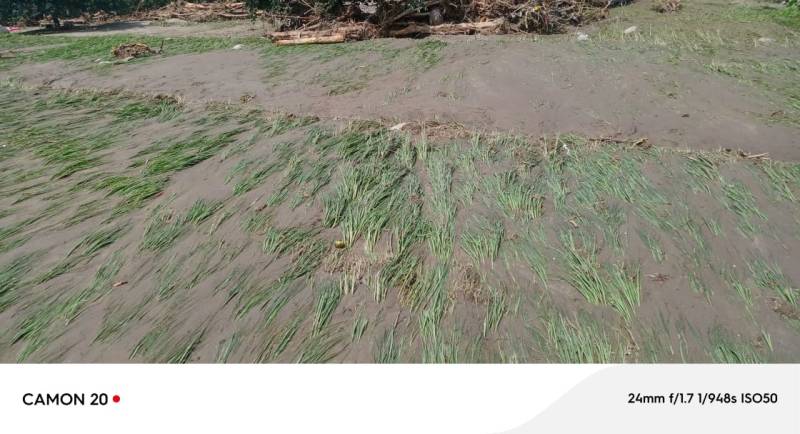
The loss of livelihoods is equally devastating. Floodwaters destroy not just homes but the lifelines of rural Swat. Standing crops of maize, rice, and vegetables are flattened, leaving families without both food and income. Hundreds of acres of fruit orchards, the pride of Swat’s economy, are uprooted in hours, followed by vegetable, paddy (rice) and maize crops. Livestock, often a family's only asset, are swept away. Markets, too, collapse under the weight of destruction. In Mingora and adjoining towns, shops filled with goods worth millions sink under silt and debris, while roads and bridges that once connected farmers to buyers are cut off. For many, recovery is not measured in months but in decades.
Cultural heritage suffers silently as well. With every collapsed bridge, washed-away shrine, and eroded archaeological site, part of our collective memory disappears. Swat is not just geography; it is history. The loss of cultural markers is permanent, and to lose heritage is to lose identity itself.
Behind these tragedies lie failures of vision. Relief funds pour in when rivers swell, but once the waters recede, so does political will. Encroachments along riverbanks remain untouched. Urban planning is left neglected. Deforestation continues unchecked, stripping the mountains of their natural shield against flash floods. In many cases, trees are cut down, turning fertile valleys into barren slopes that can no longer hold back torrential rains. Unless community-led environmental councils hold leaders accountable, Swat will remain trapped in a cycle of relief today and neglect tomorrow.
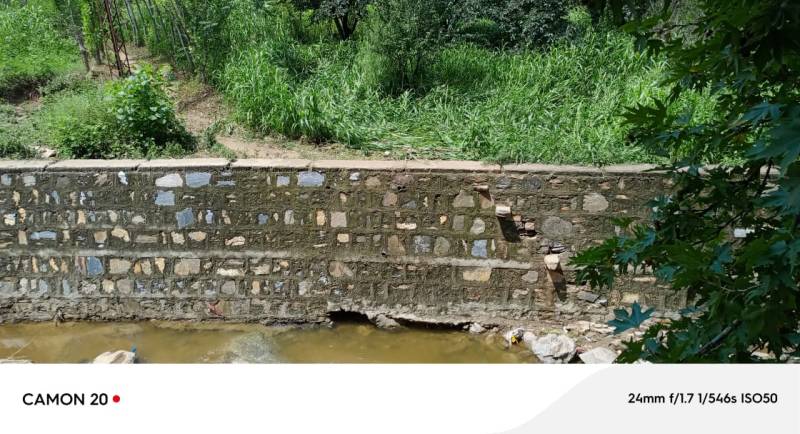
Population pressure has made matters worse. Swat’s population has surged over the past two decades, reaching 2.5 million, but planning has not kept pace. Houses are built right on riverbanks, hotels sprout at mountain bases, and new settlements creep into flood zones. Families invest their life savings in construction on unsafe land only to watch it vanish in the next flood. Population growth without regulation has turned a natural hazard into a human-made disaster. Without strict building codes, relocation plans, and safe housing schemes, the cycle of destruction will only intensify.
The natural environment itself is also changing. Climate change and rising temperatures are accelerating the melting of glaciers in the upper Swat mountains. These glaciers, once a reliable source of water for agriculture, now feed sudden torrents that overwhelm rivers and dams. Combined with erratic monsoon patterns and cloudbursts, they make floods more frequent and more destructive than ever before. The crisis is no longer occasional; it is structural.
The human toll is staggering. This year, flash floods left more than 320 people dead across Khyber Pakhtunkhwa, including Swat and Buner, in one of the deadliest seasons in recent memory. In a separate June incident, 32 people, including 16 children, were swept away in the Swat Valley alone. These tragedies prove that our disaster response remains reactive, not preventive.
Yet a way forward does exist. Floods are not just natural disasters; they are political, cultural, and moral challenges. Religious, cultural, and media platforms all hold power. Imagine if Friday sermons consistently urged tree planting and water conservation, if mosques and media became early-warning systems, if youth flooded social media not with entertainment but with climate awareness. Swat’s floods are not just waters rushing down from the mountains; they are warnings written in rising water. Unless governance, education, and culture place the environment at the centre, tragedy will repeat itself. But with foresight, accountability, and collective will, Swat can turn its pain into resilience, emerging not only rebuilt, but stronger too.