

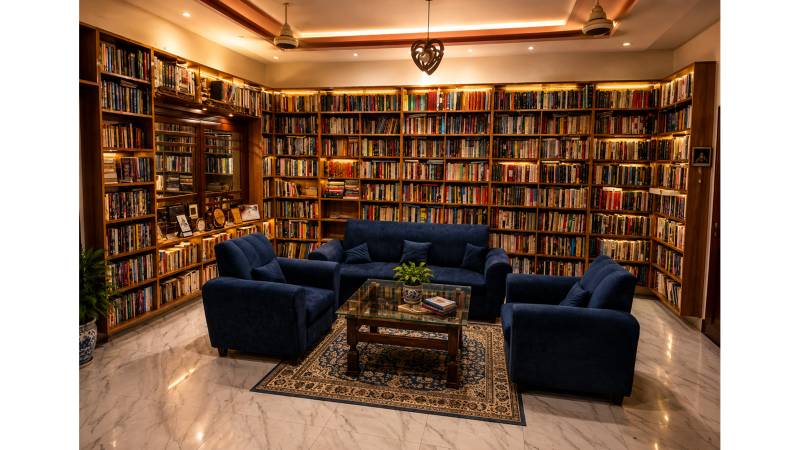
The name Akbar may mislead some readers. They may expect a story about the Mughal emperor, Akbar the Great. It is not. This is the story of Akbar Dhamrah, a bibliophile, antiquarian, and lifelong collector who has built one of Hyderabad’s finest private libraries.
His full name is Nadir Akbar Dhamrah, though he prefers to be called Akbar. By profession, he is an electrical engineer. He spent much of his working life with Sui Southern Gas and retired as Chief Engineer in 2024.
His life with books began long before retirement. In 1979, Akbar entered Government College Hyderabad, now Government College University Hyderabad. Those college years drew him deeper into reading. He began buying books and never stopped. A few books became a shelf. Shelves grew into a collection. In time, the collection became a library.
Then came an event that changed both Akbar’s life and the identity of his library. On the 7th of March 2010, his son, Durab Akbar Dhamrah, died in a road accident on Jamshoro Road near Bhitai Town, Hyderabad. Durab was a Class VIII student at Army Public School, Hyderabad. After Durab’s death, Akbar gave the library his son’s name. It became the Shaheed Durab Dhamrah Library. With time, friends and readers shortened it to Durab Library. The name stayed.
Today, Durab Library stands in Qasimabad, Hyderabad. It holds more than 10,000 books. If placed within the Dewey Decimal system, the collection would cover almost all its major fields. Philosophy and psychology sit beside religion. Social sciences share shelves with language. Other sections hold art, literature, history, and geography. Computer science, natural sciences, mathematics, and applied sciences have a smaller presence.
Yet numbers alone cannot tell the story of this library. It began with a young student buying books in 1979. It grew through more than four decades of reading, travel, curiosity, and search. Along the way, it took on a deeper meaning. It became a way for a father to keep his son’s name alive.
I visited Durab Library in the last week of July 2026. Akbar welcomed me among shelves he had built over a lifetime. We sat for a long conversation. We talked about books, newspapers, his student years, Sindh, archaeology, travel, politics, and the events that shaped him as a reader and collector. Rather than retell the meeting in my own words, I have chosen to let Akbar speak. What follows comes from our conversation. I have shaped it into dialogue and divided it into short, titled sections for ease of reading, while keeping the meaning and spirit of his responses intact.
An Antilibrary Before He Knew the Word
Durab Library raises a simple but intriguing question. Why would anyone spend more than four decades gathering over ten thousand books in an age ruled by screens? We live among Reels, Threads, live streams, and podcasts. They ask us to move fast. We scroll, watch, listen, and move on.
Books ask for something else. They ask us to stop. To read. To think. And sometimes to return.
So why did Akbar keep buying them? One answer lies in the idea of the antilibrary. The idea grew from the vast home library of Italian writer and scholar Umberto Eco. Eco owned around 30,000 books. Visitors would look at his shelves and ask, “Have you read all of them?” For Eco, that was the wrong question. The unread books mattered because they held what he did not yet know.
Original 1980s newspapers preserved in the library offer an unfiltered, day-by-day record of the MRD movement, martial law, and public protests in Sindh
Nassim Nicholas Taleb took the idea further in The Black Swan (2007). He used the term antilibrary for a library whose unread books remind us of the limits of what we know. They keep questions alive. They tell us that there is always more to learn.
Akbar, of course, did not begin with such a theory. His story was much simpler.
“My first love was the newspaper,” he recalled.
It was the late 1970s. Zulfikar Ali Bhutto had been removed from power. General Zia-ul-Haq had imposed martial law. Politics filled the newspapers, and the young Akbar wanted to know what was happening.
“I wanted to read every newspaper that came into my hands,” he said. “I would read it first and then pass it to others.”
He did not stop at the headlines. He turned to the editorials. He waited for weekend and special editions. Politics drew him to newspapers, but their literary pages opened another door.
“I still remember the literary editions of Ibrat, Hilal-e-Pakistan, and Sindh News,” he said. “For us, they were like small literary magazines. There was so much to read.”
Newspapers became his first reading room. Through them, he met writers, poets, columnists, political thinkers, and new ideas. One article pointed towards another. One writer led him to another writer. Soon, newspapers were no longer enough.
Then came university.
“In 1983, I joined Mehran University of Engineering and Technology,” Akbar recalled. “By then, my interest in reading had grown. At university, it became much stronger.”
The campus widened his world. The 1980s were years of fierce debate. Students talked about Zia’s rule, democracy, Bhutto, Sindh, nationalism, the MRD movement, and the Afghan war. Beyond Pakistan, the Cold War divided the world. Socialism and capitalism competed not only between states but also in student debates. Palestine, apartheid, the Soviet Union, the United States, Iran, and Afghanistan entered campus conversations.
“To take part in those discussions, you had to read,” Akbar explained. “You could not argue only on what you had heard from someone else. You needed to know more.”
So he read. And because he read, he bought books.
“At first, I bought books that I wanted to read at once,” he said. “Later, I began buying books that I thought I might need one day.”
Without knowing the term, Akbar had begun building his antilibrary.
An Autobiography Written in Books
Akbar sees his library as a record of his own life.
“If you arrange my books in the order I bought them, you can trace my journey,” he said. “The books I bought in college were different from those I bought at university. After fifty, my interests changed again.”
In that sense, Durab Library is Akbar’s autobiography written in stocked books. Its shelves mark stages in Akbar’s life. His interests changed with age, work, travel, and experience. What interested the college student did not always interest the engineer. What attracted the young engineer changed again as he grew older.
Yet one subject held him for decades: Archaeology.
When Ruins Began to Ask Questions
Akbar believes Durab Library has one of the richest private collections in Hyderabad on the archaeology of Sindh. But how did an electrical engineer develop such a deep interest in the ancient past?
His answer took me back to his school days.
“I think the curiosity was already there,” he recalled. “When I was in Class VI, I visited Quba Mir Shahdad Talpur near Shahpur Chakar. It was my first close encounter with a historic place.”
The place stayed in his mind. Two years later, while in Class VIII, he visited the ruins of Brahmanabad.
“Brahmanabad was different,” he said. “I was young, but the ruins made me think. Who lived here? What happened to their city? Why did it disappear?”
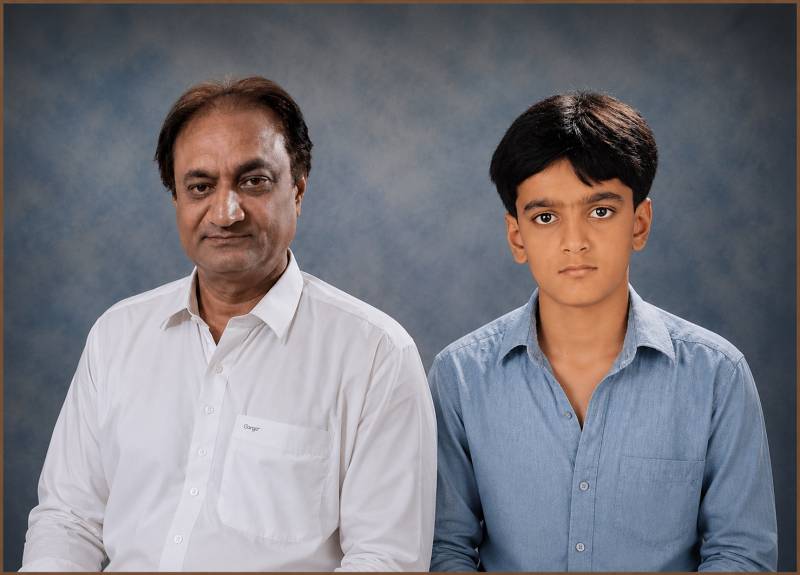
He had no answers then. He had few books to turn to. But the questions stayed.
“I did not even understand archaeology at that age,” Akbar said. “But those ruins made me curious.”
Years passed. Akbar became an electrical engineer and joined Sui Southern Gas. His work sent him across Sindh. What had begun as a schoolboy’s curiosity now found a much wider field.
“My job gave me the chance to travel,” he said. “I went to the coast, Kachho, Kohistan, Thar, the riverine forests, and the plains along the Indus. Whenever I heard that an old site was nearby, I tried to see it.”
His journeys took him to, or stirred his interest in, Mohenjo-daro, Amri, Chanhudaro, Brahmanabad-Mansura, Banbhore, Ranikot, Thatta, Makli, and many lesser-known sites. Kachho and Kohistan offered another kind of encounter. There he saw old routes, graveyards, ruined settlements, rock formations, and remains scattered across the land.
The coast raised a different set of questions.
“Banbhore made me think about Sindh’s old ports,” Akbar said. “Who came here? Where did the ships come from? What did they carry? How was Sindh linked with the outside world?”
For Akbar, seeing a site was only the beginning.
“When you stand among ruins, questions come to you,” he said. “Who lived here? How old is this place? Why did they choose this spot? Was there a river nearby? Was it on an old road? Was it linked to a port?”
Those questions followed him home.
“After a trip, I would look for something about the place I had seen. It could be a book, an excavation report, a gazetteer, a map, a survey, or a research paper.”
Each place opened another path of reading. Mohenjo-daro led him to the Indus Civilisation. Banbhore took him towards Debal, old ports, and sea trade. Ranikot drew him to forts and historical geography. Thatta and Makli led him to the Sammas, Arghuns, Tarkhans, and Mughals.
“I saw the place first,” he said. “Then I wanted to know its story. To know the story, I needed books.”
Soon, travel and reading began to feed each other.
“Sometimes a book worked the other way,” he added. “I would read about a site I had never seen. On my next tour, I would try to find it.”
That habit shaped his library for decades. He travelled. He saw. He asked. He read. Then he bought books.
“This is what makes my library special to me,” Akbar said. “I believe Durab Library has one of the richest private collections in Hyderabad on the archaeological sites of Sindh.”
His archaeology shelves are more than a set of books on an academic subject. Many volumes carry the memory of a place he has seen. Behind a book on Banbhore lies a journey to the coast. Behind one on Ranikot stands the landscape of Kohistan. A book on Mohenjo-daro recalls an ancient city he walked through.
The collection grew from the ground beneath his feet.
Sindh’s Memory: Sweet and Sour
Another strength of Durab Library is its collection on Shah Abdul Latif Bhitai.
“I have tried to collect almost every book I could find on Shah Latif,” Akbar said. “I also have many editions of Shah Jo Risalo. They are not all in Sindhi. I collected books on Latif in other languages as well.”
Over the years, one book led him to another. Different editions of the Risalo came onto the shelves. So did translations, commentaries, biographies, and studies of Latif’s poetry and thought.
“Shah Latif is not a subject you finish with one book,” Akbar said. “Every writer reads him in a different way. That is why I kept collecting.”
Then Akbar pointed towards another part of the library. Here, the shelves hold a different kind of memory.
“I have old files of Mehran and Aman newspapers from 1983 and 1986,” he said. “For me, these are not just old newspapers. They are records of that time.”
Their pages take the reader back to General Zia-ul-Haq’s rule and the Movement for the Restoration of Democracy (MRD). They record events as they unfolded across Sindh.
“You can see who offered arrest during the MRD,” Akbar explained. “You can find where people marched against martial law. You can read where the police carried out raids and whom they arrested.”
Some reports tell a harsher story.
“The papers also reported public floggings,” he said. “They give names and places. You can see who suffered. Some were political workers. Some were students. Others came from trade unions.”
For Akbar, these newspapers offer something a history written years later cannot quite reproduce.
“A book written later tells you what the writer thinks was important,” he said. “But a newspaper takes you back to that day. You see the names, the places, the arrests, the marches, and the fear of that time.”
Together, these shelves preserve two faces of Sindh. Shah Latif carries its literary and cultural memory. The old newspapers record its protest, prison, and resistance. One speaks through verse. The other through the news of its day.
Books Arrive, Responsibilities Follow
I asked Akbar how the library continues to grow after more than four decades.
“Books now come to me in two ways,” he replied. “I still buy books. That habit has not stopped. But now books also come to the library on their own.”
As Durab Library became better known, books began arriving from new sources.
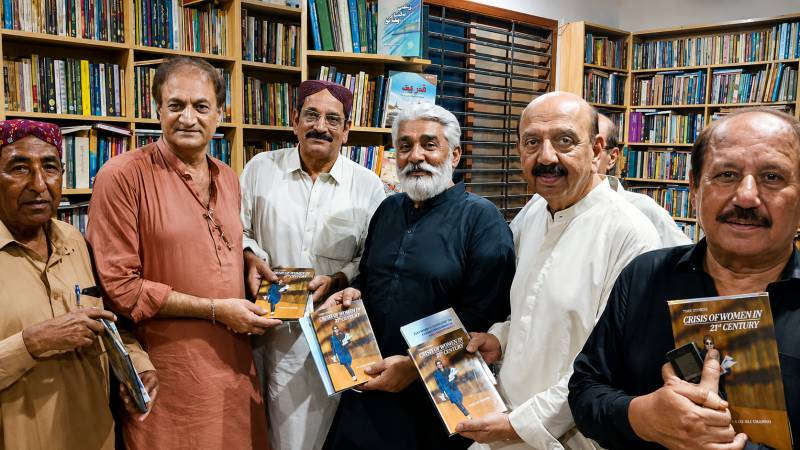
“Authors know about the library now,” Akbar said. “Many send their books as gifts. Friends also help. If someone receives an extra copy, he often thinks of Durab Library and sends it here.”
In the early years, Akbar searched for books. Now books also find their way to him.
“I still look for books,” he smiled. “But these days, books also look for the library.”
That steady flow brings its own challenges.
“Buying a book is the easy part,” Akbar said. “The real task begins after it reaches the shelf.”
Rare books can take years to find and often cost more than expected. Once acquired, they need care. Dust, humidity, insects, and age can damage them. Then comes space. Each new book needs a shelf and a place in the catalogue.
“As the library grows, you need more space and more care,” he explained. “Otherwise, you may own a book but not be able to find it when you need it.”
Yet one concern goes beyond space and upkeep.
“Every private collector must think about what will happen to the books after him,” Akbar reflected. “Will the library remain together, or will the books be scattered?”
The joy of collecting also brings responsibility. A private library may begin with a love of books, but keeping it alive takes time, space, and care.
The harder question concerns its future. Who will value the books? Who will protect them? And who will carry the library forward?
I Left Durab Library with Books and its Story
I looked at the wall clock of Durab Library. The day had already changed. The short hand had crossed one. The long hand rested near two. It was 1:10 in the morning.
I apologised for keeping Akbar awake so late and rose to leave. I thanked him for the midnight coffee, the vegetarian meal, and above all, the long hours among his books.
Outside, Hyderabad had cooled. A soft breeze moved through Qasimabad. Before leaving, I asked him almost in jest, “Is there still some special feature of Durab Library that you have not told me about?”
Akbar smiled. He waved me towards a bookshelf.
“Come,” he said. “Take whatever books you want.”
For a moment, I thought he was joking. He was not.
I walked towards the shelves and picked a few books on history and archaeology. His ease in giving them away surprised me.
“How can you give away books from a collection you have spent your life building?” I asked.
“These are extra copies,” he explained. “Friends from other towns and cities sometimes send the same books. Some authors give me several copies and ask me to pass them on to readers. I think anyone who comes to a library must have some love for books. So I give them away. Perhaps the book will find the right reader.”
“So Durab Library is also a book distribution centre?” I teased.
“Maybe,” he smiled. “Maybe not.”
Then he paused.
“Think of an online repository,” he said. “People download books from it. Do they read every book they download? Of course not. It is the same here. I give books to visitors. Some will read them. Some may never even open them.”
He laughed.
“And one day, perhaps, I may find one of these books lying on a footpath near Frere Hall or somewhere in Saddar.”
I touched his shoulder.
“Not these,” I assured him. “I will read them.”
He smiled. We parted.
I stepped outside carrying the books he had given me. Qasimabad had fallen quiet. The heat of the day had gone. A cool breeze moved through the trees. Somewhere nearby, night-blooming jasmine—raat-ki-rani—had opened for the night. Its fragrance drifted through the street.
The moon was nearing fullness. Its pale light slipped through the branches and fell in broken patches across the road.
I walked for a while with Akbar’s books in my hands. Something about the night had changed. Perhaps it was leaving a house of ten thousand books after a conversation that had wandered from childhood to ruins, from Shah Latif to the MRD, from old newspapers to unread books. Or perhaps it was simply the warmth of a long midnight conversation with a man who lives and dreams among books.
Then again, perhaps it was only Hyderabad after midnight.
The breeze. The moonlight. The sleeping streets of Qasimabad. The scent of night-blooming jasmine.
I could not tell where the fragrance ended and the happiness began. I only knew that I had entered Durab Library as a friend.