

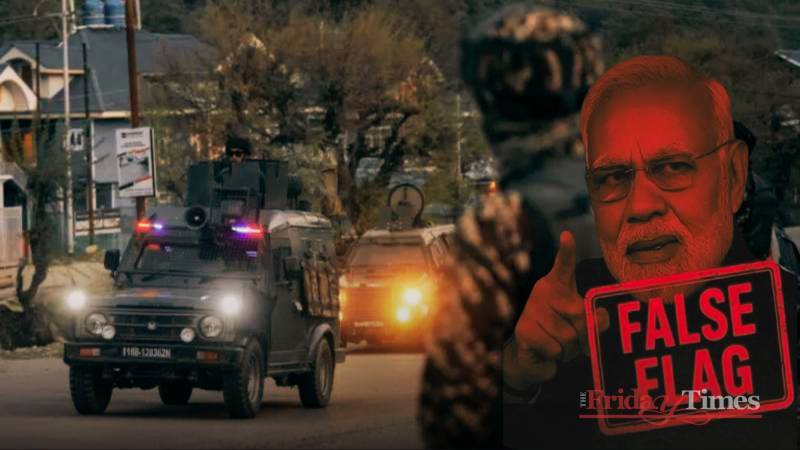
The recent arrest of two individuals in Pahalgam, reportedly linked to the terror attack, has brought a critical development to the forefront of India’s national security discourse. According to emerging reports, the suspects have revealed the identities of the attackers and provided information about the entities that allegedly dispatched them. This revelation places a heavy responsibility on Indian authorities to act swiftly and decisively. The government must now verify these claims, trace the attackers’ affiliations, and present clear evidence to the public and the international community. Without such transparency and due diligence, the retaliatory military action against the neighbouring country Pakistan, which India undertook, would be perceived as premature, unjustified, or politically motivated.
This moment presents a fork in the road for India’s leadership. On one path lies the opportunity to validate the government’s narrative and reinforce its commitment to national security. On the other lies the risk of further embarrassment for the ruling Bharatiya Janata Party (BJP), which is already facing criticism for its handling of recent security lapses. The stakes are high, not just for the credibility of the current administration, but for India’s broader standing in the global arena. The way this situation is handled could either restore public confidence or deepen the sense of disillusionment that has been growing among citizens.
The BJP, which has long positioned itself as a guardian of national security, now finds itself under intense scrutiny. If the suspects’ claims are substantiated and the government can clearly demonstrate the chain of responsibility leading back to foreign actors, it would significantly bolster the administration’s position. It would also provide a strong rationale for any diplomatic or military response, reinforcing India’s right to defend itself. However, if the investigation falters, or if the government is seen as manipulating the narrative for political gain, the backlash could be severe. In that case, the BJP may find itself accused not only of incompetence but of exploiting national tragedy for electoral advantage.
In an era where global narratives are shaped in real time through digital media, the government cannot afford to lose control of the story
Public perception is a powerful force in any democracy, and in India, a nation of over a billion people with a vibrant and vocal civil society, it can be a game-changer. The government must therefore prioritise transparency and accountability. A clear, evidence-based response will not only reassure the Indian public but also send a strong message to the international community that India is a responsible and principled actor on the world stage. Conversely, any attempt to obscure facts, delay action, or politicise the issue could have far-reaching consequences. It could erode trust in institutions, fuel political polarisation, and weaken India’s diplomatic leverage.
Internationally, India’s response will be closely watched by allies and adversaries alike. Countries that have stood by India in the past will expect a measured and credible approach. Any missteps could complicate diplomatic relations and undermine India’s efforts to build strategic partnerships. Moreover, in an era where global narratives are shaped in real time through digital media, the government cannot afford to lose control of the story. It must engage proactively with both domestic and international audiences, providing regular updates and factual clarity.
This is not just a test of intelligence-gathering or military preparedness; it is a test of leadership. The Indian government must rise to the occasion by demonstrating integrity, competence, and a commitment to justice. It must resist the temptation to use this crisis as a political tool and instead focus on delivering truth and accountability. The credibility of its actions—and, by extension, its legitimacy—depends on it. India is already losing the diplomatic war with Pakistan on every front, be it presenting Pakistan as a terror-sponsoring rogue state, or refusing to engage with Pakistan in any international forums, such as the Shanghai Cooperation Organisation (SCO), and instead displaying adamant and obstinate behaviour, which the rest of the world is not buying.
In conclusion, the arrests in Pahalgam have opened a window of opportunity for India to reaffirm its commitment to justice and national security. But that opportunity comes with a responsibility to act wisely and transparently. The world is watching, and so are the people of India. Whether this moment becomes a turning point or a missed opportunity will depend entirely on the choices made in the days ahead.