

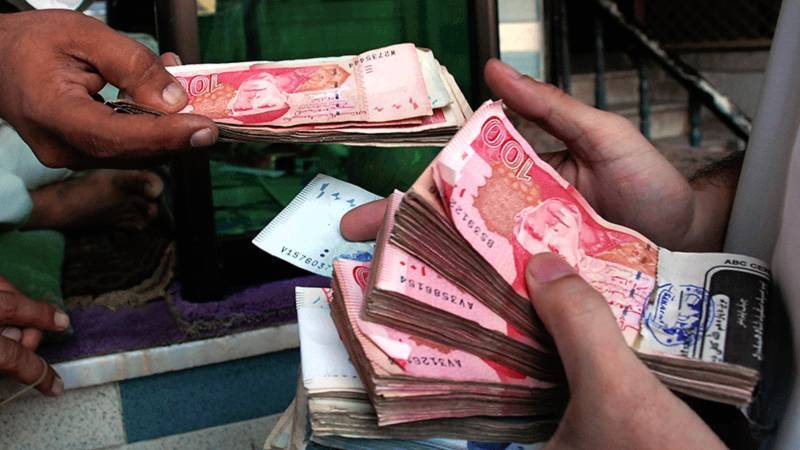
In an economy, banks have a unique position and play a critical role as intermediaries between depositors and borrowers. They accept deposits from individuals and entities with surplus funds and lend them to those requiring capital, thereby facilitating economic activities. Not only this, banks contribute to economic growth by creating money through lending activities. They provide vital financial services such as managing the payment system and offering liquidity that are crucial for economic stability.
Furthermore, banks can act as connectors of economic growth by internalising production externalities and guiding investments toward more productive uses, thereby enhancing overall economic efficiency. Their part extends to influencing monetary policy transmission, supporting financial infrastructure, and ensuring the availability of credit essential for development.
Like all other economies, in Pakistan the banking sector plays its role. However, recent trends raise the concern about whether the industry is truly serving its core function of fostering economic growth.
If we look at the August 2024 data of bank lending to the government, it shows that Pakistan's commercial banks’ lending to the government reached an unprecedented 100.83% of total deposits, with banks lending Rs31.03 trillion against deposits of Rs30.78 trillion. This surge pushed the investment to deposit ratio (IDR) to an all-time high of 100.83%, up from 84.32% in August 2023. Similarly, the State Bank of Pakistan (SBP) lent to commercial banks a record of Rs12 trillion to meet government financial needs.
This gives banks a fortunate position to earn profit from the interest rate differential, borrowing from the SBP at lower rates and lending to the government at higher rates.
If the banking system continues to give importance to government lending over private-sector credit and earns easy money, it risks hampering economic growth, discouraging entrepreneurship, and raising fiscal vulnerabilities
With lending to government, private sector lending declined sharply as the advance to deposit ratio (ADR) fell to 38.36% from 45.09% a year earlier. In Pakistan, banks have to pay additional taxation if the ADR is below 50%. So, commercial banks paid.
The Pakistani government borrowed Rs7.39 trillion from the banks from July 2023 to 7 June 2024. This surpassed the combined borrowings of Rs7.16 trillion in the previous two fiscal years (Rs3.72 trillion in FY23 and Rs3.49 trillion in FY22). Despite a 30% growth in revenue, government spending has remained high, necessitating excessive borrowing. Given the record-high interest rate of 22%, the cost of debt servicing is set to exceed budget estimates last year.
For FY 2023–24, the government allocated Rs7.21 trillion for domestic debt servicing and Rs1.04 trillion for foreign debt servicing, totalling Rs8.25 trillion. For FY 2024–25, these allocations have risen to Rs8.736 trillion (domestic) and Rs1.04 trillion (foreign), totalling Rs9.77 trillion. These figures underscore the escalating debt burden and its implications for Pakistan's fiscal health.
Between 1 July 2023 and 8 March 2024, bank advances to Pakistan’s private sector declined by over 70%, totalling just Rs73 billion compared to Rs246 billion in the same period the previous year.
Key factors behind this decline include:
- High Interest Rates – The prevailing 22% interest rate has increased the cost of borrowing, discouraging private sector investment.
- Government Borrowing Preference – Banks prefer lending to the government, which offers higher returns with lower risk, primarily through treasury bills and Pakistan Investment Bonds (PIBs).
This decline in private sector advances causes a significant challenge for economic growth. As the banks financed 99.8% of budgetary deficits, the banking sector has become a key driver of fiscal stability. However, reduced private-sector lending stifles new business ventures and industrial expansion, raising concerns about long-term economic resilience.
In 2023, Pakistan’s banking sector paid the highest tax, contributing Rs644 billion to the national exchequer. However, this tax was earned from credit which was directed toward financing the fiscal deficit, leaving the private sector out of scope.
This practice enables banks to charge high interest rates, leading to record-breaking profits in 2024, surpassing those of other industries.
If the banking system continues to give importance to government lending over private-sector credit and earns easy money, it risks hampering economic growth, discouraging entrepreneurship, and raising fiscal vulnerabilities. For a sustainable and inclusive financial system, there must be a rebalancing of lending priorities supporting both government stability and private sector expansion to drive long-term economic prosperity.