


The story of print culture in colonial Sindh is not just about machines and books. It is a story about how a society used print to think, debate, and preserve itself during a time of big political and social change.
Printing arrived in Sindh under British rule, mainly to serve administration and education. Textbooks, official notices, and press laws were meant to standardise knowledge and control what could be published. Newspapers and journals had to be registered, editors were held responsible for content, and censorship loomed in the background. In this sense, print was clearly linked to power.
Shikarpur was one of the leading commercial and literary centres in Colonial Sindh, introducing printing culture in the city. Several individuals played an instrumental role in promoting a reading culture by establishing libraries, bookshops, and printing presses to make books readily available to readers. Some colleges and schools regularly published magazines to inculcate young minds with writing skills and analytical thinking.
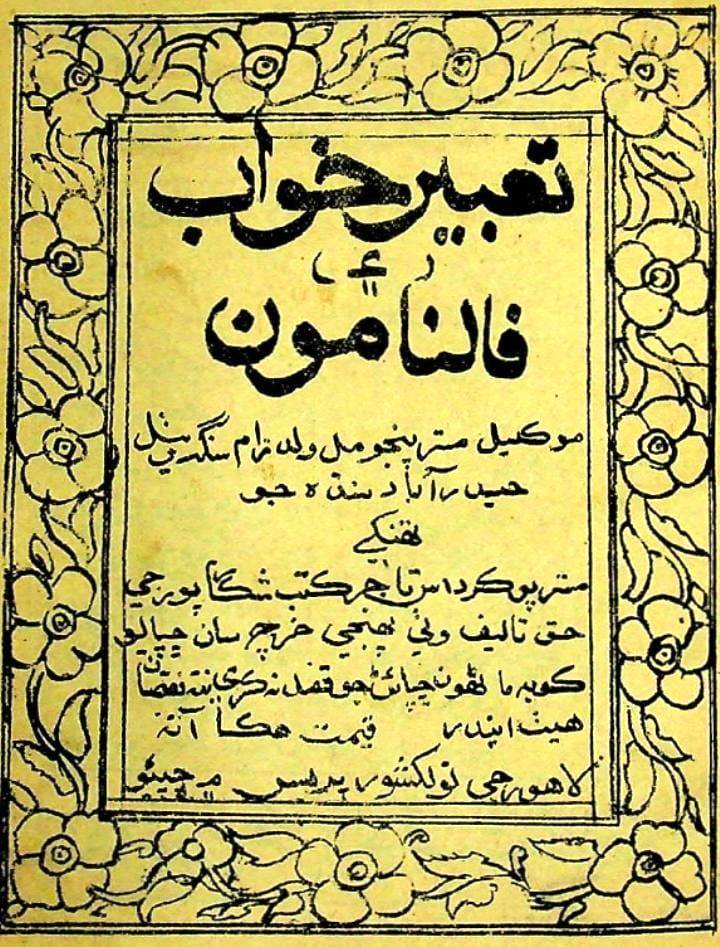
Among various booksellers and publishers, Munshi Pokardas Thanwadas, Bolchand Wasomal Rajpal, and Molvi Muhammad Azeem were leading figures. They published books and periodicals encouraging young scholars to read and write. They not only published books by young scholars, teachers, and poets, but also translated works from other languages into Sindhi.
Translation played a key role in Sindhi print culture, adapting works from Russian, Persian, and English to make global ideas relevant to local readers
According to Anwar Figar Hakro (2108:93), the author of Sij Jehra Pireen, a book showcasing information about important personalities of Shikarpur, Munshi Pokardas Thanwardas was born in 1868 in Shikarpur town. He received early education in Shikarpur. Soon, he turned to the profession of book selling in Shikarpur, opening a bookshop in a bazaar, where people of Shikarpur responded well to him, reflecting the city's interest in book culture. Soon, he also turned to publication work. He, along with Munshi Khushiram, published a small booklet titled Mula and Mawali, a comic story. Munshi Pokardas Thanwardas used to have books published from Lahore printing presses. He also got a few books published in Sukkur. Later, he established his printing press in Shikarpur. Munshi Pokardas Thanwardas observed that Shikarpuri people were taking more interest in humorous literature. So, he published several such humorous works.
According to Anwar Figar Hakro, Mula and Mawali (priest and drunkard) was published in 1889 in lithographic form. About seven hundred copies of the booklet were published. All the copies were sold in no time, boosting his business. This shows that the early history of printing, book culture, and popular literature in Sindh, especially chapbooks and storytelling traditions, was given greater importance by readers and publishers. These chapbooks became popular in Shikarpur during the late 19th and early 20th centuries, transforming the reading habits and literary culture of Shikarpuris. He also started publishing books on folktales, romantic tales, Religious narratives, and moral stories. Over time, publishers steadily expanded their output, moving beyond popular stories to print educational textbooks, religious writings, poetry, and medical and instructional manuals, turning print into a powerful medium for learning, devotion, and everyday knowledge in Shikarpur.
Dr Allah Rakhio Butt (2022:109) states in 'The Nineteenth Century Book Trade in Sindh' that local publishers, including Muhammad Yousuf, Munshi Pokardas, and Master Harising, specialised in popular stories and fairy tales, which earned them great fame among the reading public. Master Harising had a printing press in Sukkur. According to another book, Sindhi Boli men Chhapiyal Kitaban Jo Tawarekhi Jaizo- 1819-1930 (A Historical Survey of Printed Books in Sindhi Language, 1819-1930) by Dr Allah Rakho Butt (2022:12), the first printing press was established in Sukkur by 1860.
By 1893, chapbook publishing had expanded rapidly, with a growing number of printing presses across Sindh, in general, and Shikarpur in particular, fuelling a surge in literary production, as printed books captured public attention. It became an increasingly popular part of everyday cultural life. Together, these developments reveal how print culture fundamentally transformed Sindhi society by making knowledge, stories, and ideas accessible beyond elite circles. The circulation of cheap and affordable books expanded literacy, encouraged new reading publics, and reshaped everyday intellectual life in Shikarpur.
Local writers, teachers, traders, and printers of Shikarpur quickly turned printing into something more meaningful. Villages of Shikarpur, like Mian Jo Goth and
Amrote, became centres of periodicals production—not because of colonial planning, but because of local initiative. Printing presses were small in these villages, but they brought a revolution in rural areas by publishing the ideas that shaped the everyday behaviour of the rural population.
One such periodical was Hidayat-ul-Akhwan. It was a monthly periodical and is regarded as one of the earliest Sindhi periodicals associated with Shikarpur. Although intellectually linked to Shikarpur, it was produced in Amrote village. It was founded in 1900 by Maulana Taj Muhammad Amroti (d 1929) and his close associate, Maulana Ubaidullah Sindhi (d 1944). It was published by the press Mahmud al Maktabah, based at the madrasah of Maulana Taj Muhammad Amroti.
The periodical was lithographically produced and consisted of sixteen pages. Despite its modest format, Hidayat-ul-Akhwan played a significant role in shaping early Sindhi public discourse. It contained articles on religious reform, moral instruction, education, and social awareness, and addressed contemporary political and ethical concerns from an Islamic reformist perspective.
Through Hidayat-ul-Akhwan, Maulana Taj Muhammad Amroti and Maulana Ubaidullah Sindhi transformed religious instruction into a printed public intervention, using periodicals to reach wider audiences.
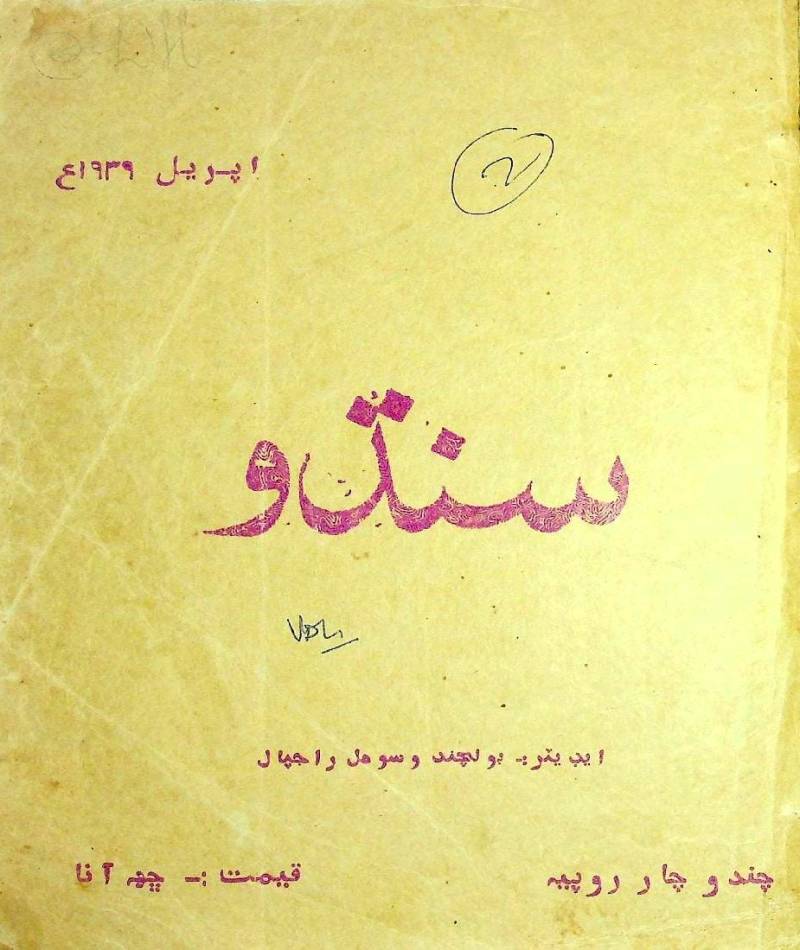
Most books and periodicals from Shikarpur were printed using lithography. Sindhi periodicals from Shikarpur town, such as Sindhu, played an important role in shaping public discourse. Sindhu, a monthly magazine, was founded in 1932 by Bolchand Wasomal Rajpal in Shikarpur. Later, he moved to Jacobabad, but his journey did not end there. He eventually shifted to Mian Jo Goth, where he set up his own printing press—transforming the village into a lively hub of literary activity. From this press, he regularly published Sindhu magazine, giving sustained voice to Sindhi thought, culture, and public debate, and firmly rooting modern print culture in a rural setting.
Translation was another key feature of Sindhi print culture. Works from Russian, Bengali, Persian, English, and other languages were translated into Sindhi, connecting local readers to global debates. These translations were carefully selected and adapted, ensuring that foreign ideas made sense within Sindhi moral and cultural worlds.
By the 1930s and 1940s, Sindhi writing increasingly reflected the anxieties of the time. Social change, ethical concerns, and the approach of the Second World War found their way into literature. Books and journals became records of how people felt about their world—not just what they thought, but what they feared and hoped for.
The Partition of 1947 was a major rupture. Printing networks collapsed, and readerships were scattered. Sindhi print culture survived, but it changed. Journals became smaller, appeared irregularly, and focused more on preservation than popularity. Literary trusts and dedicated individuals kept them alive, often at personal cost. One such figure was Bulchand Wasomal Rajpal, whose lifelong dedication to editing and publishing ensured that Sindhi literary traditions did not disappear. For him and many others, printing was not a business—it was a moral responsibility.
The publishers and booksellers of Shikarpur continued to promote a reading culture. After Munshi Pokardas Thanwardas died in 1934, his son, Bhojraj Pokardas, continued his father's legacy. Molvi Muhammad Azeem was another leading book trader and publisher in Shikarpur. Initially, he published poetry books; later, he focused on Islam and other subjects. He died in 1952, and his sons continued his legacy. Muhammadi Press, founded by Molvi Muhammad Azeem, is still productive and publishes books. There were several bookshops in colonial Shikarpur, including Sholdas Thanwardas (brother of Pokardas Thanwardas), Khubchand and Sons Publishers and Booksellers, Thadasing and Sons, bookseller, and others.
Today, these old books and periodicals are more than historical curiosities. They are archives of Sindh’s intellectual life, showing how a society used print to debate, remember, and endure. In an age of digital speed and short attention spans, the history of Sindhi print culture reminds us that words, when carefully printed and thoughtfully read, can carry a people through even the hardest times.