

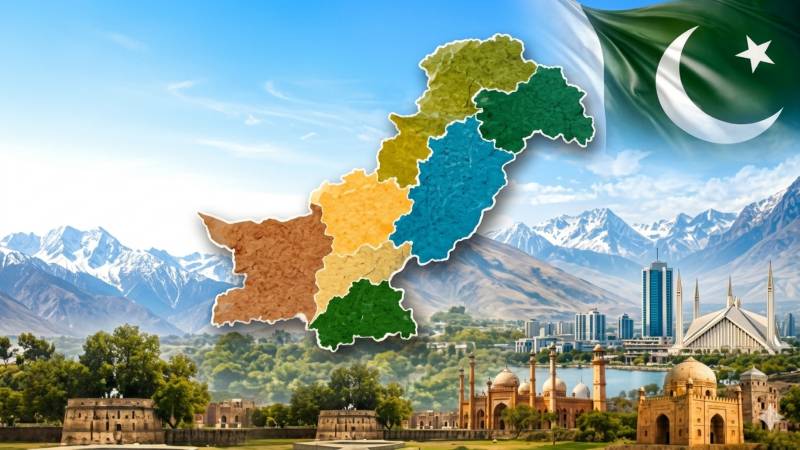
Pakistan is passing through a difficult phase. The country is facing serious economic challenges, security threats are visible in different parts of the country, and relations with some neighbouring countries remain tense. At such a time, every political decision needs to be examined carefully. The question of creating new provinces is therefore not only about administrative convenience. It is also about whether the country can afford another politically sensitive debate when it is already struggling with several serious problems.
There is nothing wrong with discussing whether Pakistan needs new provinces. A country must keep reviewing its administrative structure as its population grows and its needs change. Some regions have legitimate complaints about poor governance, lack of representation and their distance from provincial capitals. These concerns deserve attention. However, the timing of such a debate matters.
The creation of a new province is not a simple administrative decision. It affects political representation, distribution of financial resources, control over natural resources and the balance of power within the federation. It also touches people's ethnic, linguistic and regional identities. For this reason, such a debate can easily become emotional and political.
The situation in Sindh provides a clear example. The Muttahida Qaumi Movement has been strongly advocating the creation of new provinces, particularly in relation to Karachi, while the Pakistan Peoples Party and Sindhi nationalist groups have strongly opposed the idea. The issue has already produced serious political differences. The Sindh Assembly has also opposed the division of the province.
There is a real danger that such a debate may move beyond Parliament and political forums and reach the streets. Once the question becomes one of ethnic or territorial identity, it becomes much more difficult to control. The debate may change from “how can we improve governance?” to “who owns this land?” and “whose political identity has priority?” Such questions can deepen divisions rather than resolve existing problems.
Pakistan does not need another source of internal confrontation at a time when the state is already dealing with terrorism, economic difficulties and external security concerns. This does not mean that the demand for new provinces should be permanently rejected. Nor does it mean that the grievances of people living in large and administratively neglected regions should be ignored. On the contrary, these grievances need to be addressed seriously. But there is a difference between addressing genuine grievances and opening a politically charged constitutional debate at a time when the country may not be able to absorb its consequences.
There is another aspect of the issue that deserves attention. Any proposal to change the territorial structure of the federation must have democratic legitimacy. The people and their elected representatives should be at the centre of such a process. If the public develops the perception that the creation of new provinces is being promoted by unelected power centres for political purposes, the proposal will lose credibility even if some of its supporters have genuine administrative arguments. The history of Pakistan shows that major constitutional and political changes cannot succeed merely because they appear administratively logical. They require public confidence, political consensus and democratic legitimacy.
The creation of a new province is not a simple administrative decision. It affects political representation, distribution of financial resources, control over natural resources and the balance of power within the federation.
It is therefore necessary to distinguish between discussing the issue academically and turning it into a political campaign. Parliament, constitutional experts, academics and civil society can certainly examine whether Pakistan's present provincial structure is still suitable for its growing population and changing administrative requirements. They can study the economic cost, constitutional implications and possible benefits of new provinces. But converting the issue into a major political movement at this stage may be unwise.
There are also alternatives that deserve serious consideration. If the real problem is that people in certain regions are not receiving adequate services or representation, strengthening local governments could be one solution. Greater administrative decentralisation, stronger municipal institutions and a fair distribution of resources may address some of the problems without immediately changing the constitutional structure of the federation.
The central question, therefore, should not be whether new provinces are inherently good or bad. The more important question is whether this is the right time to pursue them. Pakistan has repeatedly faced situations in which political actors have opened new controversies while the state was already struggling with existing ones. The result has often been greater polarisation rather than better governance. A responsible state should therefore be careful before adding another highly sensitive issue to an already difficult political environment.
There will always be time to undertake major constitutional reforms when the country is politically stable, the economy is stronger and there is sufficient consensus among the people and their elected representatives. At present, Pakistan's priority should be to strengthen its economy, improve internal security, maintain stable relations with its neighbours and reduce political polarisation. These objectives require national attention and political cooperation.
The demand for new provinces can remain on the table. It can be studied, debated and discussed. But turning it into a divisive political campaign at a time of serious national challenges may create more problems than it solves. Pakistan does not have to decide today whether it will ever create new provinces. It needs to decide whether it can afford the consequences of making that question a political battle today. That distinction is important. Sometimes, responsible politics is not about deciding what should be done immediately; it is about recognising what should wait.