

Groundwater, the silent lifeline sustaining millions across Pakistan’s arid and semi-arid landscapes, is now under serious threat in District Mohmand. Despite the construction of two mega dams, the Warsak and Mohmand Dams, and four check dams meant to support recharge, the water table has reportedly fallen by nearly sixty feet over the past seven years. This alarming decline reflects a broader crisis across the country, where surface water scarcity and weak environmental regulation have placed immense pressure on underground reserves.
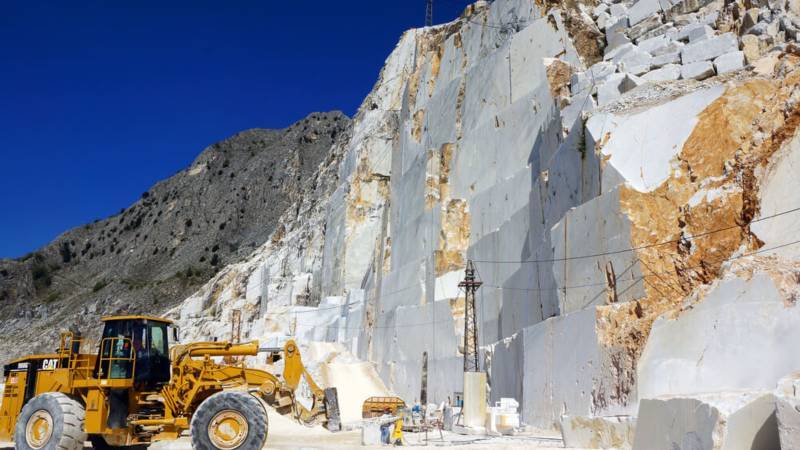
According to Dawn News (2024), groundwater levels in several north-western regions have dropped by nearly thirty feet in just six years. In Mohmand, the situation is aggravated by the marble industry, which has grown into a major economic driver but also one of the region’s most serious environmental polluters. Each marble factory extracts an estimated 5,000 litres of groundwater daily for cutting and cooling operations, discharging the used water back into the environment as calcium carbonate-rich slurry. This slurry infiltrates the soil and nearby streams, contaminating aquifers and blocking natural recharge zones.
Residents say the effects are visible and devastating. “The water table keeps dropping every year,” said one villager near Ghalanai. “Earlier, we found water at eighty feet, but now boreholes go beyond one hundred and forty feet. The slurry has turned our fields white, and crops no longer grow as they used to.” Such testimonies echo a larger pattern of industrial overuse and ecological neglect that threatens not only agriculture but also public health.
The Pakistan Council of Research in Water Resources (PCRWR) had already warned that nearly half of Pakistan’s urban groundwater is contaminated with chemical and microbial pollutants. In Mohmand, however, the problem is largely industrial in nature. Field readings from areas near marble clusters indicate elevated levels of total dissolved solids (TDS) and turbidity, far exceeding safe limits. The World Health Organization recommends that potable water have a TDS below 1,000 mg/L and a pH between 6.5 and 8.5, yet local samples have shown much higher readings. The Environmental Protection Agency also warns that alkalinity above 200 mg/L can lead to gastrointestinal disorders, kidney stones and cardiovascular complications.
Across Pakistan, approximately fifty per cent of all diseases and forty per cent of deaths are linked to the consumption of unsafe water
The environmental impact extends beyond groundwater chemistry. The slurry discharged from the Pir Bala marble factories historically flowed through natural streams along Mathra and Warsak Road, eventually reaching the Kabul River near Budhni and, further downstream, the Indus River. This chain of contamination poses risks far beyond Mohmand’s borders, underscoring the urgent need for coordinated intervention.
In response, the Khyber Pakhtunkhwa government has begun relocating marble factories from Pir Bala to the Mohmand Industrial Zone, where waste management and groundwater monitoring systems are being planned. A senior official from the provincial industry department confirmed that the relocation aims to centralise marble processing under regulated conditions. “The idea is to ensure treatment facilities are established to recycle water and safely dispose of slurry waste,” he said.
Satellite imagery supports the findings of the study conducted in the area, revealing rapid industrial expansion that has replaced agricultural land and open recharge spaces. These formerly permeable areas, now buried under slurry deposits, have lost their ability to absorb rainfall, increasing surface runoff and the risk of flash floods. Even though the district lies in an arid region where natural recharge is limited, unregulated extraction and waste disposal have made the aquifers especially vulnerable.
Experts emphasise that the groundwater crisis in Mohmand is human-induced rather than a natural consequence of climate variability. They recommend an integrated response that combines regulation, technology and community participation. Suggested measures include aquifer mapping and hydrological modelling through GIS, HEC-RAS and HEC-HMS; construction of recharge infrastructures such as percolation tanks and infiltration wells; and the enforcement of factory-level recycling systems. Strengthened environmental compliance and public awareness programmes are also critical to reversing the current trajectory.
The broader implications are national. Across Pakistan, approximately fifty per cent of all diseases and forty per cent of deaths are linked to the consumption of unsafe water. If unchecked, the depletion of groundwater reserves could deepen the country’s water insecurity, threatening agriculture, health and livelihoods alike.
While the relocation of marble units to the Mohmand Industrial Zone signals progress, experts argue that the true challenge lies in implementation. Strict environmental enforcement, continuous water quality assessment and community involvement are essential to ensure that the crisis does not spiral into irreversible damage. The marble industry will continue to shape the economy of Mohmand, but its survival, like that of the communities it supports, depends on a new balance between economic gain and environmental preservation.
Only through science-based planning, strong governance and collective awareness can Pakistan safeguard its hidden reservoirs from running dry.