

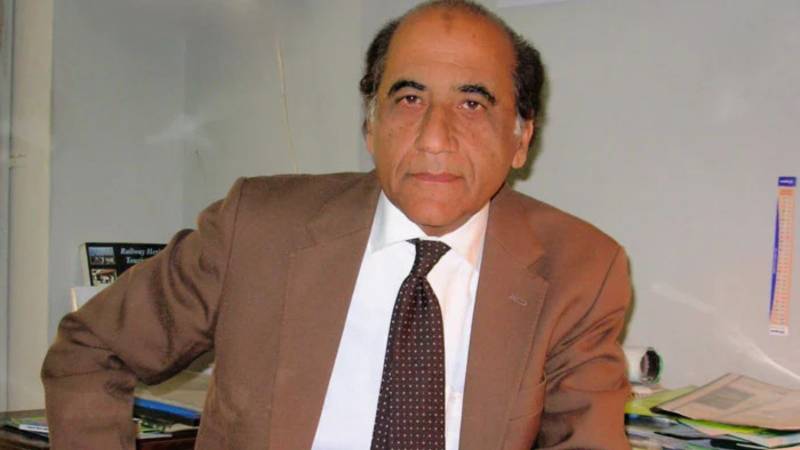
People who work in the cultural heritage sector are as precious as the heritage they strive to preserve. Zahoor Durrani was one such name — a man whose life embodied the very soul of Khyber Pakhtunkhwa’s historical legacy. His recent passing has left a deep void — a silence not unlike the fading whistle of the Khyber Steam Safari he so lovingly championed.
I had the privilege of meeting Zahoor Sahib during a train safari to the ancient Buddhist site of Takht-i-Bahi. More than a guide, he was a walking encyclopedia of KP’s cultural treasures — his stories vivid, his voice rich with pride and memory. That day, he wasn’t just leading a journey through space, but through centuries of forgotten beauty and overlooked glory.
Born in Peshawar in 1944, Zahoor Durrani Sahib grew into a man whose name became synonymous with cultural tourism in Pakistan. After his education at Edwardes College and the University of Peshawar, he joined Sehrai Travels and Tours, a business founded by his maternal uncle, the legendary Abdul Qadir Sehrai. In 1971, Zahoor Sahib undertook a remarkable road journey to the UK via Afghanistan, Iran, and Europe — an experience that shaped his worldview and deepened his love for cross-cultural storytelling.
Even in his final days, he worked tirelessly, reaching out to friends, contacts, and institutions to make this vision a reality
He later worked with Thomas Cook in London before returning to Pakistan to pour his passion into showcasing the country’s beauty, most notably through the revival of the Khyber Steam Railway Safari — a project Time Magazine listed among the world’s top five rail adventures.
Zahoor Durrani Sahib was not only a tour operator but a cultural custodian, hosting dignitaries, writers, and filmmakers, including Michael Palin, who featured his steam safari in the acclaimed BBC documentary Himalayas. He also guided author M.M. Kaye, who credited him in her famous novel The Far Pavilions. His influence stretched far beyond borders, yet he remained grounded, gentle, and warm-hearted.
The loss of Zahoor Sahib is being mourned widely — not only by his friends and admirers but also by heritage activists, historians, and artists across KP. As Dr. Altaf Qadir, a UK-based historian, poignantly noted:
“Zahoor Sahib was the epitome of tehzeeb and shaaistagi. His knowledge and passion for KP’s heritage was unmatched.”
Dr. Adil Zareef, public health expert and co-founder of the Sarhad Conservation Network, added:
“Zahoor Sahib’s heart ached for Peshawar’s heritage. The recent demolition of historic sites, particularly the Raj-era Capitol Cinema, deeply pained him. Despite his age, he remained active, striving to preserve what he loved most — our shared cultural memory.”
Zahoor Sahib’s advocacy helped lay the foundations for organizations like the Frontier Heritage Trust and supported decades of cultural festivals, exhibitions, and tourism projects. Yet, despite his global acclaim, he never received any national recognition — a bittersweet fact, considering the profound impact of his life’s work.
His passing follows the loss of other stalwarts of KP heritage — Maureen Lines, Reza Kuli Khan, Murad Ali, and Albert Godin. With Zahoor Durrani’s departure, another chapter closes. Another library of stories, laughter, and wisdom is lost.
His dream was to commemorate the 100th anniversary of the Khyber Railway’s inauguration on 2 November 2025 by reviving the iconic steam train between Jamrud and Shagai. Even in his final days, he worked tirelessly, reaching out to friends, contacts, and institutions to make this vision a reality. Whether that dream is honored now depends on the will of those who remain inspired by his legacy.
Zahoor Durrani Sahib will be remembered — not just for the journeys he led, but for the way he led them. With grace. With passion. With a heart full of stories.
As we mourn his loss, let us also ask: Who will walk in his footprints? Who will carry forward the whistle of steam and the song of heritage he kept alive for so long?