

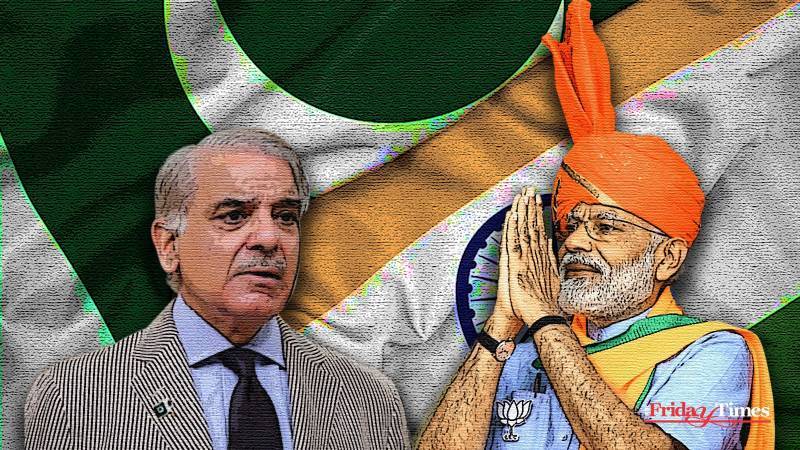
It should suffice to say at the outset that the BJP government, led by Prime Minister Modi, has done much for India—at least for its oligarchs, if not for the common Indian—since coming to power in 2014. Since then, India has transformed from a secular state into one deeply infused with the ideology of Hindutva—an extremist Hindu nationalist doctrine. This shift has drowned out the liberal argument in Pakistan that once drew comparisons between religious extremism in Pakistan and India’s supposedly secular, liberal society. Those voices have now been forced into silent contemplation. Conversely, it has also vindicated Quaid-e-Azam Muhammad Ali Jinnah’s advocacy of the Two-Nation Theory. Those who once opposed this position—whether out of conviction or intellectual fashion—now argue that Hindutva is merely a reaction to the Two-Nation Theory and Pakistan’s brand of religious extremism. However, in making this argument, they conveniently overlook the fact that the Rashtriya Swayamsevak Sangh (RSS) was founded in 1925 by Keshav Baliram Hedgewar, long before Pakistan even came into existence. The BJP, in its present form, is simply an offshoot of this organisation.
Quaid-e-Azam was perhaps more aware of these realities than his critics today.
Hedgewar was deeply influenced by several far-right Hindu writers and intellectuals, including Bankim Chandra Chattopadhyay, the author of Vande Mataram. His ideological inclinations may well have been shaped by personal grievance—an incident in his school days when he was expelled for singing Vande Mataram, which had been banned by the British Indian government. This suggests that the foundation of the RSS was rooted in resentment and a sense of victimhood. In essence, the very basis of Hindutva ideology can be traced back to childhood trauma that later manifested as hatred. Today, this ideology asserts itself with full force across India. It is widely acknowledged that any dissent against Modi is intolerable within the country. Even beyond India’s borders, the Sikh separatist movement for Khalistan has encountered the regime’s venom, evidenced by a series of targeted assassinations. Meanwhile, Modi’s BJP thrives on anti-Muslim and anti-Pakistan rhetoric. The party’s ideological reach has extended so far that even the Indian National Congress and its leaders are now accused of appeasing Muslims.
It is ironic that Indira Gandhi, who played a decisive role in the creation of Bangladesh by fomenting unrest and launching a military intervention in East Pakistan, is now viewed with disdain in India—simply because she was a Congress leader. A glaring example of this can be seen in a recent Indian production for Netflix, Emergency, where she is portrayed in a negative light for using force against her political rivals, particularly BJP leaders. Similarly, her father, Pandit Jawaharlal Nehru, India’s first Prime Minister and a founding father of the nation, is accused of pandering to Muslims, alongside Mahatma Gandhi.
Such is the extent of xenophobia in today’s India.
Given this fundamental transformation in India’s political and social outlook, one must ask: why do Muslim-majority nations such as Iran and Afghanistan continue to align themselves with India, despite its clear hegemonic ambitions? After all, no other country that shares a border with India has remained untouched by its expansionist designs and bullying tactics.
While the Indian media persistently accuses Pakistan of cross-border terrorism, it is ironic that 8,000 Kashmiris remain ‘missing’ to this day—ostensibly in the custody of Indian armed forces, or already dead
To fully comprehend this, we must take a leap into the past.
Two pivotal moments in history demand re-examination: the end of the Second World War in 1945 and the collapse of the Soviet Union in 1991. The former established the United States as a global superpower alongside the Soviet Union, while the latter left the United States as the sole hegemon. Between 1947 and 1991, Pakistan remained in the American camp against the Soviet bloc, whereas India, despite its professed neutrality as a member of the Non-Aligned Movement, benefited significantly from Soviet military and economic support. Pakistan, on the other hand, was compelled to remain within the American sphere, largely due to its precarious economic situation at independence and the ongoing conflict with India over Kashmir. This issue became a tool for external powers to maintain influence over Pakistan’s rulers, even when they sought a more balanced foreign policy.
Within this broader geopolitical context, the removal of two key leaders—the Shah of Iran, Mohammad Reza Pahlavi, and Hafizullah Amin, President of Afghanistan—was instrumental in reshaping the region. The former was overthrown by the CIA, while the latter was assassinated by the KGB and Soviet forces. This marked the beginning of the Great Game in the west of Pakistan, a conflict that has continued to shape the country’s fate to this day.
The year 1979 thus redefined Pakistan’s neighbourhood, creating challenges that its leadership has struggled to navigate ever since.
Iran, once Pakistan’s closest ally, gradually shifted towards India following its ideological rift with Saudi Arabia, which, under American influence, began investing heavily in Pakistan’s madrassas. Pakistan’s neutrality during the Iran-Iraq War (1980–1988) may also have strained relations with Tehran, despite Iran’s crucial support to Pakistan in the past. During the Indo-Pakistani War of 1965, Iran provided Pakistan with vital logistical and military assistance, including access to its airbases for refuelling and spare parts for Pakistan’s fighter jets. While not directly involved in combat, Iran played a key role in supporting Pakistan diplomatically and economically. At the time, Iran and Pakistan shared strong strategic ties, both being members of CENTO and SEATO, aligning them against Indian and Soviet influence. The Shah of Iran, Mohammad Reza Pahlavi, regarded Pakistan as a key regional ally and extended significant assistance, reinforcing close military and political cooperation.
The year 1991 was yet another defining moment.
Former Finance Minister of Pakistan, Dr Salman Shah, once remarked on my show Talking Politics on Federal Post Channel that Pakistan missed the train of economic reform in 1991. At the time, India’s economy was struggling, yet it took decisive steps towards liberalisation. Following the collapse of the Soviet Union, India swiftly transitioned to a market economy, whereas Pakistan, burdened by Zulfiqar Ali Bhutto’s socialist policies, failed to seize the opportunity to decentralise and deregulate its economy. The privatisation of state-owned enterprises, which could have spurred economic growth, was largely neglected.
The governments of the time were more focused on political power struggles than on national progress.
The administrations of Benazir Bhutto and Nawaz Sharif not only failed to address critical economic issues but also overlooked India’s construction of dams on the Jhelum and Chenab rivers, which were allocated to Pakistan under the Indus Waters Treaty. The Indus Water Commissioner of Pakistan, Jamaat Ali Shah, was reportedly bribed by India to remain silent—right under the noses of these leaders. The matter only became a national scandal when Shah fled Pakistan. To make matters worse, both parties, driven by short-term political gains, failed to forge a national consensus on the need for new dams. As a result, Pakistan now faces a severe water crisis, while these former political rivals sit together in Islamabad as coalition partners, watching over a nation that now looks at them with the same disillusionment as the closing chapter of George Orwell’s Animal Farm.
Amidst all this, the Afghans have harboured their ill feelings about Pakistan.
Blood may once again prove to be thicker than water in redefining relations between Pakistan, Iran, and Afghanistan, especially as the world undergoes a full-scale transformation under the emerging global order
Afghanistan’s claims against Pakistan revolve around territorial disputes, security concerns, and geopolitical tensions. The Durand Line remains a major point of contention, with Afghanistan refusing to recognise it as an official border. Pakistan is accused of meddling in Afghan affairs, supporting the Taliban, and providing safe havens to militant groups like the Haqqani Network. Disputes over Pashtun nationalism, cross-border terrorism, and water-sharing rights further strain relations. Afghanistan’s close ties with India add to Pakistan’s suspicions, while border skirmishes and refugee issues fuel tensions. Despite diplomatic engagements, deep-rooted mistrust continues to define their fragile and often hostile relationship. The recent terror attacks in Khyber Pakhtunkhwa and Balochistan—both bordering Afghanistan (and Iran)—have further soured and complicated the situation.
These factors explain why these Muslim-majority nations have become a playground for India, a country that loathes its Muslim population and enforces discriminatory policies against them. While the Indian media persistently accuses Pakistan of cross-border terrorism, it is ironic that 8,000 Kashmiris remain ‘missing’ to this day—ostensibly in the custody of Indian armed forces, or already dead. Their details can be found on this website, created by the parents of the missing persons.
However, the fact remains that successive governments in Islamabad since 1991, with the exception of General Musharraf’s regime (1999–2008), have failed to address these issues effectively. The tears shed in the name of democracy have only deepened the country’s pain rather than providing solutions to these fundamental problems. It has now become customary for every new administration in Islamabad to blame its predecessor rather than make serious efforts to resolve these challenges. Furthermore, every outgoing government recites the mantra that its hands were tied by the establishment, leaving it with no authority over national policies, particularly foreign policy. Yet, no one explains why, if their hands were truly tied, they did not simply walk away—when their feet remained free!
India nevertheless has benefitted from political uncertainty and economic turmoil in Pakistan – both resulting in a weak foreign policy.
However, the year 2025 has redrawn global fault lines once again.
With China and Russia taking centre stage in world affairs, American influence appears to be waning across various regions. Perhaps the most frustrating development for the United States is India’s retreat from its commitment as a strategic partner against China. Signs are already emerging that China and India are softening their stance towards each other. If this rapprochement deepens, the United States may no longer be willing to overlook many aspects of India’s domestic policies that it previously ignored—the treatment of minorities, enforced disappearances in Indian Occupied Kashmir, the democratic rights of over a dozen separatist movements within India, and the rise of religious extremism under Hindutva could all take precedence in Washington’s foreign policy towards India.
If Islam’s so-called ‘bloody borders’ shaped American foreign policy for over three decades, Hindutva may now take its place. Blood may once again prove to be thicker than water in redefining relations between Pakistan, Iran, and Afghanistan, especially as the world undergoes a full-scale transformation under the emerging global order.
I strongly disagree with the notion that all relations in the world are merely transactional.