

Pakistan is controlled and ruled by the ashrafiya (elite)—comprising the indomitable military brass, top civil bureaucracy, higher judiciary, landed upper crust and their cronies in politics, industrialist-turned-politicians, religious and so-called spiritual leaders, media tycoons and their all-knowing anchors, as well as unscrupulous and powerful traders.
Flouting the rule of law with shameless impunity is the hallmark of the Pakistani ashrafiya. The spoiled brats of this class join various nefarious circles, even organised mafia groups, engaging in all kinds of unlawful and undesirable activities—for them, vulgar ostentation of money and power is essential to prove their closeness to the most powerful organ of the state.
In the good old days, the ashrafiya were respected as a class of nobles and were highly revered. But in post-colonial Pakistan, this term now represents the money- and power-hungry classes who behave as if the country is their personal jagir (estate), and justify all their actions, however unlawful, as their inherent right.
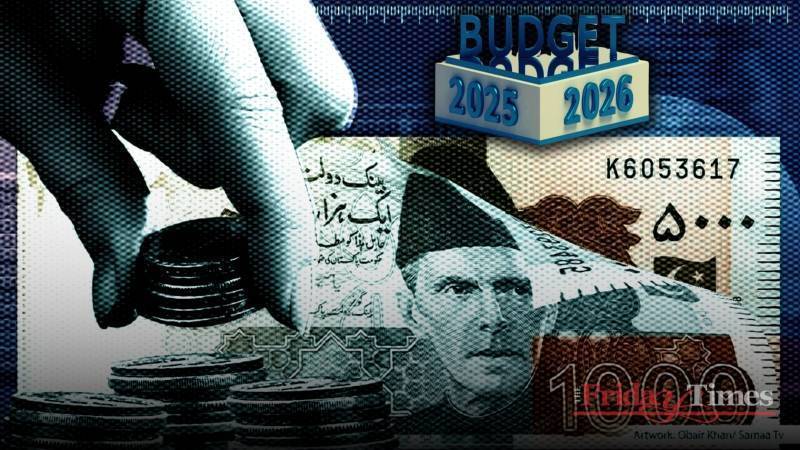
The Finance Act 2025, approved by the National Assembly on 26 June 2025 and presented by banker-turned-Federal Finance Minister for Finance and Revenue, Muhammad Aurangzeb, amid the traditional pandemonium in Parliament on 10 June 2025, confirms how unprecedented new benefits have been secured by the ashrafiya, and how tax concessions already available to it have been retained, while common citizens have been further overburdened with regressive taxes. The low-paid salaried employees have received negligible tax relief, which is effectively nullified by the new environment support levy on petrol and diesel, the enhanced petroleum levy, and the most insensitive federal excise duty of Rs. 10 on a one-day-old chick!
Not a single tax exemption available to the rich and powerful under the Second Schedule to the Income Tax Ordinance, 2001 was proposed to be withdrawn to bridge the fiscal deficit of Rs. 6,500 billion. On the contrary, mindless borrowing from banks and other sources is set to continue, pushing the nation deeper into a dark ‘debt prison’.
There is no inclination whatsoever in Budget 2025 to make Pakistan a self-reliant economy. On the contrary, it is designed to secure further expensive loans, even though the gross public debt stood at Rs. 76 trillion as of 31 March 2025—an alarming and unsustainable level. This budget, like all its predecessors, favours the rich and taxes the poor to the point of extinction.
The economy of ashrafiya-controlled Pakistan, undoubtedly, serves the interests of the privileged classes. The ruling elite—representing only 1% of the population—own 95% of national resources. They exploit the labour of landless tillers, urban workers, and white-collar employees to accumulate more wealth. They also create artificial and frequent price hikes of essential items to snatch back whatever little is earned or saved by the 98% ordinary citizens.
The evolution of this predatory and extractive state—The Land of the Pure—is elaborated by former Governor of the State Bank, Dr Ishrat Husain, in his book Pakistan: Economy of an Elitist State.
In the book, Dr Ishrat observes that, in sharp contrast to the East Asian model of ‘shared growth’—characterised by rapid development alongside poverty reduction and equitable distribution—in Pakistan, the elitist model confers political and economic power on a small coterie of elites (parasites). This is the root cause of our economic malaise and elitist budgets.
There is no doubt that the ruling trio—the mighty military complex and its civilian cronies, corrupt politicians, and unscrupulous businessmen—impose their will on members of Parliament in all matters, including budgets and taxation. The entire budget-making process reflects the apathy of parliamentarians towards the masses who vote them into office, hoping they will address socio-economic needs or at least provide basic essential services—housing, transport, education, and healthcare.
Despite the declining direct tax-to-GDP ratio, Muhammad Aurangzeb and FBR officials continue to make inflated claims of “impressive” increases in tax revenues, which are in fact the result of high inflation and a rise in petroleum imports
Even the Standing Committees on Finance and Taxation of both Houses are routinely left uninformed about key policies and tax measures contained in the budget. Senator Muhammad Aurangzeb did not even bother to brief them before presenting his second budget.
The worthy Members of the National Assembly never pause to consider the impact of regressive taxation on the ailing economy and the devastating burden it imposes on the poor in this Land of the Pure. Time and again, it has been emphasised that democracy is not merely about elections.
Establishing a responsible government that caters to the needs of its people is a prerequisite for genuine democratic governance. This is only possible if Parliament fulfils its constitutional role, implements a robust system of accountability, and ensures good governance. In theory, the Cabinet is answerable to Parliament—but in practice, MNAs chase ministers for personal favours and gains.
The coalition government secured approval of the Finance Bill 2025 while ignoring expert suggestions and amendments proposed by opposition members in both the Senate and National Assembly. Parliamentary norms and transparency were again disregarded—as always. The treasury benches have once again acted merely as rubber stamps for the Federal Board of Revenue (FBR), implementing policies dictated by the International Monetary Fund (IMF).
In every civilised and democratic society, it is the prerogative of elected representatives to initiate the law-making process and devise national policies after consulting the public. A fundamental rule of democratic practice is that no law or policy should be enacted without thorough debate in Parliament.
In Pakistan, however, so-called elected governments consistently bypass parliamentary procedures, then lament the lack of “democratic behaviour and culture” on the part of the opposition. Each year, budget-making is entrusted to bureaucrats in the Ministry of Finance and FBR, while Parliament restricts itself to the role of silent approver.
Due to the non-participation of elected representatives, the financial managers and tax officials have persistently failed to reduce the fiscal deficit or eliminate imbalances. Their tax policies focus narrowly on source-based collections, without incorporating the wealthy into the tax net or ensuring they pay their fair share.
The sole emphasis on indirect taxation—even under the guise of income tax through presumptive tax regimes on numerous transactions—without evaluating its economic impact is a major concern.
According to official figures, the contribution of income tax as a percentage of GDP remains pathetically low: 1.9% in 2010–11, 2.2% in 2009–10, 2.6% in 2008–09, 2.9% in 2007–08, 3.0% in 2006–07, averaging 3.5% between 2005–06 and 2022–23, and falling to 3.15% in 2023–24 (FBR Yearbooks and Economic Surveys).
Despite the declining direct tax-to-GDP ratio, Muhammad Aurangzeb and FBR officials continue to make inflated claims of “impressive” increases in tax revenues, which are in fact the result of high inflation and a rise in petroleum imports. Contributions from petroleum products alone accounted for 45% of non-tax revenues in 2023–24.
Brazen misrepresentation of figures continues in the Economic Survey 2024–25 and budget documents. The FBR conveniently ignores that taxes collected at source on goods, contracts, and supplies—being minimum and non-refundable—are essentially indirect levies. In some cases, this practice even infringes on provincial rights.
Tax policy must serve as a tool for rapid industrialisation and employment generation—not merely as an instrument for squeezing the masses to reduce fiscal deficits
That 75% of tax revenue comprises indirect taxes proves that the current system directly contributes to rising poverty, as those with massive incomes and wealth escape taxation. Thus, the redistributive purpose of taxation is entirely defeated by the Finance Act 2025 and the 2025–26 federal budget. Current tax policies are harmful to the economy, business, industry, and social justice. Those with greater wealth must contribute more to the national exchequer—and vice versa.
The ability-to-pay principle remains the most equitable method of taxation, particularly due to its redistributive nature. Yet successive governments—both civil and military—have completely deviated from this principle, even though it is a constitutional obligation.
The current tax system protects the establishment and exploitative elites, who maintain complete monopoly over economic resources. There is no political will to tax the privileged. Total income tax expenditure for the year ending 30 June 2024 was Rs. 542 billion, compared to Rs. 477 billion in 2023.
The impact of zero-rating sales tax—amounting to Rs. 1,795.764 billion on the import and local supply of petroleum products—has also been omitted from the Tax Expenditure appendix of the Economic Survey 2024–25. This omission denies provinces their constitutional right to a 57.5% share under the National Finance Commission Award. The federal government’s issuance of Statutory Regulatory Orders (SROs) granting zero-rating is a blatant constitutional violation.
In lieu of sales tax on petroleum products, the federal government collected a petroleum levy (a so-called non-tax revenue) of Rs. 833.847 billion until 30 March 2025. The estimated collection by 30 June 2025 is Rs. 1,161 billion. This not only represents a loss in collection and a constitutional breach, but also deprived the provinces of Rs. 1,136 billion, while the state treasury lost Rs. 635 billion.
Pakistan continues to face numerous crises—shortages in developmental resources, trade and fiscal deficits, and balance of payments challenges. One major cause is the rapid expansion of the black economy.
The FBR is directly responsible, having enabled widespread tax evasion by accepting its “due share”. Through the notorious SRO regime, senior FBR officials provide legal cover to powerful sections of society (ashrafiya) to amass illicit wealth—now threatening the very survival of the state.
Meanwhile, common citizens bear exorbitant sales tax and excise duty burdens, including income tax collected at source. Tax incidence on imported finished goods and other items ranges from 35% to 55%, once all applicable duties are factored in. Even salt, if branded, attracts 18% sales tax. This is disastrous for the poor. In contrast, senior generals, judges, and bureaucrats—who receive plots and benefits from the state—pay neither wealth nor income tax on their vast assets. Industrialists and landed elites continue to benefit from SRO concessions and exemptions.
Tax policy must serve as a tool for rapid industrialisation and employment generation—not merely as an instrument for squeezing the masses to reduce fiscal deficits. We must tax unproductive sectors and channel wealth into productive avenues. The redistributive principle—taxing the rich for the benefit of the poor—must be restored. Currently, we are doing the reverse, as proven by the Finance Act 2025. This dangerous trend must be reversed before it is too late.