

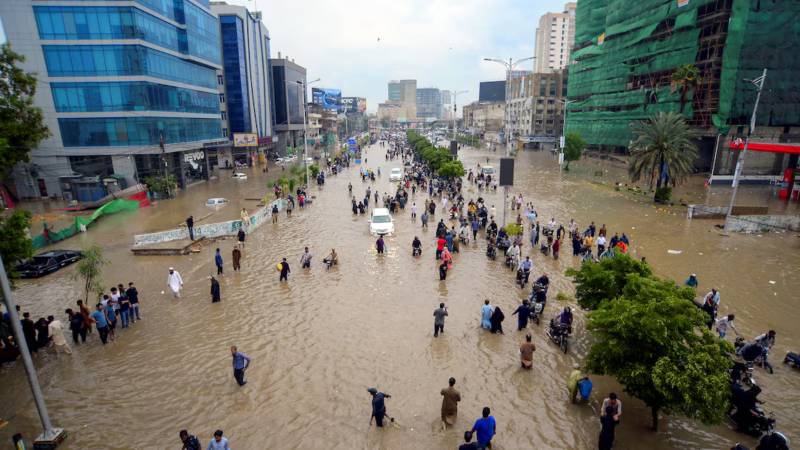
Karachi has again faced the challenge of heavy monsoon rainfall. Every year, the city’s infrastructure and its ability to withstand urban flooding come into sharp focus during this season. The recent downpour was no exception. The skies opened up with force, filling the streets with water, flooding low-lying areas, and testing the limits of civic facilities.
Yet, this time around, a new narrative has emerged alongside the familiar challenges. While the problems of drainage, water accumulation, and traffic disruption remain pressing issues, the swift response of the local administration has been noticeable. Citizens across Karachi have spoken about quicker mobilisation, better coordination, and visible efforts on the ground. It may not have been perfect, but the city witnessed an administration that was prepared and responsive in ways that deserve recognition.
Karachi’s rainfall is always an unpredictable affair. While the meteorological department provides forecasts, the intensity often exceeds expectations. During the recent spell, large parts of the city received around 200 millimetres of rain within a span of a few hours. In a sprawling metropolis of over 20 million people, this created immediate stress on the existing drainage systems. Major roads such as Sharae Faisal, I. I. Chundrigar Road, and Rashid Minhas Road saw significant accumulation of rainwater. Low-lying areas, including Surjani Town, Gulistan-e-Jauhar, Orangi Town, and Korangi, were the worst affected. For residents in these areas, urban flooding has long been a recurring problem. Streets quickly turned into streams, and in some pockets, homes were submerged up to knee level.
Stagnant water brings the threat of waterborne diseases such as diarrhoea, typhoid, and dengue
The difficulties faced by the Karachiites living in low-lying parts of the city cannot be overlooked. Poor drainage systems, haphazard construction, and a lack of proper planning have made these areas particularly vulnerable. The moment heavy rain falls, water has nowhere to go. Surjani Town, for example, has often become a symbol of the city’s flooding woes. In the recent rainfall, the residents again struggled to leave their homes as water levels rose. Transport stalled, children could not get to school, and families had to deal with the unpleasant mix of sewage and rainwater. In Korangi and Orangi Town, similar situations were reported.
The flooding not only disrupts daily life but also poses health risks. Stagnant water brings the threat of waterborne diseases such as diarrhoea, typhoid, and dengue. Moreover, electrical hazards multiply as water submerges power lines and transformers. These are issues rooted in decades of underinvestment and poor urban planning. No single administration can solve them overnight. However, what citizens expect, and what they saw in this recent spell, is a more active effort to minimise the damage and provide relief where it is needed most.
Despite the heavy rain and the resulting flooding, what stood out this year was the speed and efficiency of the local administration’s response. Various civic bodies, including the Karachi Metropolitan Corporation (KMC), District Municipal Corporations (DMCs), and the Sindh government’s disaster management teams, were visible across the city. Teams with dewatering pumps were deployed at major choke points. Within hours, large stretches of Sharae Faisal and M. A. Jinnah Road that had been submerged were cleared for traffic. This allowed the commuters to resume movement far quicker than in previous years. The Karachi traffic police, working closely with the civic agencies, diverted traffic from flooded areas and guided vehicles through safer routes. Their presence at intersections helped avoid the kind of gridlock that the city has often experienced in previous monsoon spells.
The city’s leadership and workers stood up to the challenge, proving that with commitment and coordination, even the heaviest rains cannot drown Karachi’s spirit
In several areas, especially in Korangi and Surjani, rescue teams assisted the residents in moving to safer places. Food, water, and medical aid were provided in temporary relief camps. Importantly, the administration also kept electricity providers on alert to minimise the risk of electrocution. In fact, many areas witnessed precautionary shutdowns of power supply until water levels receded. One of the significant improvements noticed this time was communication. Local authorities used social media platforms, television, and radio to inform citizens about weather conditions, flooded roads, and alternative routes. This helped the people make informed decisions and avoid the worst-hit areas.
While frustrations were inevitable in areas where flooding was severe, many citizens acknowledged that the administration’s response was more organised than in previous years. Karachi has often been criticised for its civic failures during the monsoon, but this time social media was full of posts highlighting dewatering teams at work, police guiding traffic, and sanitation workers clearing drains. Such visible action helps rebuild public trust. In a city where residents often feel neglected, these efforts demonstrated that their concerns were being taken seriously.
Of course, appreciation of the local administration does not mean that Karachi’s problems are solved. Urban flooding will remain a challenge until structural reforms are undertaken. The city requires a complete overhaul of its outdated and undersized drainage network. Proper planning and engineering solutions can ensure rainwater flows into natural nullahs and storm drains rather than clogging roads. Many drains remain choked due to illegal construction and dumping of rubbish, so sustained campaigns are needed to keep these channels clear year-round, not only during the rainy season. Specific attention should be paid to the areas that consistently bear the brunt of flooding. Infrastructure development, including raising road levels and building retention ponds, could reduce their vulnerability. Citizens also have a role to play. Proper waste disposal, cooperation with the authorities, and community-level preparedness can reduce the pressure on the civic agencies.
It is important to recognise the reality: Karachi is a city of enormous size, with infrastructure that has lagged far behind its population growth. No government or administration can fix decades-old problems in a single season. However, the test of leadership lies in responsiveness, and this is where the recent spell of rain showed progress. Instead of the helplessness often seen in previous years, the citizens witnessed a more proactive approach. Dewatering machines were out early, rescue workers were visible, and coordination among agencies was improved. The challenges remain large, but so does the resolve.
The recent rainfall in Karachi again reminded everyone of the city’s vulnerability to urban flooding. The situation of the low-lying areas highlighted the immediate need for long-term infrastructural reforms. Yet, amid these difficulties, the response of the local administration deserves appreciation. Through quick drainage operations, traffic management, relief efforts, and effective communication, the authorities managed to reduce the scale of disruption and provide the much-needed support to the citizens. It was not a flawless operation, but it was a step in the right direction.
Karachi remains a city of resilience. Its people endure, adapt, and rise after every challenge. With a more prepared and responsive administration, there is hope that the monsoon will no longer be a season of dread but one of managed relief and eventual improvement. For now, credit must be given where it is due: the city’s leadership and workers stood up to the challenge, proving that with commitment and coordination, even the heaviest rains cannot drown Karachi’s spirit.