

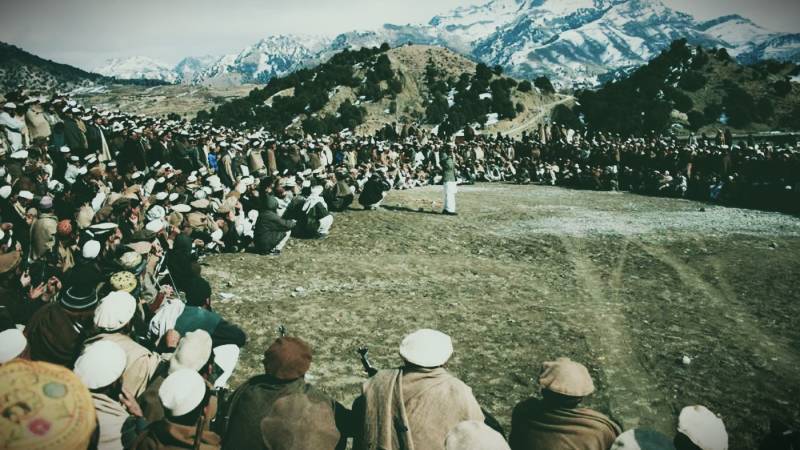
It was a chilling late December night in 2009 when my flight touched down, and I found myself in a Peshawar hotel room, staring at the ceiling, second-guessing every decision that had led me here. Outside, the city hummed with an unease I had never felt anywhere else on earth, part anticipation, part dread, the kind that settles not in the stomach but somewhere deeper, in the marrow.
I had been contracted as an energy expert to work on the reform of TESCO, the Tribal Areas Electric Supply Company, and to assess the energy sector of the Federally Administered Tribal Areas. FATA, in those days, was not merely dangerous. It was the most dangerous place on earth. The devil, I used to joke to myself, was reluctant to go there. I was not laughing.
I am writing this sixteen years later, because FATA today formally merged into Khyber Pakhtunkhwa, but forever its own haunted geography in the minds of those who worked there is bleeding again. Daily, policemen, soldiers, and ordinary civilians are offering their lives at the altar of TTP and Afghan Taliban violence. Sixteen years of supposed integration, policy reform, and military operations, and yet the nexus between militancy and the social despair of the tribespeople remains intact. This op-ed is my attempt, drawn from twelve months of fieldwork I have never fully been able to leave behind, to explain why — and what must still be done.
The Man Who May Have Saved My Life
The first piece of luck that came to me in FATA had a name: Zakaullah Khan Gandapur. He was then the Director of TESCO, a man who would later rise to become its CEO, and who carries the rare distinction of being both a capable administrator and one of the finest Urdu fiction writers of his generation — an intellectual who reads people as carefully as he reads manuscripts.
When I arrived, green and visibly out of my depth, Zakaullah Khan did not hand me a briefing file. He gave me something far more valuable: a methodology for survival. First, he directed me to the small library at the FATA Secretariat, where I spent weeks studying Pashtunwali — the ancient code of honour governing tribal life: self-respect, hospitality, justice, forgiveness, independence, and, critically, revenge.
Second: no mobile phone in the field, no camera, carry only tool kits and equipment manuals — the paraphernalia of a technician who has come to fix generators, not to observe. Third: decline every invitation from the Maliks, the traditional tribal elders. Politely, firmly, always.
I watched tribesmen doing work that the rest of Pakistan quietly refused: coal mines, marble quarries, deep excavation for construction far from home
I followed this counsel with the discipline of a man who understood that a single wrong signal could be fatal. I will not elaborate on how close the margin was on multiple occasions. What I will say is this: that code studied in a dusty little library was not mere anthropology. It was the key to a door that might otherwise have swung shut permanently.
What I Saw: Genius Wasted by Design
My work took me across all seven tribal agencies — into valleys of staggering beauty, through checkposts that watched you with the unblinking suspicion of a land permanently at war. I went to fix the generators and transformers. But I was watching everything.
The landscape itself was a revelation. Tirah Valley rises above twelve thousand feet, its dense pine forests and orchards heavy with world-class apples, grapes, pomegranates, apricots, peaches, and plums. Kurram Valley astonishes with its fertility, its natural springs, and the improbable tea plantations quietly producing a thousand kilograms daily since the early 2000s. Pakistan imports over $230 million worth of edible fruits and nuts annually. I never tasted FATA’s produce in any market in Islamabad or any part of the world, because nobody built the chain to get it there.
The Khyber Pakhtunkhwa government never made a serious effort to train tribesmen in modern horticulture, post-harvest handling, or agricultural export, despite sitting on one of the most organically fertile food-producing regions in South Asia. The biodiesel policy initiated in 2006 to allow tribesmen to produce biofuel from their land has still not been seriously implemented. When will Islamabad finally announce a credible biodiesel framework, while FATA is home to maize, the best raw material for biodiesel? These are not peripheral questions. They are questions of livelihoods — and therefore of peace.
The people commanded my attention equally. I watched tribesmen doing work that the rest of Pakistan quietly refused: coal mines, marble quarries, deep excavation for construction far from home. Work that others categorised as beneath them, these men embraced with ferocious, almost joyful competence — and most were not labourers but supervisors, entrepreneurs in all but title.
Tireless, inventive hard work seemed encoded into their identity. Their adaptability was equally remarkable. I used to think: these people could go to Antarctica and sell potato chips barefoot and somehow turn a profit. The critical formation window, I became convinced, falls between fifteen and twenty-two. In that window, the mind can be shaped and given direction. Once it closes, the default programming — poverty, exclusion, the belonging offered by militancy — becomes extraordinarily difficult to rewrite.
Then I saw the madrasas. I do not know the total number of Islamic seminaries operating across ex-FATA, but I visited a few. What I found was among the most heartbreaking things I witnessed that year. Children from the ages of five to sixteen, sitting in rows, studying on the most meagre food imaginable. These students are among the most innocent human beings I have ever encountered — they have never seen life outside those walls.
The world tells us they are the pipeline for suicide bombers. The truth I observed is more painful and more ordinary: their families enrolled them because of absolute poverty and the impossibility of feeding large households. These children did not choose ideology. They chose, or were chosen by, survival. No honest conversation about militancy in FATA can skip past this fact.
I escaped from FATA alive. I have never fully reconciled the lack of that — the right advice from the right man, the toolkit instead of the notebook, the declined invitations, the code studied by lamplight
The Architecture of Failure
All of this human and natural potential existed inside an institutional structure designed, whether intentionally or by indifference, to waste it. The FATA Secretariat was among the most corrupt institutions I encountered in my professional life. The Political Agents who administered the seven agencies carried vice-regal authority — operating as minor gods, answerable upward to the Additional Chief Secretary but answerable to the tribespeople not at all. I met the Secretary of FATA multiple times. The bearing was always that of a viceroy receiving a petition.
The Maliks — traditional elders paid state allowances since the British era in exchange for maintaining local order — had long since calcified into rent-extractors. The massive flows of foreign aid arriving in FATA disappeared into the layers above. The young men of FATA watched this and drew the obvious conclusions. TTP did not arise in a vacuum. It arose because it offered what the state withheld: justice, belonging, and employment of a terrible kind. Social injustice and mass unemployment were the real recruiting sergeants — and they remain so today.
What Must Be Done
My recommendations are practical, drawn from observation of who the people of ex-FATA actually are. The critical intervention must target youth between fifteen and twenty-two. Skills development in this window, delivered with internationally recognised certification — not the inadequate, under-resourced institutions currently operating — can change the trajectory of a generation. Pair training with English, Arabic, and Spanish through social media, and you are creating people capable of earning serious foreign remittances from anywhere on earth. These are people without homesickness. They will go anywhere. Give them the tools.
The employment model must be honest. Government jobs suppress the inbuilt energy of the tribesperson rather than releasing it. The exception is the armed forces, which channel the martial character productively. Beyond that, the model must be private sector, entrepreneurial, and intensive — matched to the extraordinary work ethic that I watched in those mines and quarries. China’s 996 work culture, demanding by any standard, is not far from what these communities already practise voluntarily. Hard work offered with dignity, fair compensation, and a path forward is the only ideology capable of competing with TTP’s.
Islamabad and the Khyber Pakhtunkhwa government must also unlock the agricultural wealth sitting idle. A serious fruit and vegetable export programme from Tirah and Kurram — with training, cold-chain infrastructure, and market access — would generate livelihoods and foreign exchange simultaneously. The biodiesel initiative of 2006 must be revived and implemented as policy because ex-FATA is the home of maize, the best raw material for biodiesel. These are not visionary proposals; they are overdue basics.
And the children in those madrasas deserve a different conversation entirely. They are not threats. They are the product of poverty and large families with no alternative. Addressing them means addressing the poverty that placed them there — supplementary education, nutrition support, and a real pathway into the formal economy. Without confronting poverty directly, no amount of security spending will bring peace to Khyber Pakhtunkhwa.
I escaped from FATA alive. I have never fully reconciled the lack of that — the right advice from the right man, the toolkit instead of the notebook, the declined invitations, the code studied by lamplight.
The people I watched working those mines, the young men whose minds were still reachable, the children sitting on bare floors in those seminaries, the orchards producing fruit that never reached a market — they are still there. Their sons are there now. And the same failures I observed in 2010 are still being practised, with the same results.
The lesson of my year in FATA is simple and unalterable: without addressing poverty and without creating real employment, peace in ex-FATA and Khyber Pakhtunkhwa is not a policy objective. It is a fantasy. When the devil was reluctant to go there, I went. I came back with a debt to the truth; I am only now, sixteen years later, beginning to repay it.