

“I measure the progress of a community by the degree of progress which women have achieved.” — Bhimrao Ramji Ambedkar
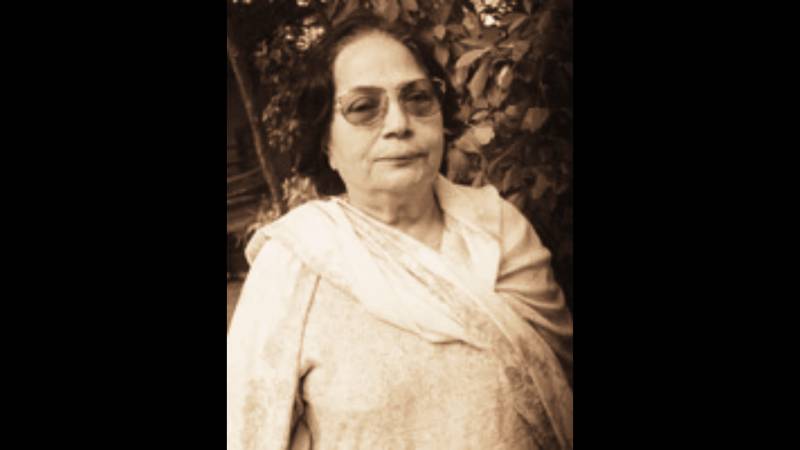
In the annals of Pakistan’s labour history, few names carry the weight of both steel and solace like that of Kaneez Fatima, who passed away in May 2025 and was universally known as "Baji." To understand Baji is to understand the physical pulse of a nation—the dockworkers of Karachi, the factory hands of the industrial estates, and the women whose labour often goes uncounted.
Her life was not merely a series of protests; it was a masterclass in the transition from grassroots activism to the institutionalisation of workers' rights. In a society where the elite often overlook manual labourers, Baji’s four-decade struggle serves as a stark reminder that recognising the dignity of the poor is reflected in a nation’s character.
Baji’s journey began in 1963, a time when the labour movement in Pakistan was almost exclusively male-dominated. Entering this fray as a woman was not an act of mere participation; it was an act of defiance. She broke gender barriers not by asking for permission, but by proving that the struggle for bread and dignity transcends gender.
As the long-serving president of the Pakistan Trade Union Federation (PTUF), she did not just lead; she transformed the nature of leadership. Her presence at Karachi’s ports—a gritty, predominantly male landscape of stevedores and dockers—became legendary. In an industry defined by physical brawn and harsh conditions, Baji commanded respect through her unwavering commitment to fair treatment and better remuneration.
She understood that the port worker was the silent engine of Pakistan’s economy, yet they were treated as disposable cogs. Her advocacy ensured that these workers received recognition not just as labourers, but as human beings with a right to a future.
Baji’s brilliance lay in her ability to move from the “rhetoric of the street” to the “reality of the boardroom.” She was a founding figure and the unanimously appointed Vice Chairperson of the Workers Employers Bilateral Council of Pakistan (WEBCOP). This was perhaps her most significant policy contribution.
In a modern Pakistan grappling with economic crises, inflation, and a growing divide between the elite and the physical labourer, Baji’s life offers a character test for the nation
WEBCOP represented a shift from confrontational unionism to bilateralism. Baji realised that for labour rights to be sustainable, they had to be institutionalised through dialogue between workers and employers. Her policy approach was built on several key pillars. These included:
Abolition of the Contract System: She was a fierce critic of the “thekedari” (contract) system, which allowed employers to sidestep social security and pension obligations. She pushed for the regularisation of services, arguing that a worker without a permanent contract is a worker without a stake in the nation’s future.
Institutional Safety Nets: She was a vocal advocate for the Employees' Old-Age Benefits Institution (EOBI) and SESSI. For Baji, these were not just government departments; they were the “moral fibre” of the state. She fought to ensure that every port worker and labourer was registered so that when their physical strength faded, their dignity did not.
Gendered Workplace Equity: Long before “workplace harassment” became a standard corporate term, Baji was campaigning against it. She advocated for policies that protected women from sexual harassment and violence in factories and fields. Her mentorship empowered a generation of women to see labour leadership as a viable path to justice.
Baji’s activism was rooted in the “quiet persistence” of the poor. She saw the “quiet contradictions” of a society that relies on the labour of the impoverished but treats their survival as ignorable. Whether it was fighting for the “Son Quota”—ensuring children of deceased workers had a path to employment—or demanding timely salary disbursements, her focus was always on the continuity of livelihood.
In times of national crisis, Baji’s voice was the one that demanded a “safety net for those who trade in movement”. She understood that when the economy halts, it is not just a logistical pause; it is a “paralysis of dignity”. She resisted the “digital insulation” of elites long before the digital age, always reminding the powerful that their stability was built upon the very labour they often sought to marginalise.
Baji was not a solitary figure; she was a mentor. Her legacy lives on in the thousands of individuals she empowered across sectors. She taught that “sacrifice” is only noble when it is voluntary, and that any "national austerity" measure that disproportionately burdens the poor is not a sacrifice, but an injustice.
She remained active until her health declined, serving as a bridge between the old guard of the labour movement and the new challenges of a globalised economy. Her life documented a unique position: a leading woman in a sector that often tried to keep women in the background. She proved that humanity remains unfinished as long as the struggle for fair wages and safe conditions is treated as a secondary concern.
Kaneez Fatima (Baji) passed away, but her policy blueprints remain more relevant than ever. In a modern Pakistan grappling with economic crises, inflation, and a growing divide between the elite and the physical labourer, Baji’s life offers a character test for the nation. She taught that “progress” is exclusionary if it protects the future of one class while dismantling another. Her struggle was a demand for a society that does not treat the impoverished as an afterthought.
Baji’s legacy is a call to stay alert—to recognise that the story of our nation is incomplete, and indeed fractured, if we allow our most vulnerable members to slip into a state of “predictable pathos”. She was the architect of a more inclusive Pakistan, one where the dignity of the labourer is the very foundation of the state.