

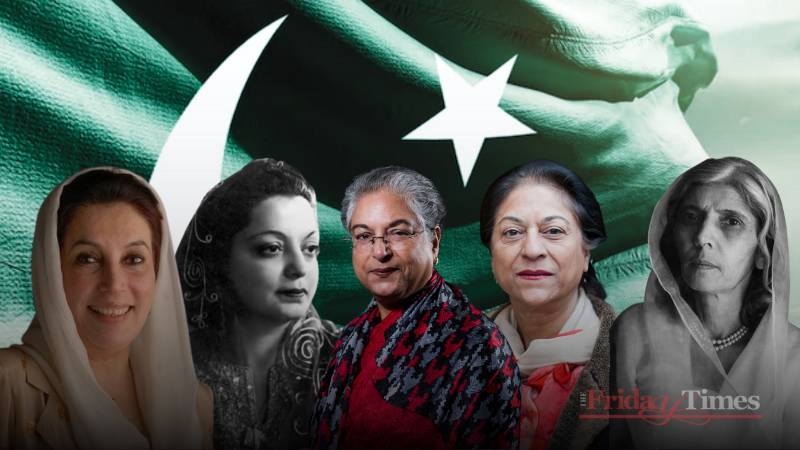
The 8th of March is globally celebrated as International Women's Day, and Pakistan observes this day in tribute to the remarkable contributions of women. This occasion honors their unwavering dedication and struggle to secure their rightful place in every facet of life. Throughout Pakistan's history, there have been numerous luminaries who have played pivotal roles, from Fatima Jinnah to Asma Jahangir, from Benazir Bhutto to Raana Liaquat Ali Khan, et al., and countless others. Today, I dedicate this column to all the women who have fought relentlessly for women’s rights and devoted their lives to this noble cause – to elevate the status of women. Their journey has never been easy, but these courageous women have proven that the voice for women's rights cannot be silenced or suppressed. Women in Pakistan make up over 50% of the population, and the nation's progress is impossible without their active participation – inclusion in every sphere of life. Following are the brief accounts of these women:
Fatima Jinnah (1893-1967): Often referred to as the "Mother of the Nation," Fatima Jinnah, the sister of Muhammad Ali Jinnah, the founding father of Pakistan, stood beside him in the creation of the country. A trained dentist turned political activist, Fatima Jinnah inspired countless women to engage in public life and contribute to Pakistan’s progress. She challenged General Ayub Khan's authoritarian rule, courageously running for president against him when he consolidated his military regime. Her popularity among the masses led to widespread allegations of electoral rigging and suspicions surrounding her unnatural death. Fatima Jinnah opened the doors for women to stand against tyranny and oppression.
Asma Jahangir (1952-2018): A prominent lawyer and fearless human rights activist, Asma Jahangir dedicated her life to fighting for the rights of women, minorities, and marginalised communities. She boldly challenged every dictator, from General Ayub Khan to Zia-ul-Haq and, later, General Musharraf. Notably, she was one of the few who supported Fatima Jinnah's presidential candidacy, alongside the influential religious leader Maudoodi. Asma’s landmark legal case, Asma Jilani v. Govt of Punjab & Others, played a key role in shaping Pakistan’s constitutional law. She became the first female president of the Supreme Court Bar Association and founded the Human Rights Commission of Pakistan. For her tireless work, Asma received numerous awards, including the Sitara-e-Imtiaz (the highest Pakistani Civil Award), the UN Prize in Human Rights, the Right Livelihood Award (often dubbed the "Alternative Nobel Prize"), and the Asia Society’s Game Changer Award. Asma Jahangir's legacy as a fearless and tireless advocate for justice and equality continues to inspire generations. There has been no replacement for her in the fight for human rights – neither among women nor men.
Their unwavering dedication has paved the way for the enactment of women-centric legislation by both the federal and provincial governments in Pakistan
Benazir Bhutto (1953-2007): The Charismatic Leader Benazir Bhutto was the daughter of the legendary Zulfikar Ali Bhutto, the architect of Pakistan’s 1973 Constitution. She was educated at Harvard and Oxford. Benazir became the first female Prime Minister of Pakistan and the first woman to lead a Muslim-majority nation. Despite enduring personal tragedy and political adversity, including the judicial murder of her father, Benazir remained steadfast in her commitment to democracy. During her tenure, she played a critical role in empowering women, notably establishing Pakistan’s First Women’s Bank in 1989, designed to offer financial services and promote economic inclusion for women. Her contributions to the enhancement of women's rights in Pakistan remain significant, and her untimely assassination in 2007 left a void in the political and social landscape of the country.
Raana Liaquat Ali Khan (1905-1990): Educated at Aligarh University and the London School of Economics, Raana Liaquat Ali Khan, the first First Lady of Pakistan, was a visionary in social work and diplomacy. A strong advocate for women’s rights, she co-founded the All-Pakistan Women’s Association (APWA) and worked tirelessly with the Red Crescent Society. As Pakistan’s representative on the global stage, she played a pivotal role in fostering international relations and advocating for women's welfare in international forums. As the wife of Pakistan’s first Prime Minister, Liaquat Ali Khan, Raana's contributions to the socio-political fabric of the nation were instrumental. Her legacy as a champion of women's rights and social justice continues to resonate today.
Hina Jilani: The younger sister of Asma Jahangir, Hina Jilani is another indomitable force in the realm of human rights and women's advocacy. A lawyer and social activist, she has fought persistently against the oppressive laws of Pakistan's dictatorial regimes. As the founder of the AGHS Legal Aid Cell, Hina has become a symbol of courage and determination. Her tireless advocacy for human rights, particularly the rights of women and minorities, has earned her numerous prestigious awards, including the International Women of Courage Award, the Right Livelihood Award, and the World Economic Forum’s Human Rights Award. Her contributions have not only shaped Pakistan’s legal framework but have also made a significant impact on global human rights.
In summary, the contributions of these remarkable women have been invaluable to the advancement of human rights, gender equality, and social justice in Pakistan. Their courage, resilience, and tireless dedication continue to inspire countless individuals in Pakistan to stand up for justice, equality, and human dignity. They are the true architects of change, and their legacies will live on for generations to come. It is through their relentless efforts that today's women have access to greater opportunities across every sphere of life. Their unwavering dedication has paved the way for the enactment of women-centric legislation by both the federal and provincial governments in Pakistan. As a result, women now benefit from a protective environment in the workplace, ensuring their rights and well-being are safeguarded.
However, despite the progress made, there remains much to be done for the women of Pakistan. While strides have been taken, the journey towards full equality and empowerment is far from complete. Continued efforts are needed to address the deep-rooted challenges and ensure that every woman, regardless of her background, has the opportunity to thrive in all aspects of life.