

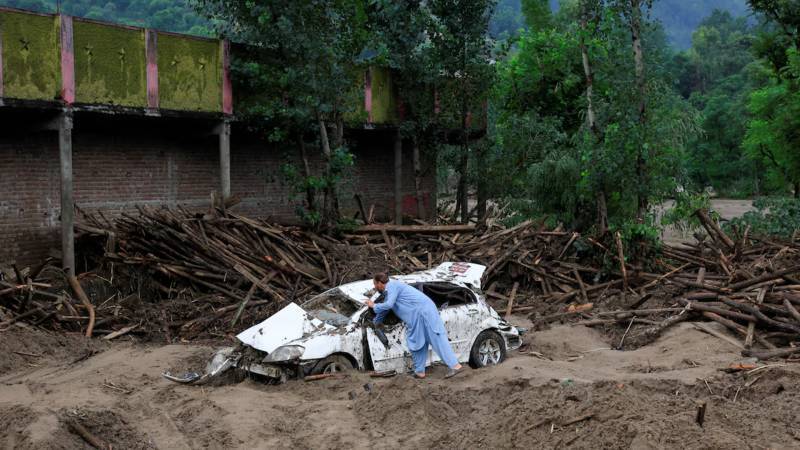
Between late June and late July, Pakistan received 10–15% more rainfall than normal, according to the Pakistan Meteorological Department. This caused floods that claimed hundreds of lives and destroyed thousands of houses, showing how severe this year’s monsoon has become.
In mid-August, a cloudburst in Buner, Khyber Pakhtunkhwa, triggered sudden flash floods that wiped out entire villages within minutes. More than 300 people have been killed, and many are still missing. Districts like Buner, Swat, Shangla, and Mansehra were among the worst hit, with roads and bridges washed away, making rescue work very difficult. Authorities have declared an emergency in these areas until the end of August, as more heavy rain is expected.
These back-to-back disasters make it clear that Pakistan cannot afford to stay unprepared. Climate activism is now more important than ever—it means bringing people together, demanding stronger early warning systems, building safer infrastructure, and promoting sustainable practices. Only through such action can the country hope to reduce the risks and damage from extreme weather in the years ahead.
What is Climate Activism?
Climate activism means taking action to fight climate change and reduce its damage. It includes spreading awareness, asking governments to make better rules, supporting clean energy, and helping people prepare for disasters. It can be done by individuals, youth groups, or whole communities. Climate activism started when scientists and environmentalists first warned about rising greenhouse gases and global warming in the late 1900s. Over time, these efforts grew into larger movements like Fridays for Future and many local campaigns around the world.
For Pakistan, where floods, droughts, and heatwaves threaten millions, climate activism is not just important—it is essential for survival
Why is it crucial?
Climate activism matters because it turns awareness into real action. It pushes for stronger disaster planning, protects natural resources, and promotes renewable energy. Without it, progress is often too slow. Across the world, activism has brought real change—from better flood defences in Bangladesh, to massive tree planting in Kenya, to quicker adoption of clean energy in Europe. For Pakistan, where floods, droughts, and heatwaves threaten millions, climate activism is not just important—it is essential for survival.
In many developing countries, climate activism has become a lifeline of survival and hope. In Bangladesh, it helped create stronger flood warning systems and cyclone shelters that save thousands of lives each year. In Kenya, large-scale tree-planting drives have helped fight drought and restore degraded land. These examples prove that care for people and nature can be transformed into real action for a safer and more sustainable future.
Pakistan can also take similar steps to build stronger and more resilient communities. Key measures include creating local flood warning systems, constructing rainwater storage tanks, planting trees in both flood-prone and dry areas, and encouraging climate-smart farming. As a developing country, Pakistan can focus on affordable yet effective actions such as community emergency drills, low-cost flood-resistant housing, using solar energy in rural regions, and improving urban drainage to prevent city floods. Schools and community groups can raise awareness, while universities and young activists can lead projects that train people in disaster response. When combined with strong government backing, these small but steady efforts can bring meaningful change.
The government’s role is crucial in tackling these challenges. It must invest in early warning systems, stronger infrastructure, and emergency shelters in high-risk areas, while also promoting renewable energy, better waste management, and water conservation. Sadly, such steps are often missing, as short-term politics takes priority over long-term planning.
Disasters like the recent cloudburst in Buner—caused by sudden heavy rain, with its impact worsened by deforestation, poor land use and weak infrastructure—show how urgent action is. These tragedies can be reduced if the government and society work together on early warnings, safer housing, and tree planting. Other countries prove this is possible; Bangladesh, for example, has sharply reduced cyclone deaths through shelters and community alerts. Pakistan, too, can avoid future losses if leaders and citizens act together now, instead of waiting for the next disaster.