

April is the month the world remembers genocide — selectively.
It mourns Rwanda on 7 April, honouring those lost in 1994. It recalls the Cambodian genocide on 17 April. 19 April marks the 1943 Warsaw Ghetto Uprising, a powerful act of Jewish resistance against Nazi Germany. Holocaust Remembrance Day (Yom HaShoah) also falls in April, though the date changes each year. It commemorates Armenia on 24 April, marking the victims of the Armenian Genocide.
In Bangladesh, 25 March is Genocide Day, consecrated for fifty-four years to a death toll and a narrative marketed with the precision of a state religion and defended with the ferocity of national identity. I have written about this machinery of selective memory before, including in these pages most recently in The Friday Times (July 2025), arguing that the Bihari genocide is the one nobody talks about. It was published, read, and then dissolved into the same silence it was trying to break.
This April, I wrote what I framed as my last piece on this matter, published in The Express Tribune on 22 April 2026. Several readers took it as a farewell. It was not. It was exhaustion speaking, and exhaustion can sound like finality. I want to clarify that here, in The Friday Times, which, alongside The Express Tribune, has given my writing on the Pakistani Bihari genocide more consistent space than almost any other English-language platform in Pakistan.
A few readers responded. Sajjad Bashir, whose family suffered in 1971, called the Bihari genocide an open secret and prayed someone would listen. Hassan wrote that Pakistan’s academia suppresses the issue, publishing only externally approved narratives. Ayesha wrote simply that Biharis sacrificed for Pakistan and received nothing in return. Raj, writing from the United States, asked whether there is any willingness to establish a Truth and Reconciliation Commission for 1971. Some readers wrote privately that my piece made them uncomfortable in the right way, particularly in linking the Bihari genocide to what the world is watching in Gaza and still doing nothing.
These responses matter and also expose the problem. Thoughtful, morally serious people encountered this issue by chance, through a newspaper. The spaces that shape public memory — universities, television, policy forums, literary and peace festivals — remain closed. For me, that audience has remained hypothetical for years.
I am not quitting. I am pausing. There is a difference.
I have made this appeal before to former Army Chiefs and former Prime Ministers, through op-eds in Urdu and English while they were in office. I have made the same appeal to those currently in power. None of them produced a response. I state this not in bitterness, but as a matter of record.
Pakistan is at a significant moment. Peace talks are underway. Diplomatic attention is concentrated. It is precisely at such moments, when narratives are being renegotiated and histories revisited, that the correction of a long-buried truth becomes not just possible but strategically necessary.
The dominant 1971 narrative, produced by Bangladesh and amplified internationally, has gone unanswered for too long. It damages Pakistan. It buries the Pakistani Bihari community, and it does both through lies masked as history.
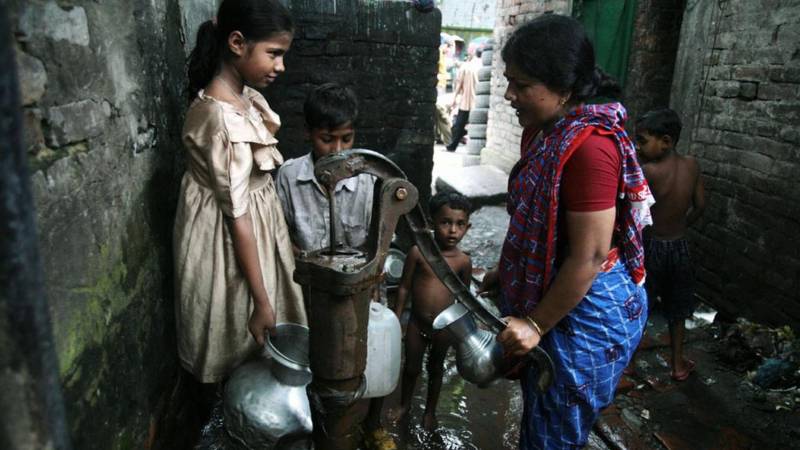
Field Marshal Syed Asim Munir’s stature in Pakistan’s current landscape is visible to anyone watching honestly. He has the institutional weight this moment requires. I do not ask for a press conference or a diplomatic incident. I ask only that the question of 324,000 stateless Pakistanis, abandoned in nearly sixty-six so-called camps, many no larger than four-by-four to seven-by-seven feet per family, for over half a century, finds its way onto the agenda of those with the power to act.
It is difficult to watch sections of Pakistan’s own liberal and feminist circles, some far older than me, casually invoke the phrase “Bangladesh’s independence war” and then, with a sardonic certainty, suggest that people like me “were on the wrong side”
The Army defended Pakistan’s integrity. It did not commit atrocities against patriotic Pakistanis. The Pakistani Bihari (non-Bengali Urdu-speaking) community stood with Pakistan when it cost them everything. Their story is Pakistan’s story too, and it deserves to be told by Pakistan, not buried by its silence.
The 324,000 still in those ghettos need closure that no newspaper, no NGO, and no individual writer can deliver. Only the state can.
Now, let me document what passes for engagement.
Between July 2025 and March 2026, I spoke at the Pakistan Academy of Letters, the Progressive Writers’ Association in Islamabad, the Army Institute of Military History, the Pakistan Thinkers Forum, and two YouTube channels (Naya Daur and Imtiaz Gul Official). I am grateful to each of these forums. But I must also be honest about what they produced: sympathy (not empathy), polite, genuine, and well-intentioned. While concern and awareness are present, the urgency of this community’s plight — rooted in betrayal, marginalisation, silence, and stigma — has yet to be converted into tangible policy action and lasting advocacy.
Several well-educated, self-described “enlightened” participants, including some outside these forums, confused Biharis with Bengalis and apologised, assuming I was speaking about Bangladeshis. Others, including human rights advocates, maintained a careful silence or declined to engage with the idea of repatriation.
Then there is the propaganda, more insidious than a state narrative alone. Some within the community, deeply embedded in the political ecosystem of the Awami League, actively resist repatriation. They insist conditions are manageable, that incremental progress is enough. They are the ones insisting that everything is fine, that the “camps” are manageable, that people have jobs, that someone passed the CSS, that NGOs are helping.
In parallel, Pakistani nationalists treat the issue as inconvenient and best left buried. The result is a pincer: pressure from outside to keep the narrative hostile, pressure from inside to keep the community quiet.
I have written about this architecture of forgetfulness before. It has made no measurable difference.
How does independent, self-financed work compete with globally networked academics, luminaries, and social media figures producing well-funded, widely cited accounts that promote one side of this history? It does not. That imbalance is structural, and it is sustained.
If there is to be any serious engagement, it must begin with four non-negotiable principles: repatriation for those who wish to return to Pakistan; restorative justice for those who remain in Bangladesh; recognition of the community’s sacrifices across five decades; and restoration of dignity and honour for the 324,000 still surviving.
My unfunded advocacy continues. My training work continues. My humble support for students researching statelessness continues. My documentation remains publicly accessible.
Political parties have abandoned this cause when it became inconvenient. Governments have treated it as someone else’s problem. No party has made Pakistani Bihari statelessness a matter of Pakistani policy, principle, or even rhetoric. Meanwhile, a sentimental diplomacy reduces decades of unresolved injustice to a moment of bilateral warmth.
Some simply do not know. Generations of students, journalists, civil and military officers, and professionals across sectors have never been exposed to the full history of 1971. They have not been taught to distinguish between the struggle for democratic rights and the breaking apart of a state — that red line remains blurred in public understanding.
It is difficult to watch sections of Pakistan’s own liberal and feminist circles, some far older than me, casually invoke the phrase “Bangladesh’s independence war” and then, with a sardonic certainty, suggest that people like me “were on the wrong side”. That framing reflects not just disagreement, but a deeper absence of historical complexity.
They have also not been told that Zia ur Rahman was a major in the Pakistan Army who turned against it (a traitor), killed his own senior officer, Col. Janjua, and went on to lead targeted violence against patriotic Bihari Pakistanis in East Pakistan, while Mujibur Rahman remained in West Pakistani custody.
That absence is not accidental. It is maintained on both sides because it is useful.
Some readers have listened. Some have spoken. Some continue to ask for truth and accountability. These are not trivial acts. But they are not enough — not for 324,000 people still in the ghettos, and not for a history that remains unresolved.
In this environment, I work. I struggle. I breathe.
I am still here. The 324,000 in those so-called camps have no choice but to still be there. That asymmetry between my ability to pause and their inability to leave is the only reason I need to eventually return.
Pakistan Hamesha Zindabaad.