


On the morning of 10 January in Prague, rain and snow shared the same sky, falling without urgency, turning the pavement into a silver mirror. Outside an apartment building, a little girl stood beside her father, absorbed in a task that belonged entirely to childhood. In her hands were toy tools, tiny replicas of farming instruments, with which she shaped the wet snow into fragile forms that lasted only a moment and yet meant everything to her. She pressed, lifted, rebuilt. Winter, for her, was not a season to endure. It was a space to explore.
There was no fear in her posture. No listening for danger. No calculation. Snow was not weather. Snow was permission. Permission to imagine, to play, to fail and try again. The world around her behaved gently, predictably, as if it had made an agreement with childhood.
At the same hour, thousands of kilometres away, snow was falling in Tirah too. But there, winter has learned a different language.
The image of Tirah's snow no longer comes only from memory. It arrives through mobile screens, through short videos sent by friends, through shaky clips forwarded on messaging apps: narrow roads disappearing under white, children standing silently in doorways, hills that look peaceful and yet carry tension. It also arrives through Radio Mashaal, where Tirah enters daily conversation through analysis, debate, and culture. Five days a week, professional life is shaped by those voices: as a newscaster, live-show anchor, and music jockey, the valley travels through microphones and studio walls. And when the broadcast ends, Prague returns with its calm streets, its cleared pavements, and children whose winters are protected. Two worlds pass through the same day; one through responsibility, the other through safety.
Snow has two meanings. In one place, it is play. In another, it is preparation. In Prague, a father watches his daughter discover the world. In Tirah, fathers often watch their children learn how to leave it. This difference is not cultural. It is structural; shaped by how power distributes safety.
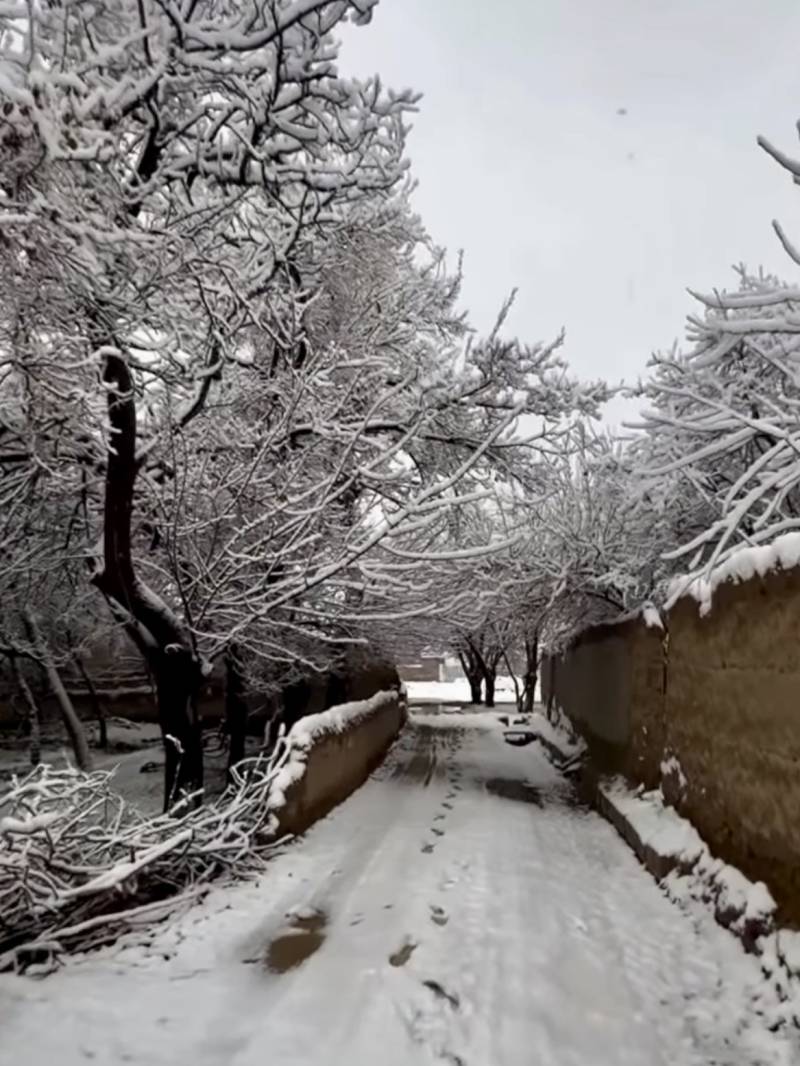
Tirah lies high in the mountains of Khyber Pakhtunkhwa, close to the Afghan border, folded into a network of valleys that include Maidan, Mastura, Waran, Rajgul, and the passes that connect them to Dwa Toi, Toor Toot, and Haider Kandaw. It is not a single valley but a layered geography, where winter settles heavily and spring arrives through meltwater that feeds narrow streams and small fields. Snow there has always been familiar, even loved.
The people of Tirah are Pashtuns, largely from the Afridi tribes whose history is marked by resistance and autonomy. These are the same Afridis who fought the British during the colonial era, guarding their land not as territory but as honour. Tirah was never a submissive terrain. It was a proud homeland.
In peaceful years, winter in Tirah meant school holidays, smoke rising from kitchens, firewood stacked against stone walls, children sliding down slopes on plastic sheets, and mothers calling them back before dusk. Cold mixed with warmth. Hardship mixed with belonging. Tirah was designed for endurance, not conflict. For patience, not evacuation. For continuity, not interruption.
Pashtun life in Tirah grew around modest means and deep bonds. Livestock, small farming, and seasonal trade sustained households. Hospitality was not an ethic; it was law. Leaving one's land was not a choice; it was a wound. Displacement did not exist in imagination because home was assumed to be permanent.
Even colonial records described Tirah as difficult to control but self-sustaining. Its isolation protected autonomy. Its mountains guarded a rhythm of life that needed no empire. But geography becomes a burden when it becomes strategy.
After 9/11, Tirah was no longer spoken of only as homeland. It was discussed as a corridor. In intelligence and journalistic circles, it was described as a pathway from Al-Qaeda's headquarters in Tora Bora toward Pakistan. Names such as Osama bin Laden, Khalid Sheikh Mohammed, Ramzi bin al-Shibh, and Abu Ubaidah were associated with routes believed to pass through these mountains.
For decades, residents have heard promises of decisive victories, yet the cycle of militancy and displacement renews itself, leaving history declared complete while reality remains unfinished
And yet, at the same time, the Pakistani army was visibly present. Patrols moved on horseback. Checkposts existed. Uniforms were not absent. Authority was not invisible. The contradiction was already written into the land. If the army was present, how did Tirah remain a safe passage for militants? If the valley was monitored, how did it remain porous? If the area was under control, how did it continue to function as a corridor?
For years, ISPR statements followed a familiar pattern: areas were "cleared," then "held," and finally "handed over to civil administration." Dozens of such declarations are on record. Each one promised closure. Each one announced finality. And yet Tirah kept returning to uncertainty. Was it a lie? Or was it an overestimation of control in a geography that does not obey paperwork? Perhaps it was neither deception nor failure alone, but a misunderstanding of how power works in mountains where survival moves faster than policy.
Hillary Clinton once warned that when one "keeps snakes in the backyard," one should not expect them to bite only the neighbours. Militancy cannot be managed selectively. It grows wherever ambiguity is allowed to survive. Tirah seems to have lived inside that ambiguity for decades. Military presence existed. Militant movement continued. Declarations of control were made. Displacement followed. History does not respond to press releases.
Friends who have watched Tirah over decades describe this transformation with grief rather than anger. Ibrahim Shinwari, writing in Dawn, records jirgas, compensation frameworks, registration processes, and return schedules. Beneath the bureaucracy lies a simpler truth: families are being asked, repeatedly, to step away from their roofs and fields. Ikramullah Jan Kokikhel speaks of Tirah as a place that taught dignity before fear. Reza Shinwari remembers a valley where winter meant resilience, not relocation. Their language is not political. It is ancestral.
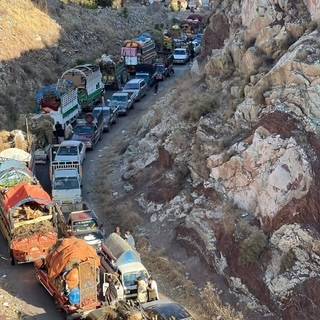
According to the Provincial Disaster Management Authority (PDMA) and the 24-member elders' committee, displacement in Tirah is no longer memory; it is present reality. Malik Kamal Uddin, head of the committee, has said that around 12,000 families have already left, and another 25,000 families have been directed to leave before 25 January.
The evacuation zone stretches from Maidan in the Tirah Valley to Dwa Toi, Toor Toot, and Haider Kandaw. This is not the emptying of isolated villages. It is the emptying of a living corridor of Pashtun history. It cuts across six Afridi sub-tribes: Qamar Khel, Malik Din Khel, Adam Khel, Qambar Khel, Zakha Khel, and Shalobar. Each name carries generations of settlement—graves, mosques, hujras, orchards, and memories. When these names move, it is not relocation. It is cultural rupture. This is not the movement of individuals. It is the movement of tribes.
At several exit points, especially around Dwa Toi, families gather without a fully organised registration and processing system. Administration moves slower than fear. People wait with bags packed, unsure how their movement will be recorded or when their names will be called.
There is also another anxiety. Without proper mechanisms, militants—fragmented and disorganised themselves—may attempt to blend in by altering their appearance, shaving beards or trimming hair. This fear is not born of cruelty. It is born of chaos. Civilians are asked not only to flee, but to carry suspicion along with their belongings. This is the injustice of displacement: to leave, to register, to wait, to trust, and to hope that trust will not be turned against you.
In Prague, snow is cleared so life can continue. In Tirah, snow falls on roads crowded with families leaving. In Prague, winter interrupts traffic. In Tirah, winter interrupts belonging.
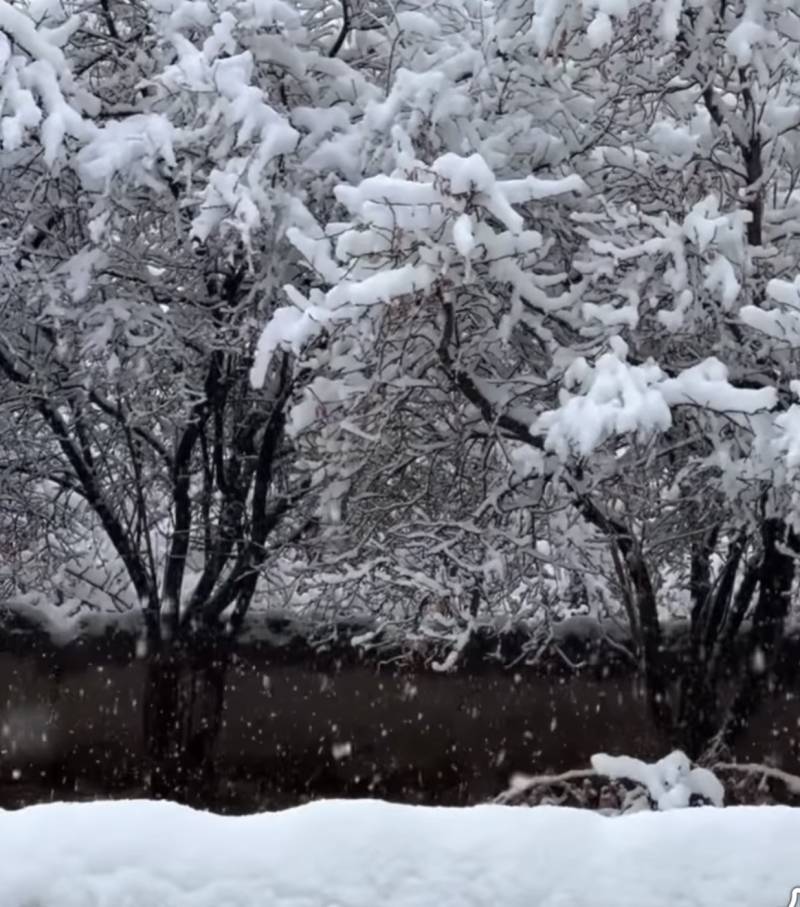
The little girl shaping snow outside her apartment will remember that morning as something light and ordinary. A child in Tirah may remember winter as urgency, as unfinished things: books left behind, snowmen abandoned, questions unanswered. Snow should never teach survival. Snow should teach wonder. Yet in Tirah, snow has been forced to teach readiness.
This is where numbers end. This is where voices begin. Tirah does not speak only through movement and silence. It speaks through voice. And in a land where internet is weak or absent, where roads close and signals fail, Radio Mashaal is not merely a broadcaster. It is a bridge. Often, it is the only open window to the outside world.
On Mashaal, Tirah speaks in two languages. Da Karkhy Pa Ghara carries the fire of accountability. It is not a calling show. It is a space of debate and confrontation, where elders, journalists, political figures and representatives are invited to answer what is happening to the land. It is where questions are placed before power. Da Yarano Mashaal carries the warmth of memory. It is largely a topic-based programme about culture and tradition: village names, forgotten characters, old stories, customs, weddings, poetry, migrations, and the geography of belonging. In a region where displacement threatens identity, Da Yarano Mashaal becomes an archive. People do not only listen to it; they preserve themselves through it. If Da Karkhy Pa Ghara is the fire, Da Yarano Mashaal is the hearth. One questions power. The other protects continuity.
In recent weeks, as Tirah emptied again, Da Karkhy Pa Ghara – On the Edge of Borderland placed Tirah at the centre of its discussions. Invitations were sent. Calls were made. Messages were forwarded. And yet, those who hold office chose silence.
Abdul Ghani, the PTI MPA. Shahid Iqbal Rao, the Deputy Commissioner of Khyber. Irshad Mohmand, the Relief Assistant Commissioner. The Frontier Corps spokesperson. And the ISPR. None appeared. None responded. None explained. In a moment when families were leaving their homes and valleys were being emptied, silence itself became a statement.
Instead, the voices that filled the programme came from those willing to speak publicly. The chief of the 24-member elders' committee appeared, not to accuse, but to describe the scale of loss and the burden of displacement. During the live debate, PTI MNA Iqbal Afridi accused him of being a "stooge" of the Army's 27th Brigade. The charge was political, not judicial. It revealed how Tirah's suffering had now entered a space where pain was being measured through suspicion.
Alongside him were: Hashim Afridi, chief of the Bara Siyasi Ittehad. Abdul Raziq Khan, ANP's chief in Khyber. Different politics. One geography. All three denounced the military operation in Tirah. Their unity was not ideological. It was territorial. They were speaking as people whose land was being emptied.
Then came the moment when speech turned into danger. After the broadcast, the ANP Khyber chief's hujra in Maidan was bombed and burned to ashes. No claim was established on air. No accusation was declared as fact. But the message travelled faster than confirmation: even dialogue now carried risk. This is how Tirah listens to politics today: not as debate, but as danger.
And yet, culture refuses to surrender.
On Da Yarano Mashaal, the language softens. It remembers. It gathers. It names villages so they are not erased. It recalls elders so they are not forgotten. It speaks of weddings, migrations, love, and loss so identity remains alive. When music is played, it is not escape. It is preservation. When poetry is spoken, it is not entertainment. It is record.
Listeners do not ask for songs of war. They ask for songs of patience, reunion, love, and dignity. They ask for melodies that make anger feel out of place, that allow war to feel ashamed of itself. If debate is the flame, music is the light. And today, that light rests in the hands of friends, callers, listeners, and ordinary people who refuse to let Tirah be remembered only through evacuation orders and explosions. The torch is in the hands of friends.
There is also politics, standing uneasily between protest and responsibility. The Chief Minister of Khyber Pakhtunkhwa, Suhail Afridi, belongs to the same Afridi tribal belt from which many of Tirah's displaced families come. His roots lie in the same soil that is now being emptied. Today, he is often seen in Sindh, leading street protests for his party chief, Imran Khan, who remains behind bars. His speeches are fiery. He speaks against military operations in Tirah. He condemns displacement as injustice.
Yet in Peshawar, his cabinet approves funds for the displaced. He chairs the meeting. He becomes part of the administrative machinery that manages the evacuation he publicly opposes. Opposition in the streets. Responsibility in office. Both claim loyalty to Tirah. Both remain distant from its snow.
On the other side stands the institutional voice of the military, represented by the ISPR's Director General, Lt Gen Ahmad Sharif Chaudhry. His briefings speak of security, necessity, decisive action. They speak of final phases and closure. For more than twenty-two years, journalists have sat in those rooms hearing the same language. Every generation has been told that this is the last operation. That militant networks have been dismantled. That their backbone, their "spinal cord," has been shattered.
And yet: The operations return. The militants survive. The displacement repeats. No one is ever allowed to ask the question history keeps asking: What happened to the previous "final" operations? Why did those victories not hold? Why does every ending need another beginning? Not because journalists do not think of these questions, but because the moment never allows them. The narrative moves forward without examining its past. History is declared complete while reality remains unfinished.
Between Suhail Afridi and Lt Gen Ahmad Sharif Chaudhry lies a strange symmetry: two men of authority, two forms of stubborn certainty. One speaks in protest. The other speaks in command. Neither stands in the snow at Pindy Cheena Temporary Registration Centre. Neither waits in registration lines. Neither watches a child abandon a snowman. Power speaks loudly. Displacement speaks quietly.
And so the essay returns to its first image. A little girl in Prague shaping wet snow with toy tools, unaware that snow can ever be political. And children in Tirah, learning that snow is instruction, that winter carries deadlines, that beauty can be temporary.
But Prague, too, was once a frontline city. During the Cold War, it lived under the shadow of tanks, ideological battles, and occupation. Its streets knew fear. Its history carries suppression and silence. Yet time, accountability, and political courage allowed it to heal. Today, Prague can give its children a firm decree: Play as long as you want. The State will protect you.
That is the real definition of peace. Not the language of security briefings, not the vocabulary of operations, but the certainty given to a child that nothing will interrupt her innocence. Prague can promise this to a little girl playing in the snow. No evacuation. No orders. No fear. Tirah cannot.
Not because its people deserve less. Not because its children are different. But because war there has been allowed to renew itself without closure, generation after generation. Prague was once a frontline. Tirah remains one. One city crossed from fear into freedom. The other remains trapped between promise and repetition.
Until Tirah can give its children the same permission Prague gives its own—to play without counting time, without listening for announcements, without preparing to leave—no declaration of victory will be complete. Because the final victory of any nation is not measured in territory cleared, but in childhood protected.
Snow has two meanings. One teaches play. The other teaches readiness. The tragedy is not that these meanings exist. The tragedy is that they have become normal.
And yet, the torch has not gone out. It rests in the hands of friends, in voices that refuse silence, in songs that refuse war, in memories that refuse erasure. As long as that torch remains lit, Tirah remains alive.