

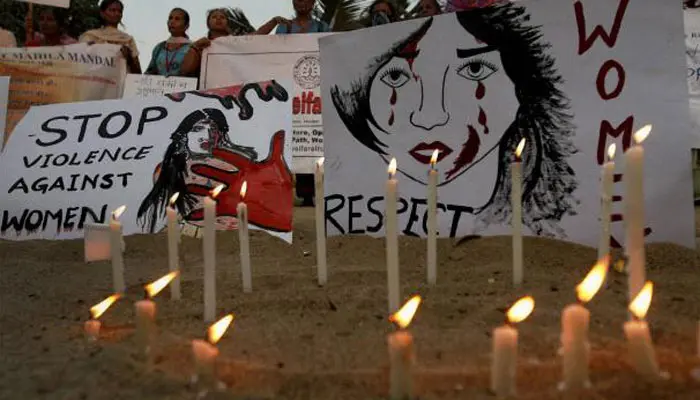
The idea of media advocacy using mass communication as a vehicle for social and legal reform has stood at the heart of Pakistan’s gender discourse for more than two decades. In a society where cultural taboos often suppress the voices of victims, the media has emerged as an alternative court of moral appeal. From talk shows to documentaries, investigative reports to primetime dramas, advocacy-driven communication has persistently challenged entrenched norms, exposed the contradictions of power, and made the invisible visible.
At its core, this approach is guided by the belief that journalism must do more than inform; it must transform. When institutions fail to deliver justice, storytelling becomes the bridge between private suffering and public awareness. Pakistan’s experience demonstrates that persistent coverage, empathetic framing, and collaborative activism can yield tangible results: laws reformed, cases reopened, and survivors empowered.
Few names embody this transformation more profoundly than Mukhtaran Mai. In 2002, after surviving a brutal gang rape ordered by a village council, she could easily have disappeared into silence. Instead, she became a global symbol of resistance because journalists refused to let her story fade. Reporters documented her courage, and civil society organisations amplified her voice. The ensuing national and international outcry compelled authorities to act, while her own resolve led to the establishment of schools for girls in her village—turning personal pain into collective empowerment. Her story remains a defining example of media advocacy’s power to transform outrage into reform.
The killing of Samia Sarwar Mohmand three years earlier was another watershed moment. Murdered in the office of the Human Rights Commission of Pakistan while seeking protection from an abusive marriage, Samia’s death was one of the first honour killings to receive sustained media attention. The coverage dissected the culture of impunity surrounding such crimes and prompted legislators to debate women’s autonomy. Though justice for Samia remained elusive, her story ignited a reckoning that reshaped the national conversation on honour-based violence.
As corporate and political pressures tighten their grip on mainstream journalism, advocacy-oriented storytelling restores the media’s conscience
Similarly, in the late 1990s, Saima Waheed’s legal battle for the right to marry of her own choice laid bare the patriarchal underpinnings of Pakistan’s legal system. Through detailed court reporting and impassioned televised debates, the media transformed a seemingly private dispute into a national dialogue on women’s consent and agency. Her case remains a touchstone in discussions of family law and women’s rights.
Media advocacy also played a decisive role in confronting one of the most brutal manifestations of gendered violence: acid attacks. Survivors such as Bushra, whose face was disfigured by her husband, gained medical, legal, and social support largely because journalists and civil society organisations turned their suffering into a public cause. Continuous coverage of such cases compelled the government to enact the Acid Control and Acid Crime Prevention Act 2011, which criminalised these attacks and imposed stricter penalties.
Documentaries and televised features further sustained the momentum. Sharmeen Obaid-Chinoy’s Oscar-winning films Saving Face and A Girl in the River took these stories to a global audience, forcing the state to confront its human rights record. These visual narratives reframed justice not as charity but as accountability, demonstrating how cinematic storytelling can serve as a powerful instrument of reform.
Beyond factual reporting, television dramas have also contributed significantly to cultivating moral awareness. Productions such as Udaari on child abuse, Baaghi based on Qandeel Baloch’s life, Rehaai on child marriage, and Shoaib Mansoor’s Bol blurred the boundaries between entertainment and activism. Their characters became cultural metaphors for resistance, while partnerships with organisations such as the Aurat Foundation, Shirkat Gah, and ASR Resource Centre underscored how collaboration between artists and advocates can move public sentiment more effectively than policy papers or political slogans.
Pakistan’s women’s movement has long recognised the media as an indispensable ally. From Aurat March campaigns to investigative series on workplace harassment, collaborations between journalists and activists have transformed isolated tragedies into national debates. Legal reforms such as the Protection against Harassment of Women at the Workplace Act 2010 did not emerge in isolation—they were propelled by consistent advocacy through editorials, press conferences, and televised discussions that refused to let injustices fade into oblivion.
This synergy between the media and civil society illustrates that advocacy is most effective when it transcends platforms, newsrooms, theatres, social feeds, and community halls alike. The language of reform has evolved with technology: today’s advocacy flows through hashtags, vlogs, and citizen-journalism clips, yet carries the same moral conviction that once animated newspaper columns and television dramas.
Pakistan’s struggle for women’s justice has never been linear, but its moral victories have often been secured through communication. Whether through Mukhtaran Mai’s interviews, Samia Sarwar’s headlines, Saima Waheed’s court reports, or Bushra’s televised recovery, each narrative affirms that visibility itself is a form of resistance.
As corporate and political pressures tighten their grip on mainstream journalism, advocacy-oriented storytelling restores the media’s conscience. It transforms information into empathy, and empathy into social motion. The real triumph of media advocacy lies not merely in ratings or awards, but in the quiet transformation of public morality—the growing awareness that injustice anywhere diminishes us all.
In that sense, Pakistan’s tradition of media advocacy continues to reaffirm the moral purpose of journalism: to bear witness, to awaken conscience, and to ensure that the telling of a story becomes, in itself, an act of justice.