

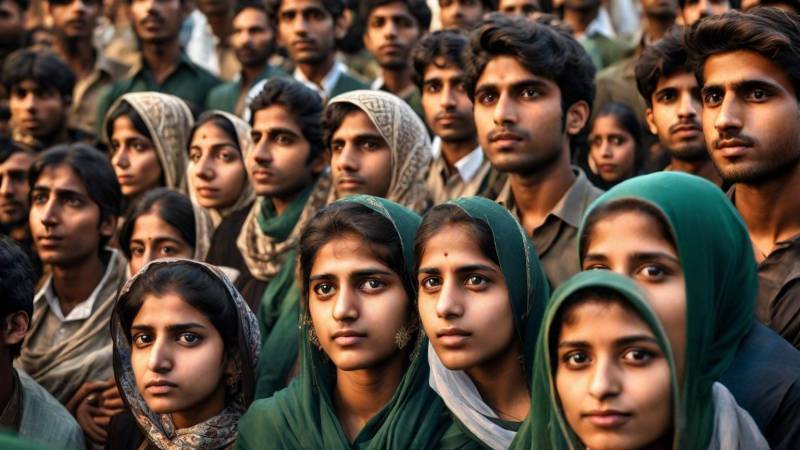
In today’s Pakistan, one of the most serious problems faced by our educated youth is the pressure to “have a job” as soon as they finish their education. The moment students graduate, people start asking: "Where are you working?", "Private or government?", "Still unemployed?"These questions may seem normal, but they carry a heavy emotional burden. For example, think about four friends who graduated together—two of them got jobs quickly, while the other two are still unemployed, even though they all had similar qualifications. This is a common situation in our country, where the number of people looking for jobs is much higher than the number of available jobs.
The problem is not just about getting a job—it’s also about the high expectations society puts on young people. Pakistan has a growing number of educated youth, but the job market cannot offer enough positions for all of them. Good jobs that match a person’s education and skills are even harder to find. Because of this, many talented people either end up doing jobs unrelated to their studies or stay unemployed for a long time. Some try to start small businesses or follow different paths, but instead of support, they are often met with doubt or criticism. Society still believes that only a “proper job” counts as success, and anything else is a failure.
This way of thinking creates an unfair and discouraging environment. It ignores creativity and effort, and pushes young people into roles that don’t suit their talents. As a result, many of them lose motivation, not because they lack skills, but because they don’t get support or understanding from the people around them. To truly help our educated youth, we must change this thinking. We need to respect all kinds of honest work, and accept that success doesn’t only mean getting a job—it also means having the courage to create one.
In Pakistan, the youth unemployment rate remains high, around 8-9%, with millions of educated young people entering the job market each year, but only a fraction can find formal employment
In many developed countries, youth are encouraged to start their businesses and follow entrepreneurial paths instead of depending only on regular jobs. For example, Germany, Canada, and Singapore have systems that support young people through startup programs, skill training, and financial help. In Germany, students get both education and practical training, which helps them start their work confidently. Canada gives government grants and guidance to young people who want to turn their ideas into real businesses. Singapore also supports innovation by teaching students from a young age and offering startup-friendly policies.
This kind of support creates a culture where starting your own business is respected and appreciated. It helps youth believe in themselves and brings new energy, ideas, and jobs to the economy. When young people are allowed to use their skills and education to build something on their own, it helps both them and the country. Pakistan also needs to adopt this mindset, so that our educated youth are not judged just for not having a “regular job,” but are supported for their efforts in creating something valuable. This way, we can protect both the minds of our youth and the strength of our economy.
To make it easier for young people to start their businesses, both the government and individuals need to take simple and helpful steps. The government can support youth by giving interest-free loans, small business grants, training programs, and easy ways to register a business. It can also create platforms where young people can get advice, support, and connect with investors. For example, Malaysia and Turkey have taken strong steps to help young people start their businesses. They offer startup grants, training programs, and make it easy to register a business. These countries support small and medium-sized businesses and have created a system where young people are encouraged to turn their ideas into successful work. If Pakistan takes similar steps, it can give its youth more chances to use their skills and build their future instead of waiting for limited job openings.
Instead of focusing only on finding jobs, young people should be encouraged to develop digital skills, explore freelancing, or start small businesses based on their interests and education. However, in Pakistan, the youth unemployment rate remains high, around 8-9%, with millions of educated young people entering the job market each year, but only a fraction can find formal employment. The rate of new business startups in Pakistan is also much lower compared to countries like Malaysia or Turkey, where supportive policies have helped foster entrepreneurship.
Unfortunately, due to fear of negative comments and poor reactions from family and friends, many youngsters avoid starting their ventures, even when they have the skills and ideas. Families and society must change how they think and support those who take a different path. Starting a business, even a small one, is not a failure—it shows strength and creativity. It also lowers the burden on the government by creating jobs and contributing to the economy as a whole. If we support this change, it will not only reduce the pressure of finding jobs but also help build a strong and independent youth that contributes significantly to the growth of the country.