

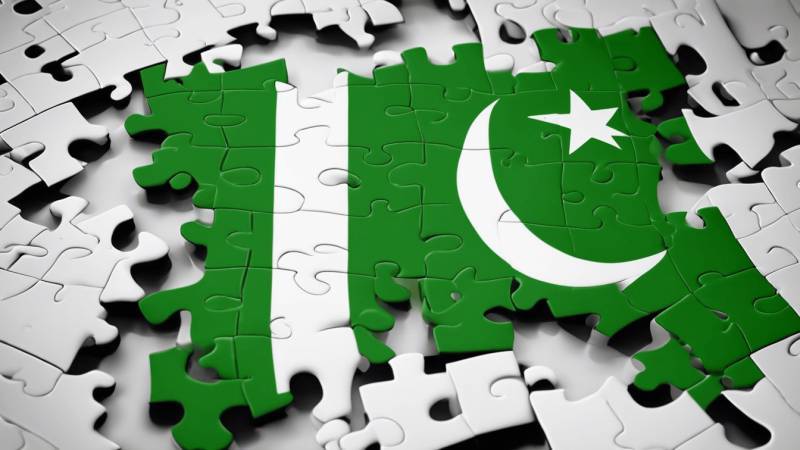
In the crucible of the May 2025 clash with India, Pakistan’s Army Chief, Field Marshall Asim Munir, has emerged as the country’s most powerful figure. His resolute leadership, combined with the decisive mediation of former U.S. President Donald Trump, helped avert a catastrophic escalation. Now, Pakistan faces a historic opportunity to heal deep internal rifts—political polarisation, ethnic tensions, sectarian divides, and chronic governance failures—and position itself for future resilience.
Field Marshal Munir has once- in- a- lifetime opportunity to steer Pakistan toward a transformative era, drawing inspiration from the ambitious reforms spearheaded by Saudi Crown Prince Mohammed bin Salman. Under Vision 2030, Saudi Arabia has undertaken sweeping changes: diversifying its oil-dependent economy, empowering women, fostering cultural openness, investing in technology and tourism, and building futuristic cities like NEOM. Similarly, bold and forward-looking reforms could help Pakistan unlock its latent potential, forging a more inclusive, stable, and prosperous future.
The guns fell silent on 10 May 2025, ending days of clashes under a US-brokered truce. Citizens showered soldiers with petals, garlanded them, and distributed sweets. Crowds poured into public squares—not in protest, but in relief. A Gallup Pakistan poll showed 93% now viewed the military more favourably. Markets surged: the KSE-100 jumped over 9% in the first post-ceasefire session. For the first time in years, a rare moment of national unity emerged while India reeled from global rebuke over its bungled “Operation Sindoor.”
A comforting narrative has quickly taken hold: stability has returned. The military held firm, the threat was neutralised, and cautious triumphalism has set in. But beneath this calm lies a deeper fragility. The borders may be quiet, but the rot within cannot be wished away. To confuse a battlefield win with a reset would not be wise. Let’s face it: Pakistan’s democratic project has stalled. What the country needs is not another backroom deal or power-sharing pact, but a structured, time-bound reset—led by competence, not compromise.
We cannot afford another cycle of failure. Another election under the same rules will yield another hung parliament, another IMF bailout, and another lost decade
Talk of a “macroeconomic miracle” is delusional. Inflation has eased and markets look buoyant, but the underlying structure remains brittle. Growth remains subpar. Agriculture barely grew. Large-scale manufacturing shrank. Real wages remain lower than three years ago. The projected 2.68% GDP growth for FY 2024–25 misses the 3.6% target and is optimistic, if not contrived, at best, given only 1.77% growth in the first nine months. Dependency on remittances and bailouts continues. True recovery will require years of disciplined reforms, not cosmetic stabilisation.
Pakistan cannot remain perpetually tethered to the IMF. An orderly exit demands a time-bound plan of fiscal prudence, export growth, and targeted investment in productive sectors. But this cannot be achieved under a system designed to preserve privilege, not pursue progress.
The real threat to Pakistan is not external—it is our inability to build a well-governed state. Elite capture, military overreach, and a patronage-driven political class have eroded public trust. Calls for “national reconciliation”—a handshake between the military and Imran Khan—suggest yet another recycling of a failed political script, not a meaningful reset.
The unvarnished truth is stark: Pakistan lacks a coherent governance architecture. What exists is an institutional bricolage—a mélange of borrowed templates, colonial-era statutes, and elite ad-hocism. We ape Westminsterian pageantry—elections, debates, resolutions—believing theatricality can obfuscate vacuity.
We didn’t adapt democracy to our context—we transplanted it. But Pakistan is not a unitary island like Britain. It is a complex federation with contested legitimacy, ethnic cleavages, and disillusioned masses. The result is a politics defined by revolving-door coalitions, patronage elections, and governments obsessed with survival rather than reform.
This system isn’t failing—it was never designed to work. Yet we continue the charade. Pundits – often out of touch with contemporary history and the modern world - repeat democratic platitudes, elections are treated as ends in themselves, and political parties blur into indistinguishable alliances of rent-seekers.
While we fixate on the West, we ignore the lessons of the East. The Asian miracle—from Taipei and Seoul to Kuala Lumpur—was built not on imported democracies, but on adaptive, state-led governance rooted in domestic realities and backed by strong, disciplined institutions.
This is not a rejection of democracy—it is a call to make it real. To anchor it in Pakistan’s experience, not colonial blueprints or foreign theories espoused by academics from ivory towers. The 1973 Constitution, in its original centralist form, marginalised regional voices and entrenched a majoritarian bias. Genuine federalism and devolution to local governments were never realised.
Meanwhile, liberal democracy globally faces crises of legitimacy. Its worst failing is not procedural, but moral—when it condones atrocities abroad while preaching values at home. As Jeffrey Sachs asked of Gaza: “Does the United States want to be complicit in genocide?” Such contradictions expose the emptiness at the heart of liberal democratic rhetoric. Pakistan must seize this moment to draft a new social contract—one rooted in justice, pluralism, merit, and the lived realities of its people.
This requires more than an election. It demands a clean break—a transitional reset led by a credible, independent, time-bound government of experts. This proposal may seem controversial, but it finds precedent in successful technocratic interventions elsewhere, such as the “Berkeley Boys” in Indonesia under Suharto’s regime.
The dual task of the government of experts must be clear:
Rebuild governance by restoring meritocracy, institutional integrity, and economic resilience;
Reconstruct the state through a decade-long process to rebuild the constitutional order on firmer, more inclusive foundations.
This is tricky and a tall order, but necessary. The transitional government must not merely be a placeholder. It must govern, reform, and lay the groundwork for long-term transformation. A recycled caretaker setup won’t suffice. Nor will a technocracy in disguise. What’s needed is a respected, competent cohort—jurists, economists, reformers, and public servants, with a fixed mandate to deliver measurable results and restructure the state.
Its proposed agenda could include:
- Electoral redesign: a mixed system balancing proportional representation with constituency accountability.
- Fiscal federalism: devolution through transparent, rules-based revenue sharing.
- Civil-military clarity: oversight, legal constraints, and institutional boundaries.
- Independent watchdogs: with guaranteed funding and real enforcement capacity.
- Performance-driven governance: civil service reform and service delivery tied to outcomes.
This is no short-term fix. It is a ten-year rebuild—a structured transition to stability, not a permanent departure from democracy.
This is not without precedent. New Zealand abandoned first-past-the-post in the 1990s for a hybrid model. Indonesia devolved over 25% of state revenue to local governments after Suharto’s fall. Germany’s Bundesrat forces genuine federal negotiation. Turkey, before its authoritarian turn, reformed civil-military relations. South Africa enshrined independent watchdogs into its constitution after apartheid.
Importantly, the military, now basking in public approval, must take an active interest in supporting this reset. Not as rulers, but as institutional guarantors of space. Their credibility today exceeds that of any civilian party. But their role must be clearly defined, time-bound, and subordinate to a future constitutional order.
Some will label this proposal dangerous or anti-democratic. But what’s democratic about parliaments that don’t legislate, elections that offer no real choice, and governments that can’t govern?
Legitimacy does not flow from ritual—it flows from performance. If schools work, lights stay on, corruption declines, and exports grow, people won’t ask who printed the ballots. They’ll know something has changed.
We cannot afford another cycle of failure. Another election under the same rules will yield another hung parliament, another IMF bailout, and another lost decade.
Pakistan is not out of time—but it is out of excuses. This rare moment of national unity is a gift. Let us not squander it. The real truce must be declared at home—between ideologies, ethnicities, institutions, and generations. Only through a new social contract rooted in local realities can this country stop merely surviving and start building.
If we do not redesign the system now, we will merely reassemble the wreckage—call it democracy, or hybrid democracy—and remain perplexed, wondering why the arrangements collapse repeatedly.