

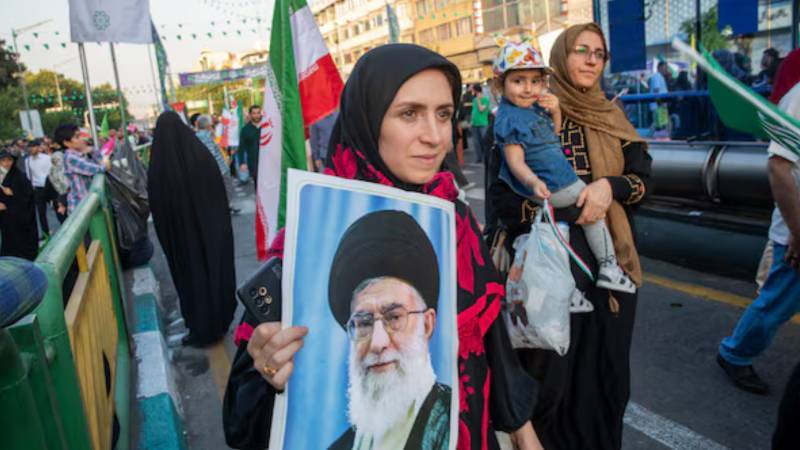
To understand the present, one must revisit the betrayal of 1953. Mohammad Mossadegh, Iran’s democratically elected Prime Minister, nationalised Iranian oil, challenging the British-dominated Anglo-Iranian Oil Company, now BP. His move was bold and intolerable to Western interests. The CIA, in collusion with British intelligence, MI6, engineered Operation Ajax, toppling Mossadegh and reinstalling Mohammad Reza Shah Pahlavi. Thus began decades of dictatorship cloaked in Western modernity: repression, censorship, and the dreaded SAVAK secret police—all generously financed by the West.
When the Islamic Revolution of 1979 overthrew the Shah, it was not a fundamentalist uprising in the abstract. It was a nationalist, anti-imperialist rejection of neocolonialism. The leadership of Imam Khomeini, rooted in religious authority and popular legitimacy, created a unique dual structure: a republican government coexisting with a Supreme Religious Leadership. Iran’s ideological foundations today are a product of that reaction, one that the West still refuses to accept.
Today, the son of the deposed Shah sits comfortably in exile, echoing Western talking points and seeking support to “restore democracy.” But Iranians remember. They remember the opulence of the royal family, the mass poverty, and the indignity of foreign occupation in political form. Reza Pahlavi’s past alliances and current ambitions are not credible to the Iranian people. His father’s regime was so deeply discredited that no Western nation offered him asylum when he fled Tehran—an irony lost on those calling for his restoration.
Any attempt to impose regime change by installing monarchs of a bygone era or by foreign diktat is doomed to fail, not only because of Iran’s strategic capacity, but because of its people’s memory
The desire to replace Iran’s ruling structure with this failed dynasty is not about freedom or democracy. It is about strategic domination, by proxy, oil control, and curtailing Iran’s regional influence, particularly among pro-resistance groups in Lebanon, Syria, Iraq, and Palestine.
Iran is not alone. The United States has repeatedly—and often recklessly—pursued regime change across the globe, with catastrophic consequences:
- Chile, 1973: Democratically elected President Salvador Allende was overthrown in a CIA-backed coup and replaced by General Augusto Pinochet, whose military dictatorship led to decades of torture and political killings.
- Iraq, 2003: On the pretext of non-existent Weapons of Mass Destruction, the US invaded Iraq and removed Saddam Hussein. The result: a broken state, the rise of ISIS, sectarian conflict, and over a million dead or displaced.
- Libya, 2011: Under NATO’s air cover, Muammar Gaddafi was killed, and Libya fell into chaos. Far from becoming a beacon of democracy, it remains a fractured warzone with slave markets and warlords.
- Afghanistan, 2001 to 2021: After two decades of occupation, regime-building, and bloodshed, the US left, and the Taliban returned. The regime change turned full circle but left a shattered economy and traumatised generation.
As Noam Chomsky writes, US foreign policy is marked by a consistent commitment to maintaining control, not to promoting democracy.
Western media often labels Iran as a radical regime, but the label lacks context. Iran is a country of over 80 million, with civilisational depth, modern universities, a vibrant youth, and centuries-old contributions to science, art, and philosophy. The dual political structure—an elected parliament and a Supreme Leader—is Iran’s own answer to balancing sovereignty and spirituality. While imperfect, it is internally legitimate and has proven resilient against decades of war, sanctions, and cyberattacks.
The American narrative champions freedom and human rights as justification for intervention. Yet its closest allies in the Middle East—Saudi Arabia, the UAE, Egypt—are authoritarian states with little to no civil liberties. The real reason for enmity towards Iran lies in its independent foreign policy, its support for Palestinian resistance, and its refusal to join the petrodollar club.
In practical terms, successful regime change in Iran would require:
- Economic strangulation, already attempted through “maximum pressure” sanctions;
- Internal revolt, unlikely given national unity during external aggression;
- Military invasion, a near-impossible task given Iran’s geography, armed forces, and popular resistance;
- International legitimacy, which Washington increasingly lacks, as shown by global protests and growing support for multipolarity.
In response to Western unilateralism, countries like China, Russia, Brazil, and South Africa have accelerated efforts to form an alternative global bloc. The BRICS alliance, along with the Shanghai Cooperation Organisation, offers the skeleton of a new world order—one where US military and financial coercion no longer dominate.
From Vietnam to Venezuela, the US has overestimated its capacity to reshape nations in its own image. Its interventions have bred more resentment, resistance, and ruin than democracy. The price has been paid not by policymakers in Washington, but by millions of ordinary people in invaded countries.
The recent war against Iran is not merely about missiles or military might. It is about narratives and sovereignty. The United States seeks to project an image of order while imposing chaos. But Iran—like Vietnam, like Cuba—is a nation that has internalised resistance.
Any attempt to impose regime change by installing monarchs of a bygone era or by foreign diktat is doomed to fail, not only because of Iran’s strategic capacity, but because of its people’s memory.
The real question is not whether the US can change Iran. It is whether the world will allow the US to keep changing countries, until nothing is left to change but itself.