

Last week, I received a call from a friend who now lives and works in New York. She holds a PhD in anthropology. She calls infrequently and always ends our conversations with suggested readings. When I asked for her permission to document and share this conversation, she agreed, provided I kept her personal information private. She explained that she was on a sabbatical leave to complete her book and that too many text messages and comments disrupted her schedule. I understood.
I remember when I picked up the call; she asked bluntly, “Why do you write about Hyderabad’s old buildings?”
I was glad the question gave me a chance to speak my mind, but I wasn’t prepared for it. If she had asked, “Why do you write?” I could have prepared a response based on my old notes. However, the locality of her question compelled me to reflect: “Why old Hyderabad’s buildings?”
I paused to gather my thoughts and responded: “When I look at the old buildings of Hyderabad, I don’t just see bricks and mortar. I see layers of time that reveal the culture, society, and people who lived there. These structures—whether grand homes, public squares, or religious sites—offer rich evidence. They are like open books, providing insights into how people organised their lives and interacted with one another.”
Her attentive listening encouraged me.
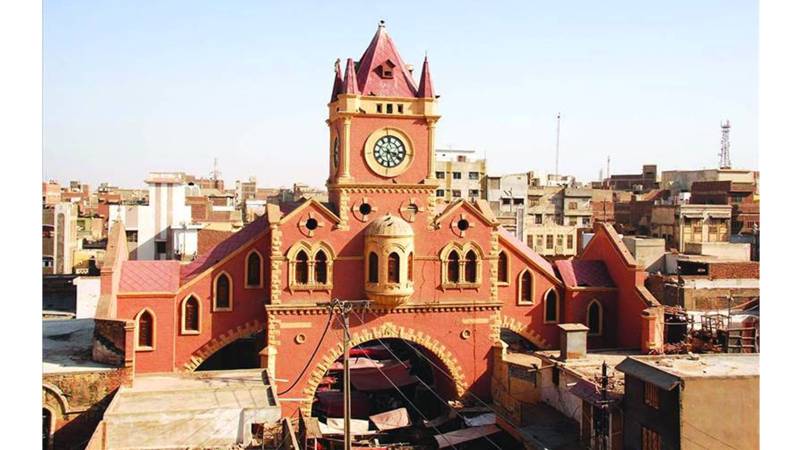
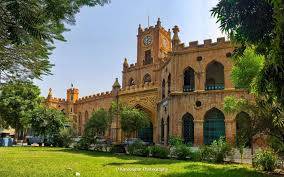
“The architecture reflects social hierarchies and family structures. The grand halls of Annie Besant and Holmsted Hall were the heart of communal life, where residents gathered and shared stories. The narrow streets of Shahi Bazaar and Paka Qila were not merely pathways; they displayed the intimate rhythms of daily life. Even the planned neighbourhood of Hirabad tells a story about the social norms of its time. Its balconies reveal everyday sociology of women folk.” I added, “ even Navalrai Market Clock Tower and Nava Vidyalaya School (Now Dr N.A. Baloch Model School, University of Sindh) whisper a lot.”
She interrupted, asking about religious structures. I hesitated, viewing it as a mechanical question usually posed in the job interviews. After a moment, I continued, “My fascination with religious structures runs deeper. The spiritual and religious iconography etched into doorways and walls of mandir, masjids, asthans, and gurwaras help me visualise the rituals of those times.”
I took a pause with an expectation that our conversation would be shifted to lighter topics—family, reading, or gossip about friends. But I heard her familiar phrase: “Are you there?” I replied, “Yes, I am.” She then asked about the contribution of neighbourhoods like Sikh Para to the collective identity and sense of belonging in. She quoted my recent article in The Friday Times and elaborated on how these structures evoke memory and nostalgia, especially for those who left Hyderabad in August 1947.
I agreed, noting that this could be an intriguing theme, one that breaths with the soul of the city. She added that we must also consider the attitudes of present communities toward these old buildings, particularly when the original inhabitants are no longer present, and the government is ready to sale and demolish them.
Our conversation shifted to architectural forms and urban planning. She spoke with academic rigour about how land politics create new power structures and social divisions. Citing Qasimabad and Latifabad, she provocatively stated, “The residents of both areas are not Hyderabadi.” This statement opened avenues for understanding the unique context and politics of these settlements. We discussed the need to tell and retell stories related to land grabbing, even names of are being changed. I endorsed her point, referencing how “Advani Ghitee” became “Babri Lane,” and is now called “Davao’n Wari Ghitee” (Street of Medicines).
We also touched on the roles of universities and their research, as well as the influence of the House Building Corporation and the Hyderabad Development Authority. These institutions prompted poor architecture that roams around the concept area “covered area.” Their poor approach has overshadowed the beautiful mahals, mansions, and bungalows of old Hyderabad.
I remind these buildings of what they were before 1947 and what they are now. I see myself as both speaker and audience. My visits are like a handshake
Another topic was the absence of a comprehensive preservation policy based on a neighbourhood approach. While acknowledging commendable restoration efforts like the Mukhi House, she insisted that preserving isolated buildings does not attract tourists. Instead, we need to develop and preserve entire areas.
Most of the time, I listened intently. Eventually, she asked as to how, as a historian, I view old buildings. I explained that my focus lies in understanding the past through chronological narratives. Old buildings serve as invaluable primary sources, offering concrete evidence of historical processes. Just as I began to elaborate, she interjected, her intellectual curiosity overtaking my words. “What possible themes could there be for historical research?” she asked. I resumed, “Some potential areas of interest could revolve around dating buildings—not just by architectural styles, but by documenting construction techniques and combing through archival records. Imagine the stories unearthed from blueprints, municipal records, and old rent agreements—all essential for establishing the timeline of a city’s development.”
I continued, “Other topics could explore the organic growth and transformation of the city over centuries. What specific roles did individual buildings or clusters of buildings played?”
We then discussed the economic history of Hyderabad, particularly focusing on the Sindh Workis' commercial buildings—the kothis and stores—and the old trade routes. “The wealth generated by the Sindh Workis shaped the design of structures. The specific materials and ornamentation used reflect the economic status and social class of their owners. Every building has a story to tell about construction methods, skilled labour, and material supply chains.”
I added that there is a need to research how the Partition led to additional construction within old buildings or their destruction, or even the renaming of buildings—a layer of history often overlooked. Just as I expected our conversation to shift again, she posed another sharp question: “If these buildings are in poor shape, deserted, or even destroyed, do you use Dr Rita Charon’s narrative medicine approach in your writing about these buildings?” In fact, in last month’s telephonic conversation she had suggested Dr Rita Charon’s book: Narrative Medicine: Honoring the Stories of Illness.
I nodded, formulating my response. “Absolutely, some of principle of Dr Rita Charon’s approach could be used to document these 'ailing or dying' structures.”
I explained that based on her approach, first, I recognise the building—not just as bricks, but as a living entity with a past: its original owner, their occupation, and socio-cultural status. “Every detail matters, just like a patient’s medical history.”
I continued, “Then I absorb that information in a systematic order to build a humanist story. It is about more than just facts; it is about empathy—understanding the life that pulsed within those walls. I advocate for the building. I give it a voice.”
I concluded, “The poor condition, destruction moves me. How can one not feel that way when visiting a beautiful building constructed with hard-earned money, only to be left to decay or destroyed? That abandonment and destruction has roots in August 1947.”
After a long pause, she unexpectedly raised another topic: as to how, as a fiction writer, I converse with buildings. This was my favourite subject. I shared that during my visits, in a monologue, I remind these buildings of what they were before 1947 and what they are now. I see myself as both speaker and audience. My visits are like a handshake—a way of saying, “Hello, I am here to know and understand you.” I reassure them that their survival is linked to the stories that must be told and printed.
I often express my view that their stories will connect them to the past, present, and future of Hyderabad. Through conversation, I emphasise that their narratives will help them live on in people's memories. Sometimes, I speak to these buildings as if I am reading a letter to them. I speak/read slow as to ensure they can follow. I beg these buildings: “Your slow destruction also kills a part of me; please speak up. Your stories will help me understand Hyderabad.” I acknowledge that sometimes their silence carries a message: wait for the right time to speak. But I know that “the right time” may mean waiting forever.
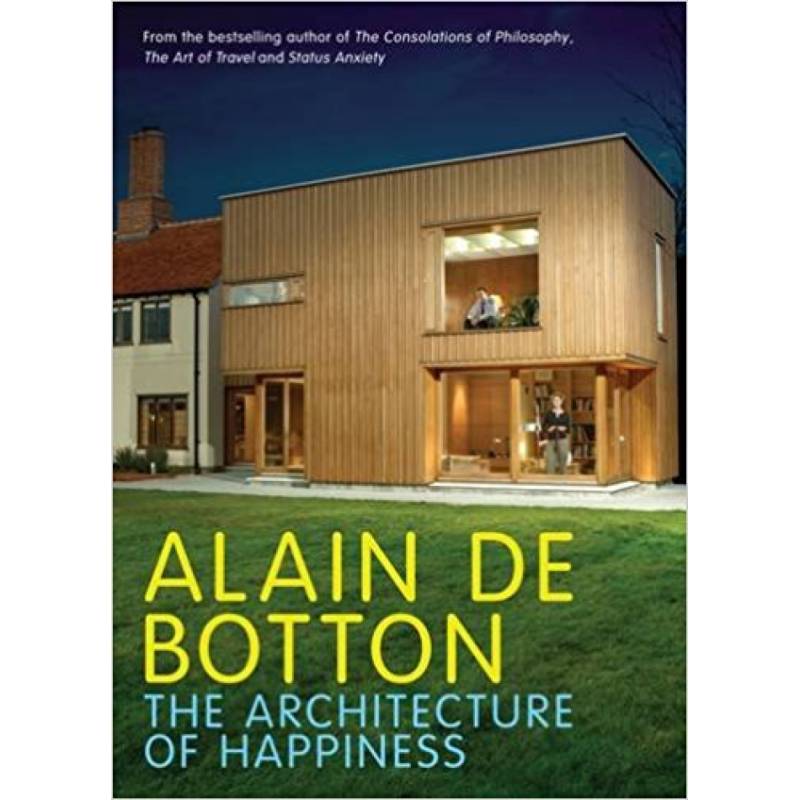
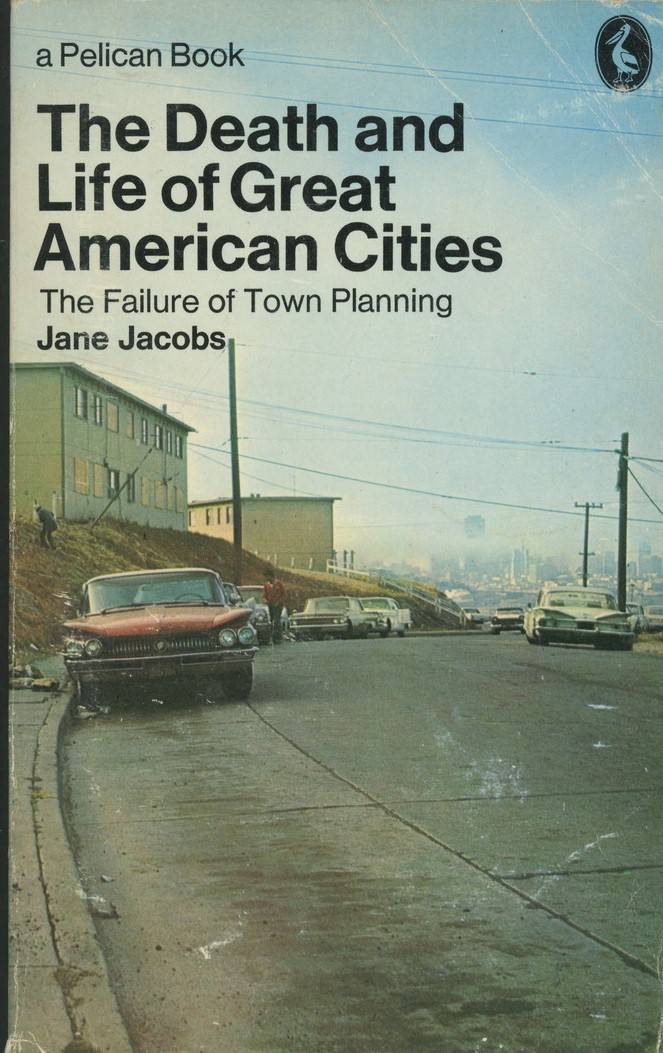
Before wrapping up the call, she shared a few titles. First, she mentioned The Architecture of Happiness by Alain de Botton, an exploration of how our surroundings affect our emotions. Then she brought up The Seven Lamps of Architecture by John Ruskin, which discusses the moral and aesthetic principles that has to guide architectural design. Next, she highlighted The Death and Life of Great American Cities by Jane Jacobs, emphasising its critical examination of urban planning and the vitality of mixed-use neighbourhoods.
Laurie Baker’s architectural philosophy also came in our discussion. It champions affordable, sustainable, and humane structures crafted from local materials and traditional methods. His approach serves as a reminder of the powerful connection between architecture and community.
As our conversation drew to a close, we both felt invigorated by the exchange of ideas and insights. “Let us continue this dialogue soon,” she said, her voice warm with enthusiasm.
“Absolutely agreed,” I replied.
With a shared sense of anticipation, we said our goodbyes. “Bye, bye!”
The call ended, but the ideas lingered—each one a story waiting to be told.