

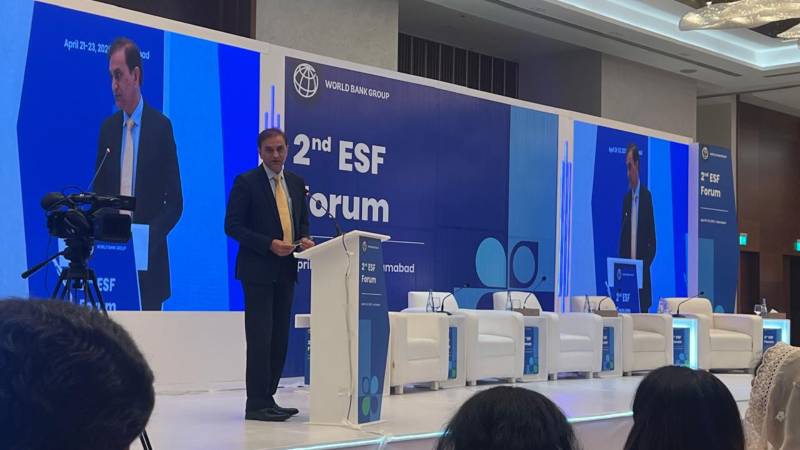
As an environmental professional deeply involved in development initiatives, attending the 2nd Environmental and Social Framework (ESF) Forum held in Islamabad from April 21–23, 2025, was an inspiring experience—one that broadened perspectives and reaffirmed the importance of inclusive, responsible development.
The hallmark of this Forum, in my view, was the active and constructive involvement of Project Directors and Implementing Units (PIUs). Rather than a top-down dialogue, this was a refreshing case of peer-to-peer learning in action—an excellent capacity-building exercise designed to bridge the gap between policy and practice.
What made the Forum exceptional was the World Bank’s own demonstration of stakeholder engagement. It practiced what it preached by listening, responding, and facilitating vibrant two-way conversations. Project Directors from across Pakistan—representing infrastructure, housing, energy, and disaster recovery sectors—shared real challenges and thoughtful solutions on issues ranging from stakeholder trust and grievance mechanisms to occupational safety and SEA/SH risk mitigation.
The sessions were not just technical briefings; they were thought-provoking discussions, with seasoned moderators drawing out insights on how trust is built (or lost) across the lifecycle of development projects. Project examples such as KP-SPEED (Khyber Pakhtunkhwa Spending Effectively for Enhanced Development), Dasu Hydropower Project, Punjab Intermediate Cities Improvement Investment Program, and Sindh Flood Emergency Housing Reconstruction Project revealed both the complexity of environmental and social risks and the opportunities to improve our systems.
The 2nd ESF Forum did not just inform—it inspired. It created a culture of shared responsibility, where lessons were not just spoken but deeply felt.
For instance, KP-SPEED demonstrated how effective coordination and transparency mechanisms can strengthen service delivery and citizen engagement. The Dasu Hydropower Project, despite its scale and geographic challenges, offered critical lessons on land acquisition, stakeholder negotiations, and environmental mitigation in high-altitude terrains. Punjab Cities highlighted how integrating urban sustainability into municipal governance can elevate the quality of life in rapidly growing towns. Meanwhile, the Sindh Flood Housing project reminded us of the deep social wounds caused by climate-induced disasters—and the pivotal role of inclusive recovery strategies in healing those wounds.
One of the most moving moments of the Forum came during a session on SEA/SH (Sexual Exploitation, Abuse, and Harassment), where global experts stressed the importance of survivor-centric responses and robust accountability frameworks. But it was Rose Dasay’s powerful reading of the poem “I Looked the Other Way” that truly struck a chord. The poem echoed the silence that too often surrounds injustice, and how such silence enables harm to continue. Rose reminded us that turning away is not neutrality—it’s complicity. As development professionals, confronting these difficult truths is not optional; it’s a moral imperative. Only by acknowledging and addressing these issues can we foster communities that are not only protected but also empowered.
The Forum’s attention to Occupational Health and Safety (OHS) was also commendable. Parallel masterclasses on Job Safety Analysis, OHS Management Systems, and monitoring protocols provided practical, hands-on training. The launch of an OHS e-learning module, in collaboration with the Asian Institute of Technology, is a step forward in building institutional learning for long-term impact. The case of the Pakistan Hydropower and Renewable Energy Project (PHREP) also came under focus, where proactive OHS planning was credited with preventing incidents and improving worker morale.
What I carried back with me was a renewed sense of purpose and professional clarity. Development projects are complex, but with the right platforms for collaboration and feedback, we can manage risks more effectively and bring genuine benefits to communities.
The World Bank’s model of knowledge-sharing and capacity-building at this forum is something other financial institutions and donors can emulate. By prioritising transparency, peer learning, and difficult but essential conversations, the Bank has taken a bold and commendable lead. It demonstrated that operationalising safeguards is not merely about compliance—it’s about building systems that serve people with dignity, equity, and foresight. The Forum made it clear: when institutions lead with integrity and invite others to grow alongside them, development becomes not only more effective, but transformational. The 2nd ESF Forum did not just inform—it inspired. It created a culture of shared responsibility, where lessons were not just spoken but deeply felt.
As we move forward, let us continue to ensure that development is not only technically sound but also socially just, environmentally sustainable, and rooted in local realities. Here’s to building futures where progress is measured not just in numbers, but in trust, resilience, and dignity for all.