

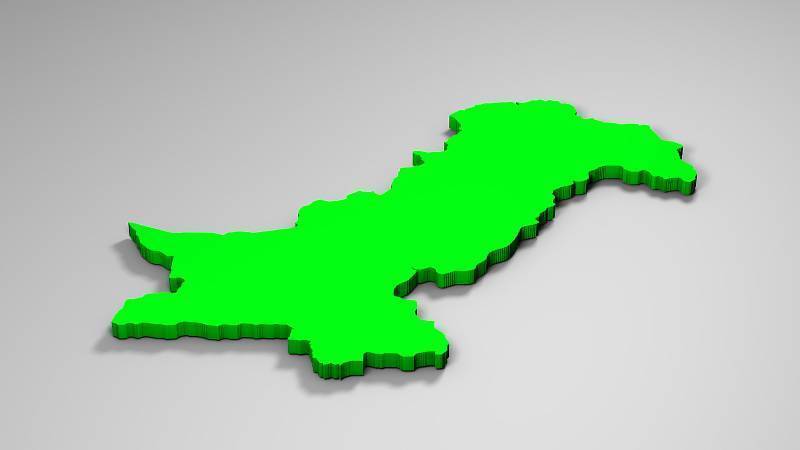
The modern nation-state is undergoing a quiet but profound unbundling. For decades, political imagination was shaped by inherited maps of provinces and regions drawn in earlier eras, when populations were smaller, cities were fewer, and governance could still be managed through relatively centralised bureaucracies. That assumption is now under pressure almost everywhere.
Across much of the developing world, governments are discovering that administrative scale itself has become a constraint. Population growth, rapid urbanisation, fiscal stress, and weak service delivery are exposing the limits of oversized provinces and overstretched bureaucracies. The result is not a dramatic collapse of the state, but a gradual rethinking of how internal borders should function in practice.
Pakistan reflects this shift more sharply than most countries. Walk through district offices in places such as Bahawalpur or Dera Ghazi Khan, and the structural problem becomes visible in everyday form. Citizens wait for basic documents that should be routine. Schools struggle with staffing gaps. Health facilities operate with chronic shortages. Behind each delay is not simply inefficiency, but distance. Decisions are made hundreds of miles away in Lahore, a provincial capital that governs a territory and population larger than many countries.
Punjab alone now contains more than 120 million people, a scale comparable to major sovereign states. Yet it is administered through a centralised provincial secretariat shaped by an older administrative logic, when both population and complexity were far lower. The mismatch between governance structure and demographic reality has become increasingly difficult to ignore.
This is not a uniquely Pakistani issue. It is part of a broader global pattern.
Across continents, states have been steadily adjusting their internal architecture. India has expanded from a relatively small number of states at independence to nearly thirty today, alongside several union territories. Nigeria has moved from three regions at independence to thirty-six states in an effort to manage ethnic diversity and administrative imbalance. Indonesia, after the fall of central authoritarian rule in the late 1990s, undertook one of the most extensive decentralisation experiments in modern history, transferring authority to hundreds of districts and steadily increasing the number of provinces.
Even China, often seen as a model of centralised governance, operates through a layered system of provinces, autonomous regions, municipalities, and an extensive network of special economic zones that function as flexible governance spaces within rigid borders. Administrative design, in other words, is no longer fixed. It is increasingly adaptive.
The direction of change is clear. Around the world, the number of subnational governments has expanded significantly over recent decades. Federal and quasi-federal systems now account for a substantial share of the global population, and scholarly consensus increasingly suggests that governance performance improves when administrative units are sized appropriately to population and complexity rather than historical inheritance.
The divisions of Bahawalpur, Multan, and Dera Ghazi Khan together represent tens of millions of people, yet consistently lag behind other parts of the province on key development indicators
Pakistan, however, has remained structurally static.
Its current provincial boundaries were largely inherited from colonial arrangements and adjusted only marginally in the decades following independence. Since then, the country’s population has multiplied several times over, its urban landscape has transformed, and its economic structure has grown far more complex. Yet the core administrative map has remained essentially unchanged.
Although the Eighteenth Amendment significantly devolved authority from the federal level to provinces, the deeper issue of scale within provinces was never addressed. In practice, provincial governments have often retained power rather than passing it further down to local governments. Article 140A of the Constitution, which mandates empowered local governance, remains only partially implemented. As a result, Pakistan operates with a missing tier of governance, where districts and municipalities lack sufficient authority, and provinces remain overloaded with responsibilities they struggle to manage effectively.
Nowhere is this imbalance more visible than in South Punjab.
The divisions of Bahawalpur, Multan, and Dera Ghazi Khan together represent tens of millions of people, yet consistently lag behind other parts of the province on key development indicators. Access to education, healthcare, clean water, and infrastructure remains uneven. The issue is not simply resource allocation but institutional distance. A provincial capital located far from these regions cannot easily prioritise or respond to their specific needs within a centralised administrative framework.
This has given rise to a long-standing demand for a separate South Punjab province, often framed not as ethnic separation but as administrative correction. Similar sentiments exist in other regions as well, including Hazara, where residents have repeatedly expressed concerns about political marginalisation within Khyber Pakhtunkhwa, and in Karachi, where governance fragmentation has created one of the most complex metropolitan management challenges in the country.
Karachi in particular illustrates a different dimension of the problem. As Pakistan’s largest city and economic engine, it functions as a megacity in every practical sense, yet remains governed through overlapping provincial, municipal, and federal structures. The result is fragmented authority and blurred accountability, where responsibility for infrastructure, transport, and civic services is distributed across institutions that often lack coordination.
Digital governance further reduces the need for large centralised administrative units by enabling smaller governments to access national systems for taxation, data management, and service delivery
Globally, similar challenges have led to experimentation with metropolitan governance models, where large cities are treated as distinct administrative units with greater fiscal and executive authority. The logic is simple. When urban populations reach a certain scale, traditional provincial structures become insufficient for managing complexity.
The case for new provinces in Pakistan rests on four interlinked principles.
The first is administrative manageability. Provinces with populations exceeding one hundred million face inherent limitations in oversight, responsiveness, and coordination. Governance becomes increasingly centralised within provincial capitals, while peripheral regions experience delays in decision-making and implementation.
The second is equity. Development disparities within provinces are often stark. Regions that are geographically distant from administrative centres tend to receive fewer resources and less institutional attention. Smaller provinces would allow governance to be more regionally focused, improving alignment between local needs and policy priorities.
The third is accountability. When administrative units are too large, the connection between citizens and decision-makers weakens. Smaller provinces shorten that distance, making it easier for populations to evaluate performance and influence outcomes through political participation.
The fourth is economic dynamism. Smaller administrative units often create space for competition, experimentation, and localised economic planning. In several countries, including India and China, regional competition has contributed to higher growth and more diversified development patterns. A similar effect could emerge in Pakistan if governance structures were more regionally balanced.
Critics often argue that creating new provinces risks increasing administrative costs, encouraging fragmentation, or intensifying identity politics. These concerns are not without merit. Ethiopia’s experience with ethnically defined federalism demonstrates how administrative boundaries can harden identities and exacerbate conflict when poorly designed.
However, Pakistan’s context is different in important ways. The demand for new provinces is largely driven by governance and development concerns rather than separatist ideology. It reflects frustration with administrative distance and uneven development rather than rejection of the state itself. With appropriate constitutional safeguards, fiscal equalisation mechanisms, and a non-ethnic basis for provincial design, these risks can be managed.
Cost is also frequently misunderstood. While new provinces would require additional institutions, the existing system already incurs high hidden costs through inefficiency, delayed development, and lost economic potential. Weak governance structures often cost more over time than well-designed decentralised systems.
The more difficult challenge is political. Any restructuring of provincial boundaries inevitably redistributes power. Established political and bureaucratic elites have strong incentives to maintain the status quo. This resistance should not be underestimated, but it also should not be decisive. Nearly every major administrative reform in modern history faced similar opposition before eventually being implemented in response to structural necessity.
The broader global trajectory suggests that governance systems are moving towards multi-layered models, where authority is distributed across national, regional, metropolitan, and local levels. Digital governance further reduces the need for large centralised administrative units by enabling smaller governments to access national systems for taxation, data management, and service delivery.
Pakistan’s challenge is to align its governance structure with this emerging reality. Its current provincial system reflects an earlier era, when populations were smaller and administrative complexity was more limited. That era has passed. The scale of contemporary Pakistan requires a more flexible and responsive institutional design.
Creating new provinces will not resolve all governance challenges. It will not eliminate corruption, stabilise macroeconomic conditions, or automatically improve institutional performance. But it can improve proximity between citizens and the state, enhance accountability, and allow for more balanced regional development.
Ultimately, the question is not whether Pakistan can afford to restructure its internal boundaries. It is whether it can afford to continue without doing so. As populations grow, cities expand, and governance demands intensify, the gap between administrative design and social reality becomes increasingly difficult to sustain.
The world is already moving in the direction of internal reorganisation. Pakistan will eventually have to decide whether it adapts through deliberate reform or is forced into change by accumulating structural pressure.