

The woman sitting on the bike behind her husband, holding election tickets in her hand with hopeful desire, shredded the tickets on the road in despair. The villagers had manipulated her husband, questioning how a woman could stand for election.
The hall was covered in silence, the air filled with sorrow as audience applause echoed. When the final scene faded, the screen displayed the title: Ticket - a film by Shah Muhammad, an IDSP Film alumnus, telling the heartbreaking story of a woman's struggle to claim her space in leadership, and the quiet erasure of her voice before it could ever be heard.
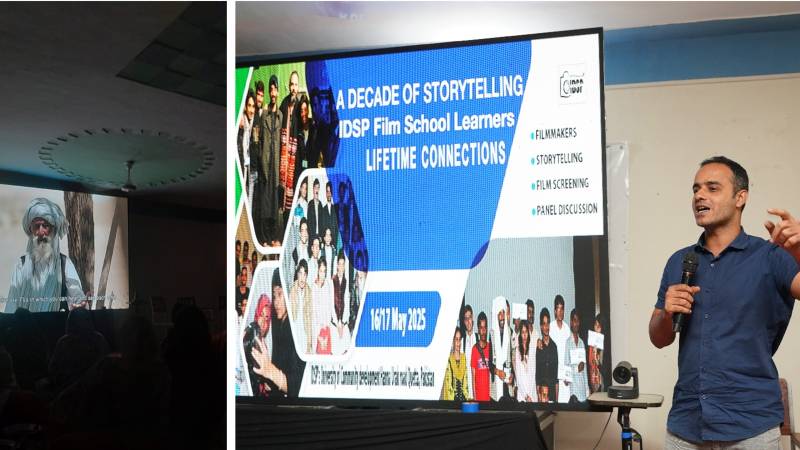
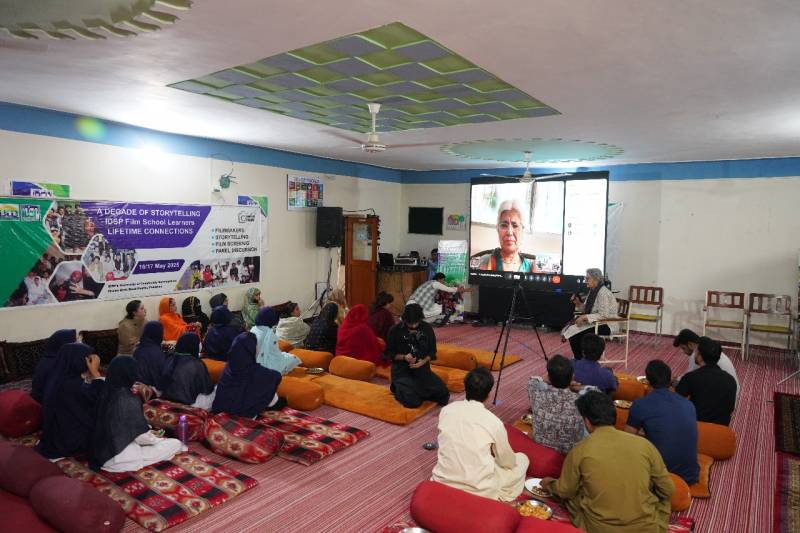
The alumni of Institute for Development Studies and Practices' (IDSP) Film School reunited on 16 and 17 May to reflect on their transformative journey as storytellers from the margins. The two-day event, hosted at IDSP's campus in Quetta, brought together graduates of the Film School program to share their filmmaking challenges, successes, and how the platform helped them amplify unheard voices from Balochistan. Titled "A Decade of Storytelling: IDSP Film School Learners' Lifetime Connections", the event celebrated IDSP's role as an institute that provides platforms for diverse communities from Balochistan.
Decades ago, IDSP initiated a program called Film School, offering filmmaking courses for the local people of Balochistan. The school was started voluntarily to equip the people of Balochistan with creative skills. These were children who had been unable to attend school or continue higher education, but IDSP became a torchbearer, enlightening their path forward.
Last year, the film school initiated a course specifically for women, with participants from rural areas who shot their final films in Karachi, on different themes
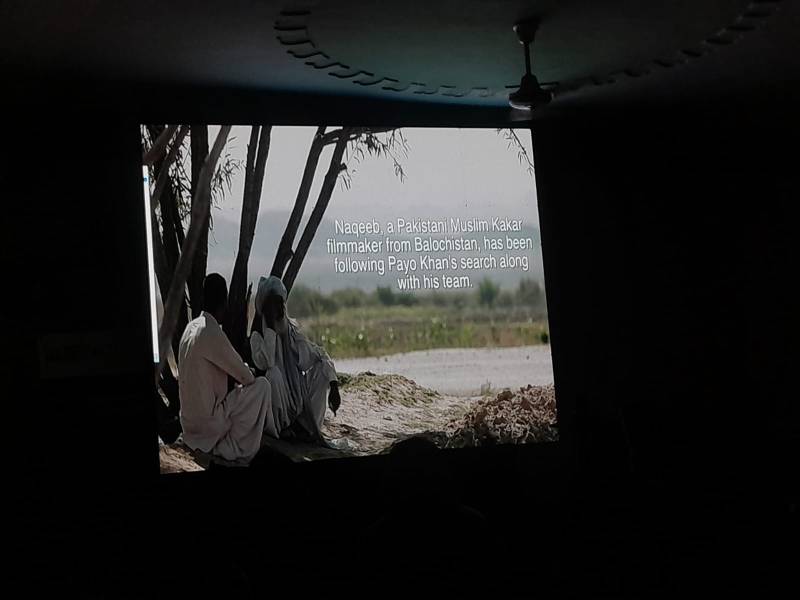
"Many of the films or documentaries we make are censored by the government, which really discourages youth," said Naqeebullah, one of the alumni. Each alumnus screened their films, which covered themes like the subcontinent's partition, refugees, terrorism, and women still being denied the right to stand for elections.
One alumnus shared his life story: "I didn't have permission to attend film school as in my area, arts weren't appreciated. I lied at home, saying I was going for religious practice for three days. When the days extended and we were taken to Karachi by Film School, I received a call from my family saying, 'You're a child and you've gone to Karachi alone.' Later, my family learned about the film school. I proved that narrative wrong with my skills, and today people in my district watch my documentaries with interest," said Zahid Baloch, film alumnus.
Balochistan is rich with cultural heritage, home to diverse communities for decades. Its rugged mountains, golden deserts, and windswept coastlines offer breathtaking backdrops, while its multiethnic communities bring depth and authenticity to narratives. Unfortunately, years of political and sectarian conflict have left deep emotional and psychological scars on the people, leaving youth vulnerable. Yet they've never surrendered - today they express their creativity through arts and music.
"Filmmaking is one way to express our emotions and creativity. Balochistan needs platforms to learn and polish visual skills and grant film degrees like other cities," said Fariq Riaz, Film School alumnus.
"We initiated the Film School platform to bring Balochistan's youth forward to portray their creativity, share their visions, stories, and challenges - to tell Balochistan's story in visual form. No one knows Balochistan's story better than Balochistan's own people," said Dr. Quratulain Bakhtiari, founder-director of IDSP. She added, "Our vision welcomes youth from anywhere without demanding particular qualifications. It's free of cost and even provides accommodation."
Last year, the film school initiated a course "Women Behind the Lens" specifically for women, with participants from rural areas who shot their final film in Karachi on different themes.
The event continued with a panel discussion where moderators explored topics like life journeys, Balochistan's policies, and filmmaking. Audience members asked alumni questions about policies and censorship of dramas and films in Pakistan's mainstream media.
Another short film screened was titled "Intizar" (Waiting) by Iltaf Hussain Hazara, IDSP Film School alumnus. The film addressed sectarian killings of the Hazara community, depicting an event where Hazara people were killed on a bus to Karachi. This short film won a cinematography award.
"If students want to script well, they must read - reading develops vision for thinking and translating ideas to paper. To be a filmmaker, one must first have passion," said Jami, teacher at IDSP's Film School.
The two-day reunion of IDSP Film School alumni was more than a celebration - it was a testament to storytelling's power in reclaiming identities, challenging stereotypes, and amplifying silenced communities. Through films reflecting Balochistan's realities - whether a woman's quiet defiance against societal norms or haunting memories of sectarian violence - the alumni proved creativity thrives even in constrained spaces. As censorship looms and cultural taboos persist, IDSP remains a beacon of hope, empowering young voices to document, reflect, and redefine narratives of a region often excluded from mainstream lenses. These storytellers remind us that true change begins when marginalized communities control their own stories and share them with the world.