

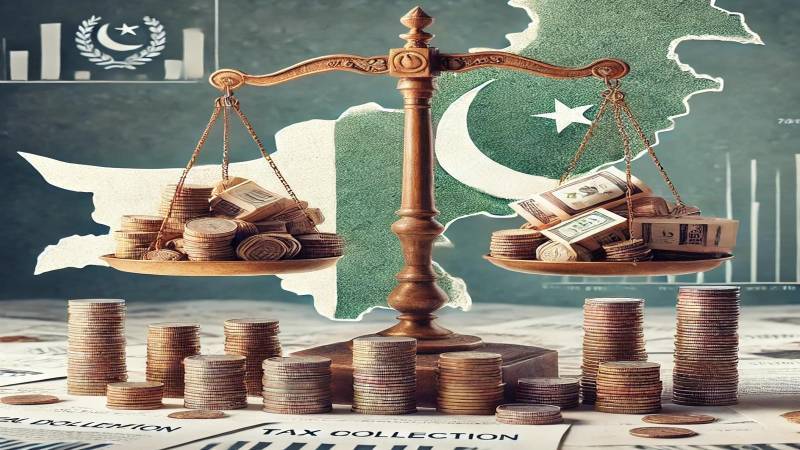
The economic landscape of any region, be it the foundation of public services, infrastructure development, or social welfare, is all handled by the government through various policies and strategies. In Pakistan, several regions are undergoing significant transitions, such as mergers or changes in governance, in the name of harmonising tax policies, which have become even more critical in order to ensure stability and growth. A fair and consistent taxation system is essential not only to generate government revenue but also to promote economic stability. Such an initiative was also taken by the government of Pakistan (PTI) to enhance the taxation system.
The 25th Constitutional Amendment of 28 May 2018 merged the Federally Administered Tribal Areas (FATA) with Khyber Pakhtunkhwa (Upper Chitral District, Lower Chitral District, Upper & Lower Dir District, Swat, Buner, Shangla, Kohistan, Malakand Districts, Amb state, Torghar District) and the Provincially Administered Tribal Areas (PATA) (Zhob, Killa Saifullah, Musakhel, Sherani, Loralai, Barkhan, Kholu, Duki, Dera Bugti, Dalbandin) with the respective provinces. Theoretically, this can be marked as a revolutionary decision when it comes to providing equal opportunities protected by the constitution itself.This was mainly done for the development and inclusive growth of the residents of those areas, as they were not entertained with the same opportunities before the merger. The 25th Amendment has used the word "Republic and its Territories" instead of FATA, giving effect to Article 1 of the Constitution of Pakistan. Similarly, as per Article 246, these regions are now to be considered as areas inside Pakistan. FATA and PATA are operational for tax law mentioned in the Income Tax Ordinance 2001 (ITO’01) Pakistan.
Prior to this revolutionary constitutional amendment, it was at the absolute discretion of the President and Governors to extend jurisdictions of taxation in FATA and PATA, respectively. Despite having this discretion, the government was not taking any responsibility for these areas, i.e., no tax laws were ever extended to these administrative regions, even though they were rich in resources.
A long-term solution can be either to include tribal areas in the tax net or to permanently exclude them. The midway approach adopted by the government, instead of harmonising the taxation system, has benefited those who were already privileged
The idea of merger was introduced by the PTI government, which was mainly focused on the development of these tribal areas. These regions are rich in resources, but there are no proper policies to make the best out of them. So, the PTI government was centered on bringing prosperity to these areas by giving them an edge to establish businesses, increase work bases, and accelerate opportunities. However, after the merger, it is evident that the coalition government was distracted from its policies. As per Section 4B of the Income Tax Ordinance, millions and billions were collected for displaced persons, who had been subjected to military operations, but nothing was spent on them.
The main objective of taxing these areas was to increase the tax net, but it is no surprise that a five-year exemption from income tax and withholding tax was given to the residents of these regions. The exemption, dated from 1 July 2018, was provided up to 30 June 2023, which was again extended up to 30 June 2024. In regard to income tax on these regions, the concept of ‘resident’—an individual who has spent a specific amount of days (183) (s.82 ITO’01) in those areas specified under Article 246—seems absurd, as there are no borders between these areas and Pakistan. Therefore, it would be an impossible task to count days in a tax year to qualify as a ‘resident’ under the Income Tax Ordinance, 2001. In one way, tax exemptions are a way of showing solidarity towards these areas, as they have never been provided with the same opportunities as the rest of Pakistan. However, these exemptions are being misused to a great extent.
These exemptions were mainly due to influential political parties and had no benefit to the common people of FATA/PATA. The government policies in countries like Pakistan are not dependent on the welfare of citizens but on the pressure exerted by influential people, which can be seen through this decision as well. The ill intention has not only posed a risk to Pakistan’s economy but has also raised a bigger question about the validity of government policies and the objective of democracy.
The exemptions granted to FATA and PATA are severely being misused, where influential business tycoons have been given a free pass. This highlights the discriminatory system of taxation in Pakistan. The massive exemption that has been granted to FATA and PATA has wiped out a majority of the economy in these areas. This has reduced the number of investors in these areas as well. Fifty to sixty per cent of the Gadoon, Hayatabad, and Hattar industrial areas have collapsed due to this policy array. This discriminatory policy has not only wiped out the steel and oil industries but has also resulted in violations of labour rights. The government never thinks about the bigger picture while enacting legislation, and it is only to benefit from such absurd policies. If these policies had been enacted to serve the public at large, that would have surely been a better decision. The law of taxation is uncertain and has many loopholes. A long-term solution can be either to include tribal areas in the tax net or to permanently exclude them. The midway approach adopted by the government, instead of harmonising the taxation system, has benefited those who were already privileged.
The problem is not with the government pretending to increase the tax net, but rather that those who are registered and already paying taxes are overly burdened
This merger has indeed extended areas of taxation for generating revenue, yet it has also given rise to a lot of problematic concerns. The jurisdiction of taxation has increased, but the exemptions have simultaneously restricted the scope. The first issue is related to exemptions laid down in statutory regulatory orders (SROs). On 23 July 2018, the initial SRO 1213(I)/2018 was promulgated. It was heavily criticised by many law journals and critics, including The Merger and Tax Issues, Business Recorder, and The News. For instance, as per Clause 146 (Part 1), Schedule 2, a restriction was imposed on associations of persons (AOPs) and companies with the condition that there would be registered offices in the areas mentioned in Article 246. However, how can there be a smooth system governing taxation if there are no tax offices in the areas, even after the amendment has been made? Now, one can say that the post-merger situation has failed to do any good. This can also be seen through F. NO. KPRA/Authority/letter/2024/8060/62, which has highlighted the same issue regarding the absence of any registered offices (NMDs), where FBR was requested to take into account the issue by providing the data of registrations and to build offices by budget officers after the approval of the Khyber Pakhtunkhwa Government.
On top of everything, in Pakistan's 77-year history, there has been a severe economic downturn. The issue is deeply rooted in government instability and military dictatorship. The FBR has also faced backlash because of absurd governmental policies pandering to the government, merchants, military, and judiciary. They are given exemptions from taxation despite the fact that there is no security, no execution of law, and no justice. In contrast, the people of FATA and PATA, who have suffered injustices, terrorism, inequality, and economic crises, are obliged to pay taxes. They have not been given any constitutional protection and are disconnected from Pakistan in a way that has resulted in no industrialisation, academic opportunities, media coverage, or development and inclusive growth. They have been miserable since the very start, and adding an extra burden—knowing that no revenue will be spent on these areas—makes this a government-centred approach. It is selfish of the government to collect taxes from these areas while exempting the privileged segments of society, i.e., business mafias dealing in black markets, business tycoons censoring their incomes, the military receiving welfare trusts for free, the judiciary receiving all perks and privileges, and political parties that can get away with paying no tax as per Section 100C, Clause 55, and Clause 66 of the Income Tax Ordinance 2001.
The problem is not with the government pretending to increase the tax net, but rather that those who are registered and already paying taxes are overly burdened. The limited check and balance can be seen imposed via the Jirga system. The biggest issue is that neither the High Court nor the Supreme Court nor legislations have any power in the tribal areas. However, any jurisdiction previously exercised by these courts in tribal areas prior to the commencement date remains unaffected.
The post-merger era was meant to usher in a new period of integration and economic development for the former FATA and PATA. However, what the government has done in the name of harmonising the taxation system has caused more damage than good. Without a coordinated, inclusive approach to taxation, historical marginalisation will continue or even worsen. True economic integration and development are only possible when policies are clear, fair, and consistently applied across the board. Only then can the vision of a unified Pakistan, where everyone is treated equally, become a reality.