

As tensions flare once again along the LoC, and the world has reflexively turned to Kashmir, a perennial hotspot between the two nuclear-armed neighbours Indian and Pakistan. However, while geography is increasingly prominent, but the ideology is now reshaping the conflict. Hindutva, the Hindu-majority ideology that has moved from the borders to the centre of Indian state power, is no longer just a domestic agenda. Its rise is shifting India’s regional status and deteriorating the foundations of peace, pluralism, and stability across South Asia.
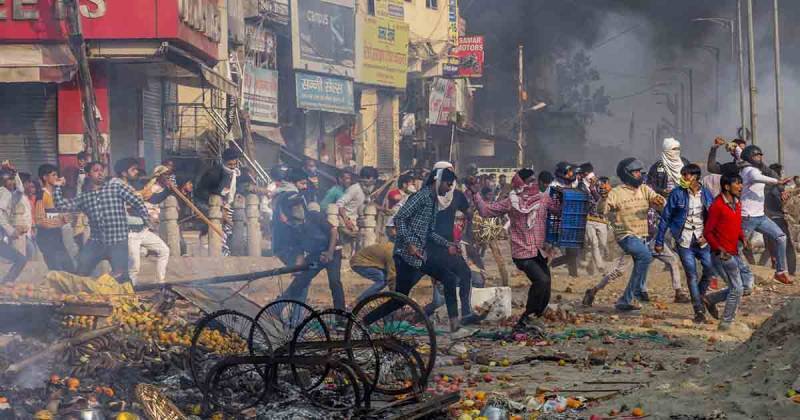
When 26 Hindu pilgrims were killed in the Pahalgam terrorist attack in Indian-occupied Kashmir in April 2025, Indian govt swiftly blamed Pakistan, which launched cross-border attacks under the pretext of counterterrorism. But this well known pattern of escalation hides a deeper and more presistent threat: the ideological shift of India under Hindutva. What started out as a cultural empathy advocated by Savarkar and the Rashtriya Swayamsevak Sangh (RSS) has now become official state policy under PM Modi’s BJP, reshaping foreign policy, religious freedoms, and domestic governance. From the revocation of Kashmir’s special status in 2019 to the discriminatory CAA-NRC laws, and most recently, the Endowment Property (Amendment) Act 2025, India’s institutions are being weaponised to disenfranchise Muslims and reevaluate secularism. In India, it has systematically excluded more than 200 million Muslims through mob violence, hate speech, disenfranchisement, and economic inequality, transforming the world’s largest democracy into a saffron state. Mosque blasphemy, lynchings, and the mainstreaming of Islamophobia are no longer unusual. They now indicate a strong majority agreement.
The repercussions are evident. Mob lynchings, mosque desecrations, and hate speech have all sharply increased, according to reports from Human Rights Watch and Amnesty International. In 2024, more than 80 instances of sectarian violence were documented in Uttar Pradesh alone. These are not isolated incidents; rather, they are part of a larger ecology of accepted bigotry, where Islamophobia is embedded in official narratives rather than existing on the outside.
A Hindutva-driven India is not only a challenge to its minorities but a destabilising force for a whole region marked by historical pain, mistrust, and unresolved borders
Hindutva is a real menace to people like 17-year-old Bilal Khan of Meerut, whose father was killed in 2023 over unfounded beef accusations. Going out after dark makes us feel unsafe. We no longer feel Indian," he said to the local press. Millions of people in the north and northeast of India, where anti-Muslim sentiment has turned into overt governmental discrimination, share this daily reality.
Hindutva has made India's attitude toward Pakistan less sensitive on a regional level. Dogma has replaced diplomacy. India's retaliatory strikes, from Balakot to Pahalgam, are no longer just strategic; they are ideological confirmations to a domestic base that sees Pakistan as an enemy of a Hindu Rashtra rather than as a neighbor. This new assertiveness has been strengthened by India's expanding defense alliances with France and Israel, two nations with hard-right ideologies.
India's discourse has become more militaristic, demonstrating this aggression. Headlines are dominated by phrases like "Surgical Strike 2.0" and "Decisive Deterrence Doctrine." They represent a change from strategic realism to religious nationalism disguised as security policy, and these are not merely words.
Despite the growing authoritarianism under Modi, much of the international community is either silent or complicit, relying on India for economic and strategic advantage. Western democracies that preach human rights have turned a blind eye to India’s momentum, preferring arms deals, tech partnerships, and alliances against China. By disguising ideological violence under the pretext of a democratic global system, this selective insult facilitates the rise of Hindutva. This creates a risky precedent where majority authoritarianism is implicitly supported in international fora and economic considerations take precedence over morality.
The danger lies not only in the prospect of war but also in the normalisation of ultranationalist rule via nuclear power. A Hindutva-driven India is not only a challenge to its minorities but a destabilising force for a whole region marked by historical pain, mistrust, and unresolved borders. For Pakistan, the consequences are both short-term and long-term. It must not only confront rising militancy and diplomatic hostility, but also fight a narrative war that portrays India as a constant aggressor while hiding its ideological axis.
It's not just about Pakistan and India. South Asia is being impacted by the emergence of Hindutva. In Sri Lanka, Buddhist nationalist organisations are finding surprising motivation in India's rightward slant; in Nepal, Hindutva supporters strive for greater ideological congruence; and in Bangladesh, anti-Muslim language in Indian media feeds mistrust. South Asia is edging closer to a perilous ideological alignment that is characterised more by ethnic and religious majoritarianism than by diplomacy.
Pakistan must respond, but not just with missiles or rhetoric. It must invest in strategic diplomacy, enhance its counternarrative on global platforms, and rebuild its international alliances beyond transactions. More critically, it must strengthen its democracy, protect its religious minorities, and lead by moral example, a duty India once claimed but no longer practices.
The world must decide: Will it continue to turn a blind eye to markets and geostrategy? Or will it finally call Hindutva what it is—a dangerously foreign ideology wrapped in the language of nationalism?
Kashmir may be the spark. But Hindutva is the fuse. And if left unchecked, the explosion will involve much more than a disputed border—it will shake the architecture of south Asian regional peace.