

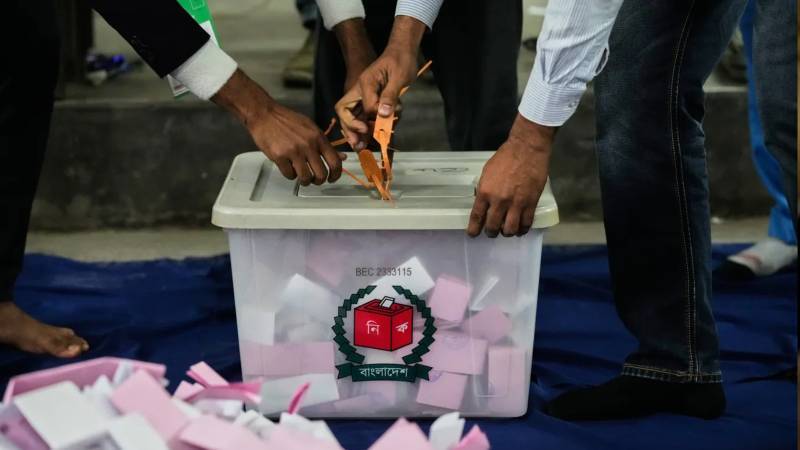
Just over a week ago, on 12 February 2026, Bangladesh held its 13th parliamentary elections. This was a big moment after the 2024 student-led uprising that ended Sheikh Hasina’s long rule. What began as protests by young people against corruption, unfair jobs, and harsh government control has now put power back in the hands of old political families.
The Bangladesh Nationalist Party (BNP), led by Tarique Rahman, the son of former Prime Minister Khaleda Zia, won a huge victory. They took about 209 to 212 seats in the 300-member parliament, called the Jatiya Sangsad. That is a two-thirds majority, which allows them to change laws easily. But many ask if this really brings the changes the students fought for.
The uprising in 2024 was a game-changer. Sparked by student protests over job quotas, it grew into a massive movement that forced Hasina’s Awami League out after 15 years of rule, often criticised for stifling dissent and rigging votes. An interim government led by Nobel laureate Muhammad Yunus stepped in to restore calm and prepare for fair elections.
Yunus handed over power smoothly after the vote, marking the end of a turbulent chapter. But the irony is stark: the revolution aimed to break free from the “two Begums” era, Hasina and Zia, yet power has circled back to the Zia family through Tarique, who returned from 17 years in exile in London. Gen Z demanded fresh faces and real reforms, but the ballot box revived the old guard.
The election process itself was a step forward in many ways. Bangladesh uses a first-past-the-post system, where the candidate with the most votes in each constituency wins the seat no need for a majority. There are 300 single-member constituencies spread across the country’s eight divisions, from bustling urban hubs like Dhaka to rural areas in Sylhet or Khulna. Voters cast ballots at over 42,000 polling centres, with a turnout of about 59.4 per cent higher than the 42 per cent in the last contested polls.
Bangladesh's ballot-box victory might feel bittersweet if it does not lead to the accountable, inclusive governance they fought for
For the first time, overseas Bangladeshis could vote via postal ballots, boosting participation to 80 per cent among them. The vote was largely peaceful, with international observers praising the fairness under Yunus’s watch. A concurrent referendum on the July National Charter package of 84 reforms including term limits, a bicameral parliament, and stronger checks on power passed with 72.9 per cent approval. This gives the new government a mandate to amend the constitution.
But the constituencies tell a tale of divided loyalties. The elections covered 299 seats (one postponed due to a candidate’s death, and results for two in Chattogram held back by court order). BNP dominated urban and semi-urban areas, winning all five in Dhaka district with large margins. This reflects strong support from middle-class voters hit hard by economic woes such as inflation and job shortages. In contrast, the Islamist Jamaat-e-Islami alliance emerged as the main opposition with 68 to 77 seats, sweeping rural strongholds such as all four in Satkhira district.
Jamaat’s rise worries some, given its past ties to extremism, though its leader Shafiqur Rahman has promised “positive opposition”. Minorities, including Hindus, saw limited wins four from BNP showing the party’s broad appeal but also the challenges for smaller groups in first-past-the-post systems.
This outcome raises tough questions. BNP’s win is historic, its first in 20 years, but will Tarique deliver on the uprising’s calls for anti-corruption drives, the rule of law, and youth inclusion? Critics fear a slide back into patronage politics, especially with Jamaat as a vocal rival. The referendum’s success is promising, but real stability depends on implementing reforms without favouritism. For Bangladesh, a nation of 170 million grappling with climate threats and economic pressures, this election could be a fresh start or just another cycle of promises unkept.
As the new parliament convenes, the Gen Z revolutionaries who sparked change will be watching closely. Bangladesh's ballot-box victory might feel bittersweet if it does not lead to the accountable, inclusive governance they fought for. In South Asia’s volatile politics, true revolutions take more than one vote to stick.