

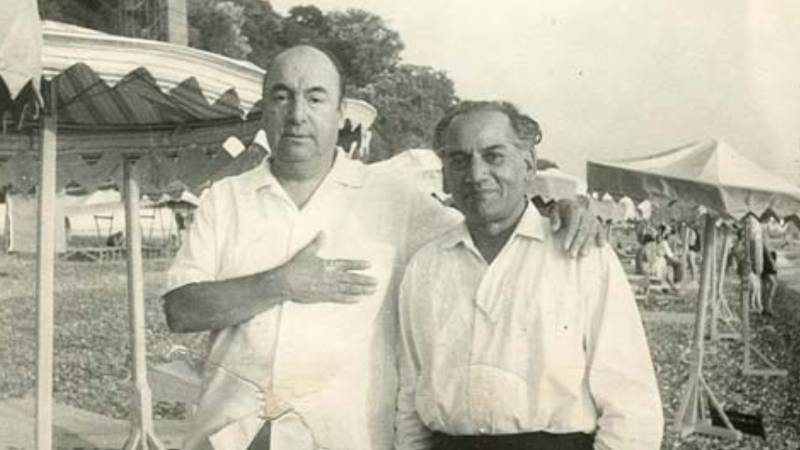
Faiz Ahmad Faiz and Pablo Neruda, great contemporary poets, were intimate friends, a fact little known in Chile and Pakistan. Chile and Pakistan are geographically far apart, but share remarkable socio-political similarities in their post-independence periods. Both countries produced charismatic leaders like Salvador Allende and Zulfikar Ali Bhutto. Tragically, they met the same fate, deposed and eliminated by military dictators at the behest of their imperialist masters.
Pablo Neruda supported Allende and served under his government, as did Faiz Ahmad Faiz under Bhutto. Pablo did not survive long after the 1973 US-backed military coup by Augusto Pinochet, which attacked the presidential palace and killed Allende. General Ziaul Haq arrested Zulfikar Ali Bhutto on 5 July 1977, and after a kangaroo trial, he was hanged on 4 April 1979.
Faiz was exiled and spent many years in agony before he could return home in 1982. He died in Lahore on 20 November 1984. Faiz is called the Pablo Neruda of Pakistan—a great compliment for him as well as the Chilean poet. Neruda was honoured with the Nobel Prize, and both won the Lenin Peace Prize in recognition of their efforts in literature and world peace.
Both Neruda and Faiz were actively involved in freedom movements, which in their times were essentially anti-colonial and anti-imperialist struggles. Their poetry, musical, lyrical, and inspiring stems from the main theme of making their homelands and the world at large a better place for the downtrodden, the wretched of the earth,’ a phrase masterfully coined by Frantz Fanon and made the title of his book.
In the post-independence period and during the Cold War era, both Neruda and Faiz were still struggling as oligarchies of the rich and mighty, created by colonial masters, captured power, denying people their due rights. Both used poetry as a means of resistance against the colonial and post-colonial legacy of control, exploitation, and denial of rights to the masses.
They remained active players in the entire struggle and were not mere idealist poets, sitting on the other side of the fence, criticising others. This makes them distinguishable from many contemporary poets and writers, who believed in “art for the sake of art” and sided with the rulers of the day, either by their silence or inaction.
In a world where might has long been right, the powerful in global politics want the perpetuation of their control through handpicked cronies and lackeys in different countries; we will need poets like Faiz and Neruda to expose them and give us the courage to fight against them
Since Allende and Bhutto pursued pro-people policies in countries long dominated by the military, they were overthrown by collaborators of the neo-imperialists, killed at the behest of the military juntas of Pinochet and Zia, and followed by long spells of repressive military regimes, which did not retreat until the Cold War ended.
Neruda and Faiz participated in the long-drawn struggle, and their poetry is the epitome of a message of hope and commitment for creating a true democratic polity in which the forces of exploitation have no role to play. Their dream was common: to see human beings living in peace and tranquillity. Neruda and Faiz were messengers of peace, equality, and justice. Their commitment to their cause was infallible. Their poetry reflects the aspirations of the masses.
From a literary point of view, both Faiz and Neruda were masters of their craft. They were not like revolutionary slogan-mongers who lacked classical authenticity and modern sensibility in their work. On the contrary, both Faiz and Neruda are considered, even by their critics, great masters of poetic expression and authentic builders of a new tradition of resistance in literature.
Faiz, during his exile, had a chance of editing the magazine Lotus of the Afro-Asian Writers’ Association. In Lotus, English translations of Pablo Neruda’s poems appeared frequently. Faiz, in his many editorials while paying tribute to Neruda, aptly called him a poet of humanity, ‘great voice of our time,’ ‘true representative of the masses,’ and ‘poet of all times to come.’
The message of Neruda, according to Faiz, is not only meant for his countrymen but for all those who were once subjugated and then struggled for freedom, only to soon realise that their liberation was a myth and not a reality, as colonial masters left behind their cronies, who proved to be more cruel than their masters.
The poetry of Faiz and Neruda is a realisation of this myth of independence, the title of a book by Zulfikar Ali Bhutto, and how to win real freedom: to undo the colonial legacy, defeat the forces of exploitation, and establish a just system for all.
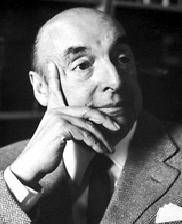
How long will this struggle continue? The answer came from Edward W. Said, the great intellectual of our time. In an interview, while elaborating the legacy of Neruda and Faiz, Professor Said pointed out that “in a world where might has long been right, the powerful in global politics want the perpetuation of their control through handpicked cronies and lackeys in different countries; we will need poets like Faiz and Neruda to expose them and give us courage to fight against them.” This is the best tribute one can present to Neruda and Faiz.