

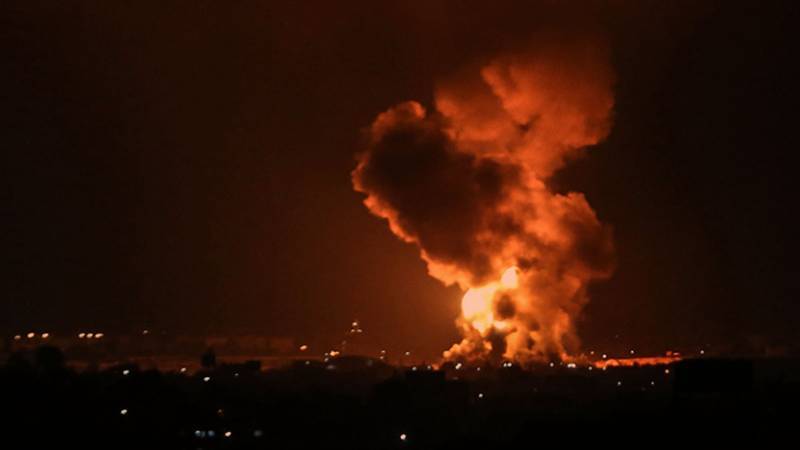
The Iran–Israel war, now unfolding with terrifying speed, is not merely a military conflict fought with drones, missiles, and proxy forces. It is also a fierce war of narratives, an information battle where headlines, frames, and digital content shape global sympathies and political alignments. While missiles flatten buildings and take lives, media narratives decide who is the aggressor, who is the victim, and who—ultimately—gets to claim moral high ground.
This dual-front war, one kinetic and the other discursive, reveals as much about global power structures and ideological alignments as it does about the military capabilities of Iran and Israel. The real-time conflict between physical destruction and media distortion demands urgent attention, especially in a world where perception has become a critical weapon of modern warfare.
The Current War: A Brief Background
Israel recently launched a pre-emptive air campaign against Iran, targeting high-ranking Iranian military officials, six nuclear scientists, and nuclear infrastructure. Prime Minister Netanyahu declared that Israel would take the war “to the heart of the regime,” naming Ayatollah Khamenei as a direct target. The justification? Iran is on the verge of developing a nuclear bomb.
Yet the International Atomic Energy Agency (IAEA) contradicts this claim. According to its latest reports, Iran’s uranium enrichment has reached 60 percent, short of the 90 percent threshold required for nuclear weapons capability. But in geopolitical strategy, facts are often subordinate to narratives. Israel proceeded with strikes, setting off a chain of retaliations.
In an unprecedented response, Iran fired waves of missiles that overwhelmed Israel’s much-celebrated Iron Dome system, striking Tel Aviv and other urban centres. For the first time, Israelis experienced the scale of destruction previously associated with Gaza and southern Lebanon. Panic spread. Civilians sought refuge. Tel Aviv was no longer invincible.
But as the physical war escalates, so too does the narrative battle—a battle that is just as influential and dangerous.
The Media War: Competing Frames
Wars today are rarely understood through direct experience. Instead, they are mediated—filtered through television broadcasts, online news portals, YouTube clips, and social media scrolls. In this landscape, framing—the way events are constructed and presented—shapes international opinion and policy reactions.
Israel portrays itself as a lone democracy in a hostile region, with media like the Jerusalem Post casting Netanyahu as a Churchillian saviour of civilisation
Western Media: Iran, the Imminent Nuclear Threat
CNN, Fox News, BBC, and the New York Times have largely framed the conflict as Israel’s righteous attempt to prevent Iran from acquiring nuclear weapons. Headlines like “Israel Defends Itself Against Iranian Aggression” or “Tehran Inches Toward Nuclear Threshold” repeatedly cite anonymous intelligence sources and Israeli officials while marginalising international verification from the IAEA.
The framing often places Iran in the role of the radical rogue state—irrational, volatile, and on the brink of apocalyptic violence. This echoes the “Axis of Evil” narrative used against Iraq in 2003, when the U.S. invaded on the false pretext of Weapons of Mass Destruction. The underlying trope is consistent: Western intervention is framed as necessary, moral, and pre-emptive.
This alignment between Western foreign policy and media framing creates an echo chamber in which facts are selectively reported, counter-narratives are silenced, and military aggression is normalised under the guise of global security.
Al Jazeera and the Muslim World: Sovereignty Under Siege
Al Jazeera, in contrast, has framed Israel’s actions as blatant aggression against a sovereign nation that has not yet crossed any nuclear threshold. Coverage focuses on civilian casualties, funerals of Iranian scientists, and interviews with Middle Eastern analysts who view the war as an extension of Western imperial interests.
Headlines such as “Israel’s Strike is an Act of War, Not Prevention” or “West Turns Blind Eye to Israel’s Violations” highlight the asymmetry not just in power but in perception. The narrative here is that of a developing, sovereign nation defending itself against a nuclear-armed aggressor, with regime change—not non-proliferation—as the real motive.
Pakistani media—including Geo, ARY, and Dawn—have broadly adopted this framing. Talk shows and editorials question Israel’s legal and moral authority to carry out pre-emptive strikes. Many recall the Iraq invasion, the Israeli strikes on Syria, and the devastation in Gaza, drawing a broader pattern of selective enforcement of international law.
Historical Parallels: Pahalgam, Gaza, and the Weaponisation of Narratives
This media bifurcation is not new. The same narrative war played out during the India–Pakistan standoff following the Pahalgam incident in 2023, when India blamed Pakistan for a deadly attack on Hindu pilgrims. Indian media—Times Now, Republic TV, and Zee News—immediately framed the incident as “cross-border Islamist terrorism,” demanding swift retribution. Western outlets echoed this narrative with minimal scrutiny.
In contrast, Pakistani media challenged the credibility of Indian claims, highlighted the systemic persecution of Muslims in India, and accused New Delhi of manufacturing incidents to justify repression in Kashmir. Al Jazeera ran investigative pieces that questioned the veracity of Indian intelligence reports. The Indian frame of “victim of terrorism” clashed head-on with the Pakistani and international Muslim framing of “Kashmir as occupied and brutalised territory.”
Similarly, during the Gaza massacres of 2021 and 2023, Western media again largely adopted the Israeli narrative of “self-defence against Hamas rockets,” while Al Jazeera and Pakistani outlets reported on the disproportionate loss of Palestinian lives, destruction of hospitals and schools, and Israel’s role as an occupying force. Emotional visuals, such as a father holding his dead daughter, or doctors operating in bombed-out clinics, were widely circulated by Al Jazeera to challenge the Western discourse.
These are not just differences in perspective—they are battles for history itself. How a war is remembered, taught, and judged hinges on which frame prevails.
Information as a Weapon: From Screens to Streets
This media war has real-world consequences. Public sentiment across the globe, especially in democracies, can push governments to act—or remain silent. Pro-Israel framing in U.S. media leads to uncritical support from Congress and delays any UN resolutions. Muslim media framing, on the other hand, stirs up public anger, protests, and demands for diplomatic retaliation.
In authoritarian states, media framing becomes a tool of domestic control. Iran’s state media, for instance, has invoked historical trauma—colonialism, Western-backed coups, the 1980s Iraq war—to frame the Israeli attack as part of a centuries-old anti-Persian, anti-Islamic agenda. It is rallying its population around nationalism and religious duty.
Meanwhile, Israel portrays itself as a lone democracy in a hostile region, with media like the Jerusalem Post casting Netanyahu as a Churchillian saviour of civilisation.
Media as a Theatre of War
While bombs fall and buildings crumble, headlines and hashtags proliferate. The battleground now extends beyond borders to include:
- Satellite TV, where Al Jazeera and BBC World compete for global viewership;
- Social media, where viral videos from both Iran and Israel are shared with selective captions and context;
Fact-checking websites, which themselves carry ideological biases; - Digital influencers and AI-generated propaganda, muddying truth further.
In this media ecology, the average global citizen becomes not just a spectator but a participant, liking, sharing, tweeting, and thus amplifying one frame over another.
Conclusion: The Cost of Framing Wars
As Iran and Israel continue to exchange missiles, the war of media framing escalates in parallel. It determines diplomatic alliances, international responses, economic sanctions, and public perceptions of justice and aggression.
The tragedy is that in both these wars—of missiles and of media—civilians are the primary victims. Not just in death or displacement, but in being denied the dignity of truth.
Framing wars are not fought in newsrooms alone. They shape the world’s moral compass. They determine which lives are grievable, which wars are just, and whose pain is visible. As this war continues to rage, we must resist the comfort of echo chambers and the seduction of single narratives. Only then can we hope to see not just with our eyes, but with understanding.