

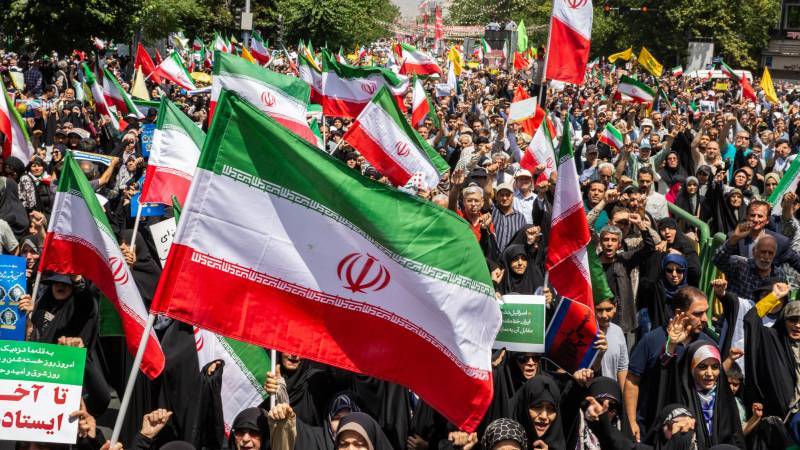
Predictions of the Islamic Republic’s imminent downfall have proliferated amid Iran’s latest wave of unrest. Economic collapse, hyperinflation, nationwide protests sparked by the rial’s freefall, brutal crackdowns (with reports of thousands killed in January), internet blackouts, and mass arrests paint a regime under existential strain.
External pressures such as U.S. strikes on nuclear sites, Israeli demands for missile curbs, and regional setbacks add to the narrative of fragility. Yet history suggests otherwise: the Islamic Republic has repeatedly outlasted forecasts of collapse by leveraging institutional cohesion, ruthless repression, and the absence of conditions that toppled other autocracies.
The regime’s core strength lies in the unwavering loyalty of its praetorian forces, particularly the Islamic Revolutionary Guard Corps (IRGC). Unlike brittle dictatorships that fracture when security services defect, Iran’s enforcers have shown no significant cracks during the latest crisis. This mirrors Bashar al-Assad’s survival in Syria after the 2011 protests escalated into civil war.
Assad’s Alawite-dominated core units and parallel security structures suppressed dissent with extreme violence, weathering defections from the regular army while retaining control over key territories for over a decade—until external military shifts finally overwhelmed him in late 2024. Iran advised Assad early on: crush protests decisively to prevent escalation. Tehran now applies the same playbook domestically, with the IRGC acting as an ideologically committed firewall.
North Korea offers another stark parallel. Despite decades of sanctions, famine, and isolation, the Kim regime endures through total control over the military, pervasive surveillance, and ideological indoctrination that frames external pressure as existential threats to the nation. Protests remain rare and are swiftly extinguished; loyalty is enforced through fear and patronage within elite circles. Iran’s system, while less hermetic, similarly ties the survival of key constituencies—IRGC commanders, Basij militias, and clerical networks—to regime continuity. Collapse would mean not just political change but existential loss for these groups.
Contrast this with the 1979 revolution that overthrew Mohammad Reza Shah. The Shah’s military, professional but not ideologically fused to his rule, hesitated amid mass mobilisation under Ayatollah Khomeini’s unified leadership. SAVAK repression backfired when the Shah wavered on full force, leading to defections and rapid unravelling.
Tehran will survive, not through affection, but through armed organisation and acute awareness of the alternatives
Protests in 1978–1979 drew millions across urban and rural divides, uniting bazaaris, intellectuals, leftists, and clerics under Khomeini’s anti-imperialist banner. The Shah’s regime, bloated by oil wealth yet riddled with inequality and corruption, lacked a deep ideological core; it was seen as a Western-imposed monarchy, alienating even traditional elites. External dynamics favoured the revolutionaries: Khomeini’s exile in Paris amplified his voice globally, while U.S. ambivalence (under Carter) signalled no decisive intervention.
Today’s Iran inverts nearly every aspect of that dynamic. Protests, while widespread and fueled by economic despair, remain fragmented by class, ethnicity, and ideology—lacking a singular, charismatic unifier like Khomeini to bridge divides. Reza Pahlavi, the exiled son of the Shah, garners symbolic nostalgia (chants of “Javed Shah”) but no operational network; his calls for referendums ring hollow without grassroots mobilisation, and the regime effectively brands him a foreign stooge.
The Islamic Republic, born of revolution, draws on an entrenched anti-Western ideology that resonates with core supporters, framing current unrest as externally orchestrated plots rather than genuine grievances.
Technologically and tactically, the contrasts sharpen. In 1979, the Shah’s forces relied on brute force without modern tools; today, the regime deploys sophisticated surveillance, AI-driven facial recognition, and internet shutdowns to isolate protesters and preempt coordination—tools honed since the 2009 Green Movement.
Back then, oil strikes crippled the economy from within; now, despite sanctions, the regime maintains control over key revenue streams through shadow networks and alliances with Russia and China. The Shah’s personalisation of power left a vacuum upon his exile; Khamenei’s system, institutionalised around velayat-e faqih (guardianship of the jurist), disperses authority while centralising repression.
Iran’s own history reinforces resilience. The 1988 mass executions of political prisoners (thousands killed in secrecy amid blackouts and isolation) demonstrated the regime’s capacity for extreme, information-denied violence to eliminate threats. Post-2009 Green Movement crackdowns, 2017–2018 economic protests, 2019’s “Bloody November,” and 2022’s Woman, Life, Freedom uprising all ended in suppression without elite fractures. Each wave eroded legitimacy but fortified repressive instincts.
External factors further insulate the regime. U.S. airstrikes in 2025 targeted nuclear facilities but stopped short of regime-change escalation, reflecting Washington’s aversion to another ground war, especially one seen as serving Israeli interests. Trump faces domestic constraints mirroring those that limited intervention in Syria.
Iran’s nuclear and missile programmes remain calibrated for deterrence: advanced enough to raise costs of attack, but not so provocative as to force preemption. Proxy setbacks (e.g., reduced coordination after Soleimani’s 2020 assassination) have eased some threats, but the regime adapts with strategic patience.
Negotiation, not collapse, appears the more probable path. Sanctions relief tied to verifiable limits on attacks against Israel or missile capabilities could emerge as a pragmatic compromise, much as Assad’s allies once bought time through partial concessions. The regime has weathered isolation before without surrendering core deterrents.
Iran in 2026 is not Syria in 2024, or even North Korea in extremis—let alone the Shah’s crumbling monarchy. No mass defections loom, no opposition unifies disparate factions, and no invading force commits decisively. The Ayatollahs retain the guns, the ideology frames dissent as heresy, and survival instincts trump popularity. Regimes fall when enforcers defect, or invaders overwhelm; neither is forthcoming here.
The Islamic Republic may limp under sanctions and unrest, but it is engineered for endurance. Wishful predictions of its demise—repeated since 1979—serve neither analysis nor policy. Tehran will survive, not through affection, but through armed organisation and acute awareness of the alternatives.