

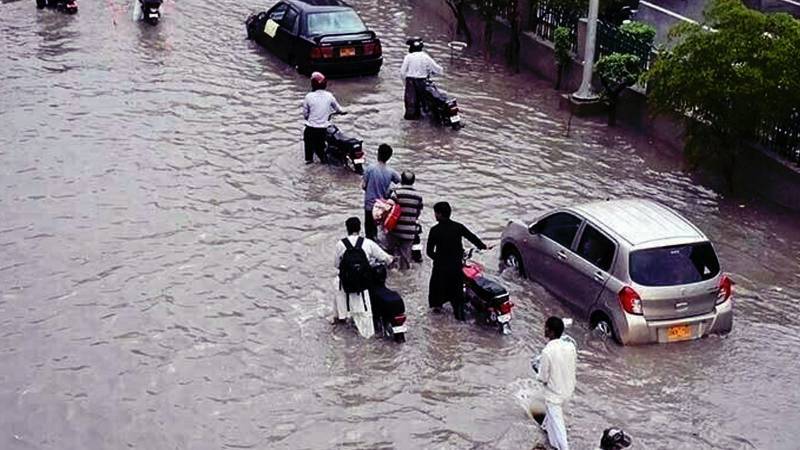
In the summer of 2025, Gilgit-Baltistan endured one of its most devastating flood seasons in decades. Accelerated glacial melt, record-breaking mountain heatwaves reaching 48.5 °C, and prolonged monsoon rains triggered glacial lake outburst floods (GLOFs), landslides, and destructive cloudbursts. Entire valleys were cut off, communities stranded, and vital infrastructure brought to a standstill.
More than 540 homes were destroyed, and critical routes—including the Karakoram Highway and the Jaglot–Skardu Road—remained blocked for days. At least ten lives were lost in Gilgit-Baltistan, while hundreds more perished nationwide as torrential rains battered Khyber Pakhtunkhwa, Punjab, and Sindh. Damages in Gilgit-Baltistan alone are estimated to exceed Rs 20 billion. Nationally, over 650 deaths have been reported since July, making this year’s floods among the deadliest since 2022.
The devastation once again highlighted that Pakistan’s climate crisis is not a distant threat but an escalating emergency. These disasters are not simply “natural” events—they are shaped by governance failures, poor land-use planning, and fragile infrastructure, all of which are compounded by rising global temperatures.
Prime Minister Shehbaz Sharif, visiting the region after the floods, pledged a Rs 4 billion reconstruction package. The relief package included compensation for affected families, the announcement of a 100-megawatt solar project to address winter energy shortages, and plans for a centralised weather alert and forecasting system. Federal Climate Minister Musadik Malik admitted the early warning network had failed, with some installations vandalised or left without maintenance, and called for relocating vulnerable settlements under the Land Reforms Bill 2025.
A dedicated Gilgit-Baltistan Climate Resilience Authority, with representation from government, scientists, civil society, and local communities, could centralise planning and adaptation measures
While these measures signal political recognition, they remain piecemeal—falling short of the structured climate adaptation strategy that Gilgit-Baltistan urgently requires.
For decades, unchecked construction in floodplains, continued deforestation, and weak enforcement of zoning laws have magnified natural hazards. Mountain streams are increasingly choked by debris, glacial lakes remain poorly monitored, and bridges built without climate-resilient designs collapse with each season of heavy rains. Without reforms, Gilgit-Baltistan will remain disproportionately vulnerable, despite contributing less than 1% to global emissions.
The path forward must treat early warning systems as critical infrastructure. These systems should be safeguarded against neglect and sabotage, strengthened with real-time satellite monitoring and community-led alert networks. In a mountainous region where communication barriers can be fatal, local ownership of alerts—whether through SMS, sirens, or radio—can transform warnings into lifesaving action.
Equally urgent is land-use planning. Relocation, when unavoidable, must not become forced displacement into deeper poverty. Communities must retain access to education, healthcare, and livelihoods. Managed with dignity, relocation can offer long-term resilience rather than compounding vulnerability.
Infrastructure too must evolve for tomorrow’s extremes. Elevated roads, climate-resilient bridges, and reinforced embankments should be supported by slope stabilisation and nature-based engineering such as terracing and reforestation. Preventing soil erosion and stabilising landscapes are as crucial as rebuilding concrete structures.
Preparedness must also be decentralised. In Gilgit-Baltistan’s rugged terrain, national responders often arrive too late. District-level operation centres, equipped with drones, radios, and trained volunteers, could ensure rapid search-and-rescue capacity even when valleys remain cut off. Localised disaster systems, supported by community trust, provide the first and often only line of defence.
Economic resilience is another cornerstone. Recovery cannot end with shelter reconstruction—it must restore livelihoods. Farmers need access to climate-smart techniques, drought- and flood-tolerant crops, and efficient irrigation systems. Tourism, a lifeline for Gilgit-Baltistan, must adopt community-driven, sustainable models that protect fragile ecosystems while sustaining local incomes. Without this, one disaster season can collapse the region’s economy for years.
Institutional reform is necessary to coordinate these diverse strands. A dedicated Gilgit-Baltistan Climate Resilience Authority, with representation from government, scientists, civil society, and local communities, could centralise planning and adaptation measures. Such a body would not only enforce zoning and infrastructure standards but also link local needs with national and international financing.
Global support is equally critical. Pakistan’s climate vulnerability is disproportionate to its emissions, and mountain regions like Gilgit-Baltistan represent some of the world’s most fragile ecosystems. Accessing climate adaptation funds through the Green Climate Fund, World Bank, and Asian Development Bank is vital. At international platforms such as COP, Gilgit-Baltistan should be presented as a model for mountain-focused climate action, demonstrating how community-led and nature-based solutions can safeguard entire river basins. Integrating the region into the national Living Indus Initiative—which emphasises ecosystem restoration across the Indus Basin—would further cement its role in protecting Pakistan’s water security.
Gilgit-Baltistan is no longer simply a land of scenic grandeur. It is ground zero of Pakistan’s climate crisis, where the collision of ecological fragility and weak governance produces human tragedy year after year. The next disaster is not a question of if, but when. The challenge now is whether Pakistan will continue to respond with short-term relief or finally embrace long-term resilience. Investing in Gilgit-Baltistan’s adaptation is no longer just a regional necessity—it is a national imperative.