

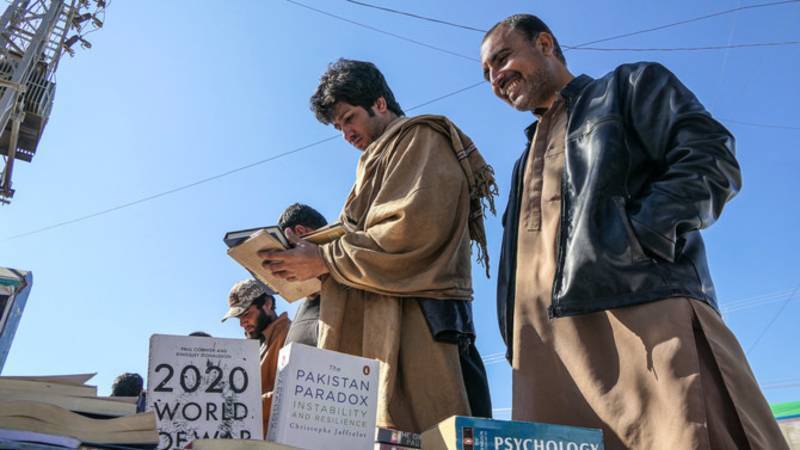
For decades, Balochistan was viewed as a distant frontier on the margins of South Asia. Today, this perception is rapidly changing. Amid instability in the Middle East, maritime insecurity in the Red Sea and Gulf region, competition over global trade corridors, and rivalries in the Arabian Sea, Balochistan has emerged as one of the most strategically significant regions in Asia.
Stretching from the borders of Iran to the Arabian Sea coastline and linking South Asia with the Middle East and Central Asia, Balochistan occupies a geography that major powers can no longer ignore. Yet its future will not be determined by geography alone. The province stands between two competing possibilities: becoming a gateway of connectivity and prosperity or remaining trapped in a cycle of insurgency, militarisation, exclusion, and underdevelopment.
Balochistan is no longer a peripheral frontier; it is becoming a central pillar in the emerging political and economic architecture of Asia and the Middle East.
The roots of contemporary instability are historical as much as strategic. Questions of autonomy, representation, resource control, and federal integration have shaped centre-province relations for decades. Repeated cycles of insurgency, centralised governance, and securitised responses have deepened mistrust between sections of the local population and the state.
Whenever tensions rise in the Gulf, the Strait of Hormuz faces disruption, or Red Sea shipping becomes vulnerable, attention shifts towards Gwadar, the Makran coast, and western Pakistan. Global powers increasingly view Balochistan as a maritime gateway, an energy corridor, a mineral-rich frontier, and a strategic bridge between regions. This significance is tied to the China-Pakistan Economic Corridor, Gulf investment ambitions, Indo-Pacific competition, and global trade shifts.
However, reducing Balochistan to Gwadar alone creates a narrow understanding of the province. Much of western and southern Balochistan, including Chagai, Washuk, Panjgur, Kech, Kharan, and Nushki, continues to face infrastructural isolation, water scarcity, weak healthcare systems, and limited education.
Western Balochistan has become a frontier economy shaped by geography, sanctions, border closures, smuggling networks, and underinvestment. In many districts, livelihoods depend on cross-border movement, fuel trade, livestock, and small-scale commerce. Climate change and groundwater depletion are intensifying vulnerability.
At the same time, Makran has become central to Pakistan's strategic imagination. Gwadar Port, New Gwadar International Airport, coastal highways, and energy projects have transformed the region into a symbol of national ambition. Yet for many local communities, development remains visible but not fully accessible.
Projects such as Reko Diq may transform the province economically, but only if strategic wealth is matched by institutional trust and fair distribution
This contradiction defines Makran today: strategic importance is rising, but social development remains weak. Roads, ports, and investment have not translated into broad-based employment, equitable opportunity, or public trust.
The youth question lies at the centre of this challenge.
Pakistan is one of the world's youngest countries, and Balochistan has an overwhelmingly young population. Nearly two-thirds are under 30. Yet youth unemployment, educational exclusion, and limited mobility remain severe challenges.
Balochistan continues to rank among the lowest provinces in Pakistan on human development indicators. Literacy rates remain below national averages, female literacy in western districts is among the lowest in South Asia, and access to technical education, digital infrastructure, and healthcare remains uneven.
This widening gap between aspiration and opportunity is generating deep frustration among educated youth.
Across Makran, families make extraordinary sacrifices to educate their children in Turbat, Quetta, Karachi, Islamabad, and Lahore. Degrees are earned, but employment opportunities remain scarce. Many strategic projects have failed to create pathways for local participation.
Behind every unemployed graduate is a family that invested years of sacrifice and hope.
The youth of Makran are not asking for charity. They are asking for dignity, inclusion, and opportunity.
Yet Balochistan's youth cannot be understood only through deprivation. Across the province, a new generation is finding its voice through student organisations, civic activism, grassroots movements, and digital platforms. Young women are increasingly participating in education, public debate, and social advocacy despite barriers.
The gender dimension of development remains especially important in Makran and western Balochistan. Infrastructure failures, including sanitation, transport, healthcare access, and public safety, disproportionately affect women and girls. Development cannot be measured only through ports and highways; it must also be measured through dignity, mobility, and inclusion in daily life.
The future of Makran is not only geopolitics. It is also about fisheries, livelihoods, water access, climate resilience, and the blue economy. Coastal communities increasingly fear exclusion from emerging maritime economies dominated by large infrastructure and external actors.
Climate change is becoming a strategic issue. Water scarcity, desertification, rising temperatures, and groundwater depletion threaten long-term stability across western and southern Balochistan.
Balochistan also sits at the centre of growing competition in the Arabian Sea, involving India, China, Gulf states, and the United States. This creates both opportunity and risk.
If political inclusion, transparent governance, and equitable resource management improve, Balochistan could evolve into a regional hub linking South Asia, Central Asia, the Gulf, and the Middle East. Projects such as Reko Diq may transform the province economically, but only if strategic wealth is matched by institutional trust and fair distribution.
Three futures remain possible: connectivity and prosperity through political inclusion; prolonged low-intensity conflict marked by mistrust; or heightened regional instability if Middle East tensions intensify and spill across borders.
Ultimately, the future of Balochistan will not be determined solely by ports, minerals, insurgency, or foreign investment. It will depend on whether governance systems can transform strategic geography into human development, political trust, and economic dignity.
Geography gives Balochistan strategic leverage. Whether that leverage becomes prosperity, dignity, and stability, or deeper exclusion and prolonged conflict, will depend on the choices made today.