

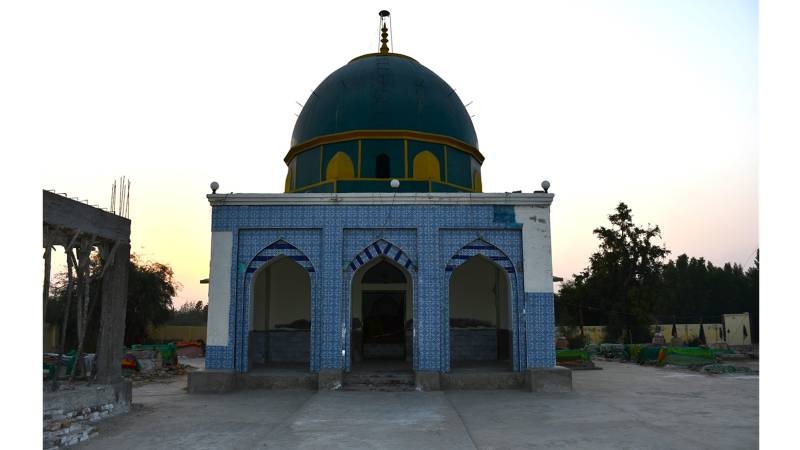
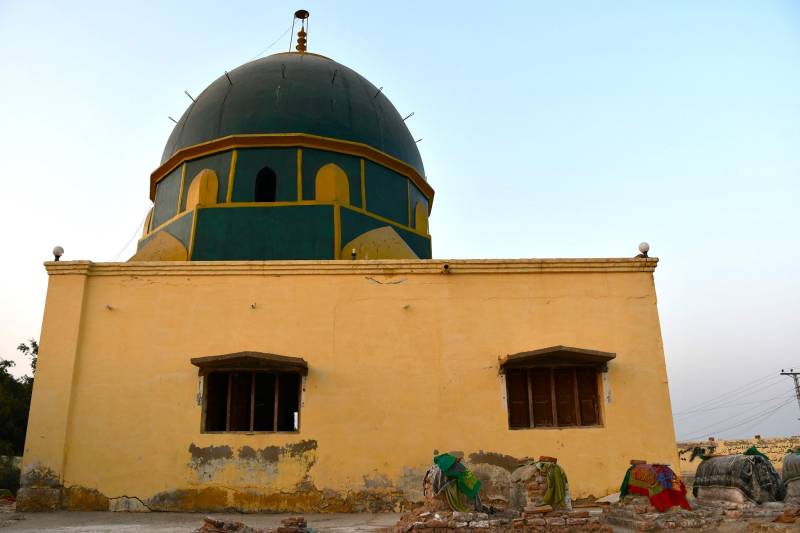
Sindh is home to numerous shrines of Sufi poets that attract visitors from both the Muslim and Hindu communities. Like other districts in Sindh, Khairpur district hosts several of these shrines. One of the most popular shrines belongs to Sufi Faqir Khush Khair Muhammad Hisbani, located near Karoondi village in Faiz Ganj taluka of Khairpur district.
According to "Khairpur Je Miran Jo Adab, Siyasat Ain Saqafat Men Hisso" by Dr Atta Muhammad Hami (1994:439), the ancestors of Faqir Khush Khair Muhammad Hisbani were originally from Sahiwal. They accompanied Adam Shah Kalhoro to Sindh, where they founded a village near Bhonr in Kandiaro taluka. Faqir Khush Khair Muhammad Hisbani was born in the village of Gul Muhammad Hisbani in Nawabshah in 1224 AH/1809 AD. It is said that he received his early education at the Madrasa of Akhund Bakhsh Ali Gadehi in Bonr village, where he studied the Holy Quran and a few Persian books. After living in his village for twenty years, he moved to Taggar village, where he continued his studies under the guidance of Molvi Abdul Quddus.
Tanveer Abbasi (1982), compiler of Kalam Khush Khair Muhammad Hisbani, writes that Faqir Khush Khair Muhammad was the son of Raees Ghulam Hyder Khan. Dr Atta Muhammad Hami (1994) believes Ravat Khan, the uncle of Faqir Khush Khair Muhammad, was an influential person and enjoyed good relations with Mirs of Khairpur State.
Sarai Ghulam Hyder Khan had four sons: Mir Muhammad, Sher Muhammad, Khush Khair Muhammad, and Araz Muhammad. Faqir Khush Khair Muhammad Hisbani was a disciple of Abdul Hayee Naqshbandi, the son of Pir Shahabuddin Naqshbandi. It is said that Faqir Khush Khair Muhammad was connected to the Naqshbandi dargah of Abdul Hayee through Usman Faqir Sangi, who was an eminent poet of Sindhi and Saraiki. Faqir Khush Khair Muhammad Hisbani was very close to Usman Faqir Sangi. According to Dr Nabi Bakhsh Khan Baloch (1985), who writes in Kafiyoon Vol 1, Usman Faqir Sangi was a well-known poet of the kafi genre of poetry. His kafis are popular in Sindh and are sung by Sufi singers.
Dr Sagar Abro wrote an article titled "Sufi Usman Faqir Sangi Naqshbandi," which was published in the compiled book Larkano Raj Rano by Riazat Buriro (2017). This article states that Usman Faqir Sangi was born in Waleed village in 1773, Larkana; however, some scholars believe he was born in 1778. His father, Khair Muhammad, was a disciple of Shahabuddin Naqshbandi, who was the father of Abdul Hayee. After Khair Muhammad's death in 1820, Usman Faqir Sangi migrated to Jamri Sangi, where he got married.
Usman Faqir Sangi spent most of his time in Naushahro Feroze under the guidance of his spiritual mentor Abdul Hayee Naqshbandi. Abdul Hayee played a vital role in spreading the Naqshbandiyya order, attracting many disciples. One of his most notable disciples was Faqir Khush Khair Muhammad Hisbani, who dedicated much of his time to serving his Sufi master.
After serving Abdul Hayee Naqshbandi for some time, it is said that Faqir Khush Khair Muhammad Hisbani embarked on a pilgrimage to the Hajj. Upon his return, he discovered that his mentor had passed away. Following Abdul Hayee's death, his son Shah Naseer became the custodian of his father's legacy at a young age. It is believed that both Usman Faqir Sangi and Khush Khair Muhammad Hisbani stayed in Naushahro Feroze to look after Shah Naseer. Shah Naseer was also a distinguished Sufi poet. Later, both also took bayat (initiation) from Shah Naseer (d 1889).
In memory of his friend Usman Faqir Sangi, who passed away in 1860, Faqir Khush Khair Muhammad Hisbani composed a heartfelt poem. The shrine of Usman Faqir Sangi is located in the village of Jamri Sangi in Larkana. Faqir Khush Khair Muhammad Hisbani wrote poetry in Sindhi, Saraiki, and Hindi. Tanveer Abbasi (1982) notes that the poetry of Faqir Khush Khair Muhammad Hisbani is deeply rooted in romanticism, a style that is also reflected in the works of his predecessor poets. He paid tribute to Sindhi Sufis, particularly Shaheed Shah Inayat of Jhok and Shaheed Makhdoom Bilal, in his poetry. Moreover, he was the second poet, after Sachal Sarmast (d 1827), to mention Shaheed Shah Inayat in his work.
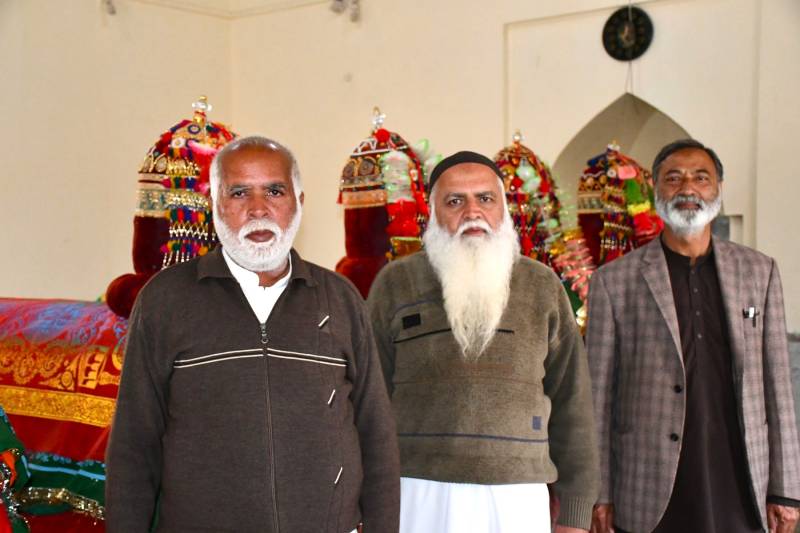
Shaheed Sarmad is also mentioned in the poetry of Faqir Khush Khair Muhammad Hisbani. In his poetry, Faqir Khush Khair Muhammad Hisbani also alludes to Persian mystics and poets, including Shaikh Attar (d 1221), Shams Tabrizi (d 1248), Bayazid Bastami (d 874), and Mansur al-Hallaj (d 922). He passed away in 1877 in the village of Taggar, where he was buried. Later, due to erosion caused by the Indus River, his mortal remains were relocated to a site near Karoondi in the Faiz Ganj taluka of Khairpur. Today, the village where his shrine is located is called Khush Khair Muhammad Hisbani. I visited the shrine of Faqir Khush Khair Muhammad Hisbani in 2021 with my friends, Majid Ali Soomro, Dr Imdad Ali Memon (author of Qalandariyyat), and Irshad Ali Memon.
The visitor can see the tombs and graves of Hindus located behind the shrine. This reflects the tolerance and inclusive approach advocated by Faqir Khush Khair Muhammad Hisbani
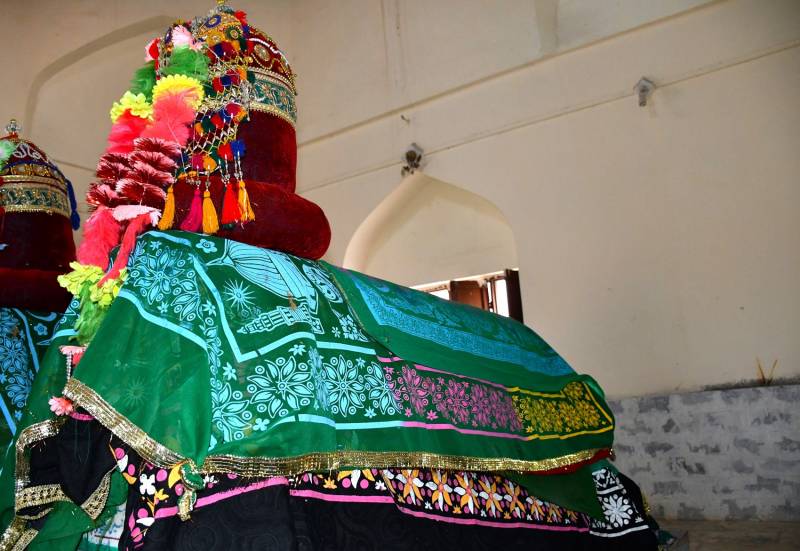
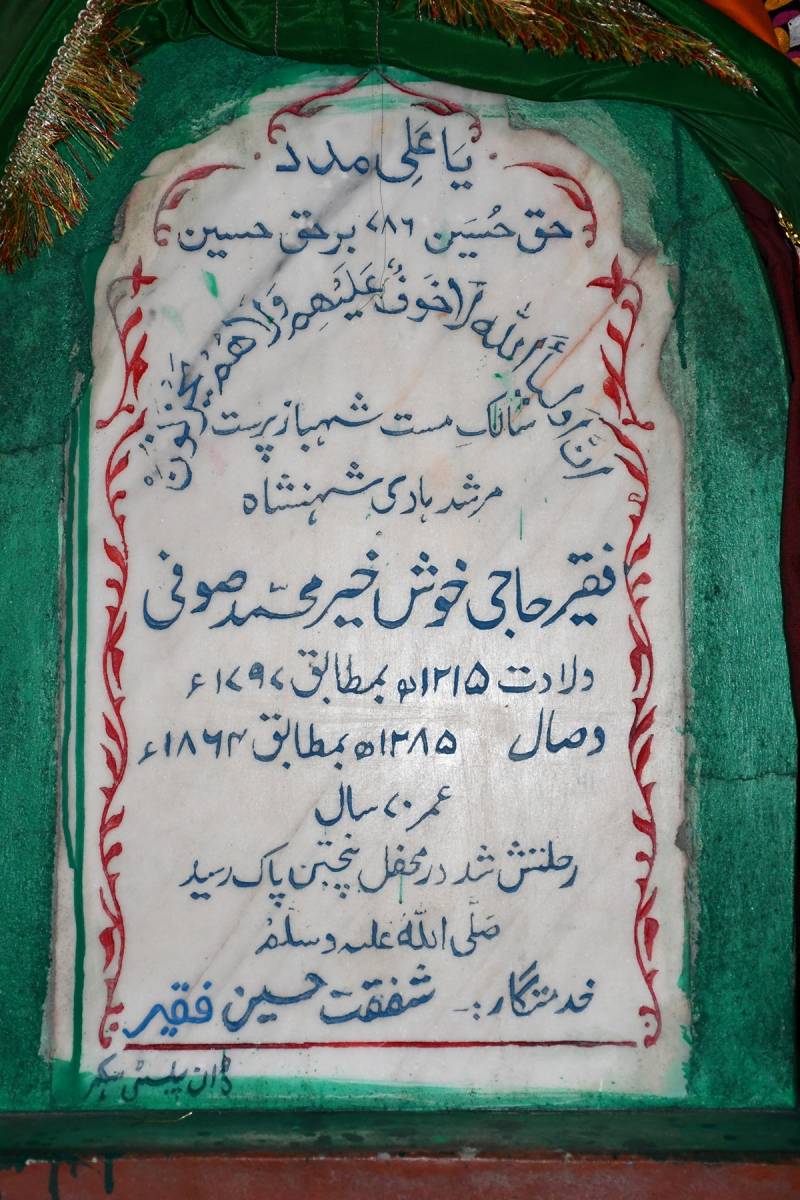
The shrine of Faqir Khush Khair Muhammad Hisbani contains five graves. The principal grave belongs to Faqir Khush Khair Muhammad Hisbani himself. According to the inscription on his grave, he was born in 1797 and passed away in 1865, which contrasts with the dates cited by scholars who have written about him.
After his death, his son, Faqir Dur Muhammad I, also known as Dur Muhammad Mast, became the custodian of the shrine. He died in 1884 at the age of 55, as noted on his grave, and was succeeded by his son, Faqir Khair Muhammad II. Faqir Khair Muhammad II continued the legacy of Faqir Khush Khair Muhammad Hisbani and died in 1918, after which he was succeeded by his son, Faqir Dur Muhammad II.
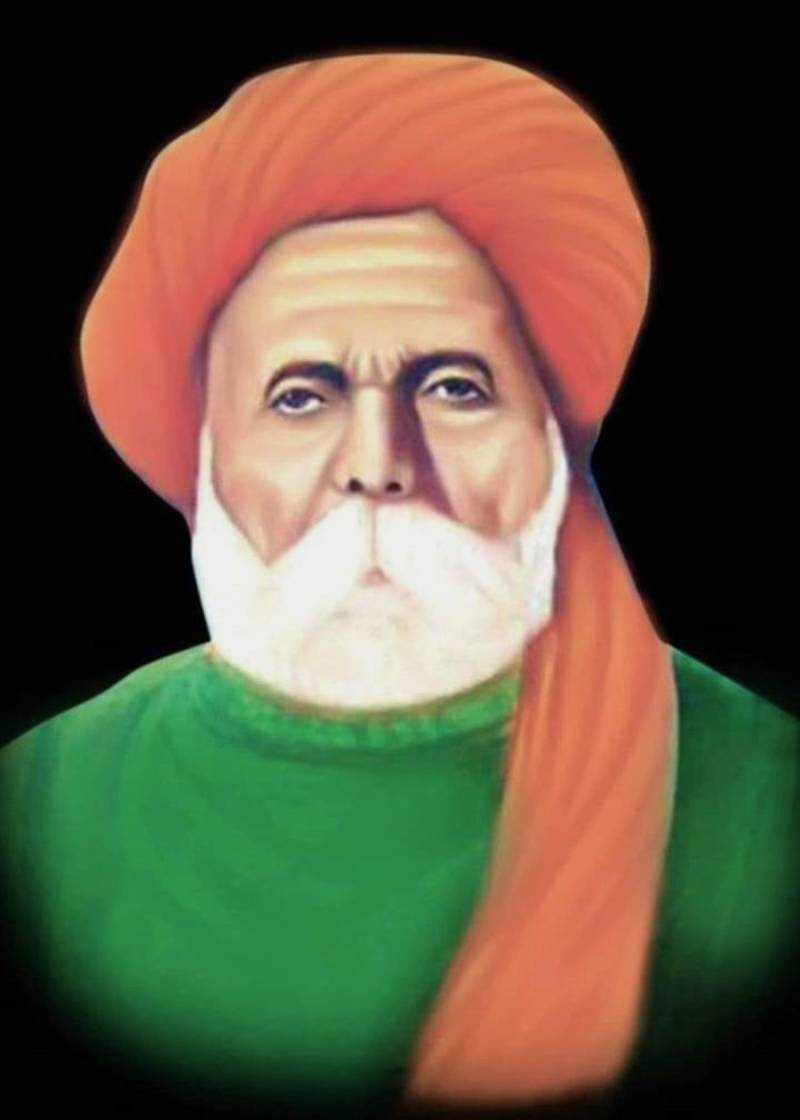
Like his father, Faqir Dur Muhammad II also continued the legacy of Faqir Khush Khair Muhammad Hisbani. He was a distinguished poet from the lineage of Faqir Khush Khair Muhammad Hisbani, writing poetry in Sindhi, Saraiki, and Persian. His poetry collections, Maknoz-e-Dur-e-Lal Volumes 1 and 2, were published by the Sufi Khush Khair Muhammad Hisbani Academy in Karoondi, with Volume 1 released in 2000 and Volume 2 in 2020. Faqir Dur Muhammad II passed away in 1977 and was buried next to his father in the shrine of Faqir Khush Khair Muhammad Hisbani.
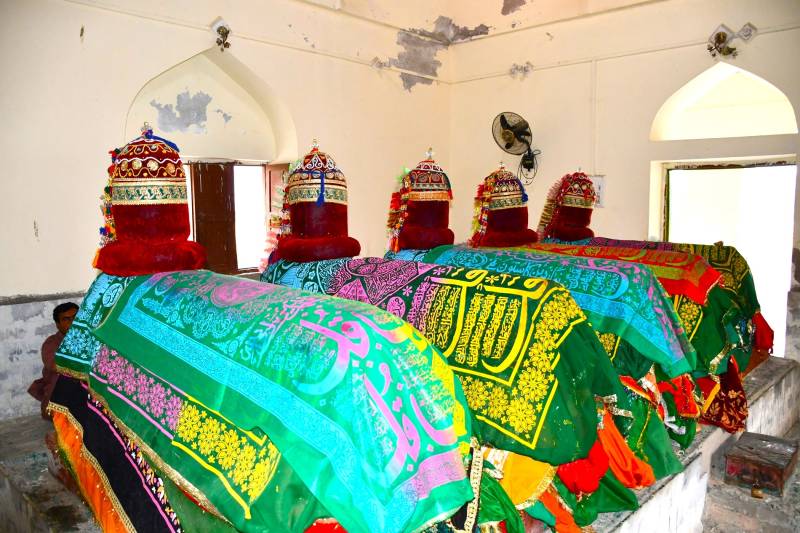
After the death of Faqir Dur Muhammad II, his son, Khair Muhammad III, became the Sajjada Nashin of the shrine of Faqir Khush Khair Muhammad Hisbani. He passed away in 2007 and was succeeded by his son, Faqir Ahsan Ali Hisbani. Apart from the five graves inside the tomb, there are several others located within the enclosure of Faqir Khush Khair Muhammad Hisbani.
Each of the Hisbani Sufi mystics had a large number of disciples. One of the most notable disciples of Faqir Dur Muhammad II was Faqir Jai Jamal Hisbani, who was the son of Faqir Moula Dad Hisbani. Faqir Jai Jamal Hisbani was born in 1899 in Ali Murad Hisbani village near Shah Panjho in Mehar taluka of Dadu district. At the age of 20, he took bayat from Faqir Dur Muhammad II. His poetry collection, "Bahar al-Baqa," has been published and remains popular among his followers. Faqir Jai Jamal Hisbani passed away in 2017 and was buried in Sadabad village, near Faqir Khush Khair Muhammad village.
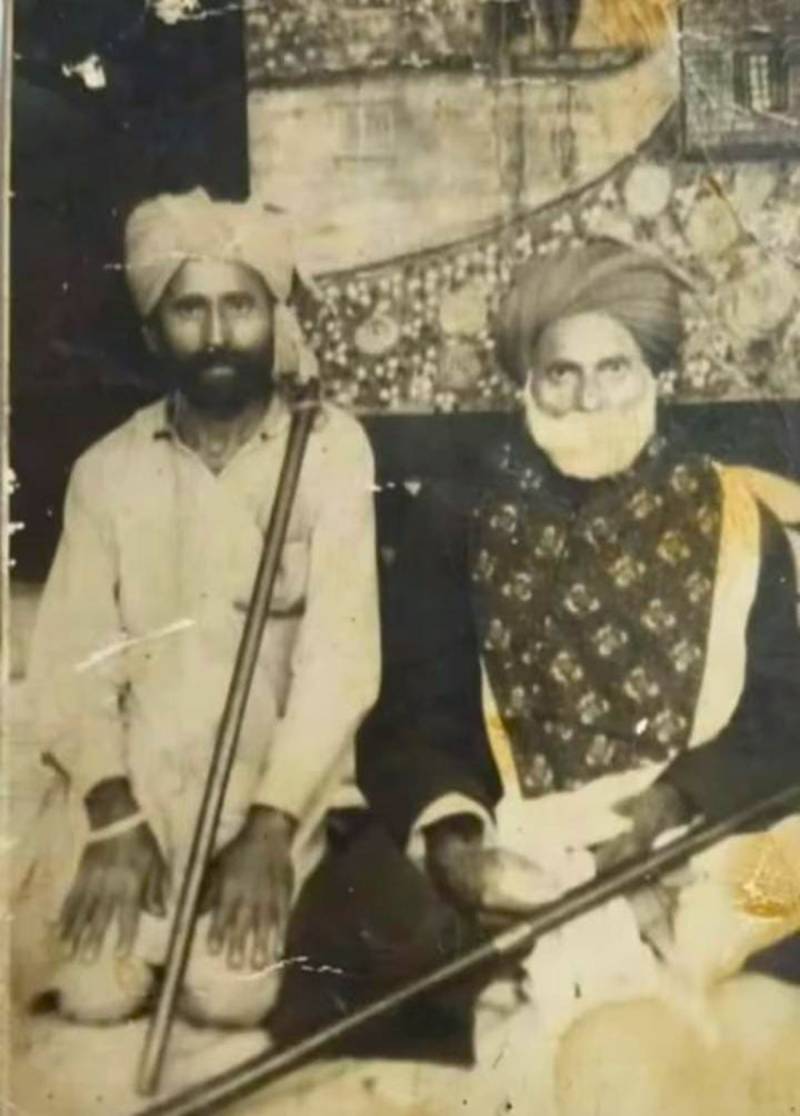
The Hisbani Sufis of Faiqr Khush Khair Muhammad village played a significant role in promoting messages of love, peace, and humanity through poetry and community service, transcending caste and creed. When visiting the shrine of Faqir Khush Khair Muhammad Hisbani, one can also see the tombs and graves of Hindus located behind the shrine. This reflects the tolerance and inclusive approach advocated by Faqir Khush Khair Muhammad Hisbani, his spiritual masters, and their descendants.
Such interfaith harmony and inclusiveness can be observed at many Sufi shrines throughout Sindh. Among the notable Hindu mystics in the graveyard of Faqir Khush Khair Muhammad is that of Kalu Faqir. Apart from Kalu Faqir, there are several other graves of Hindus, including Balu Faqir, son of Kalu Faqir, Gorakhdas, son of Bhordas, and others.