

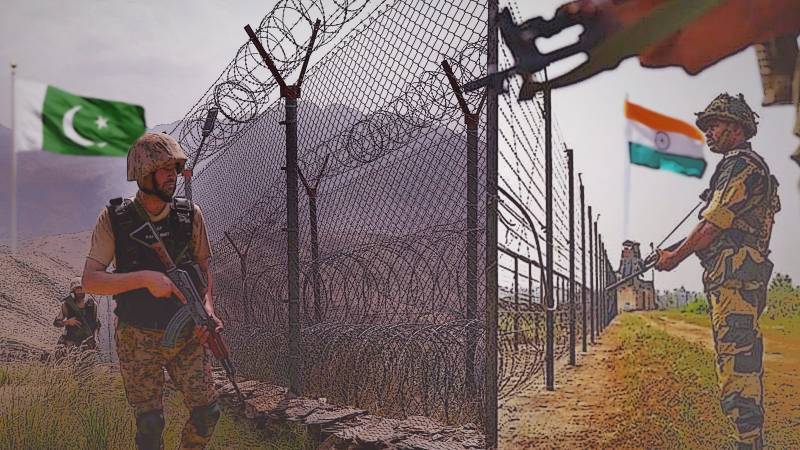
The South Asian subcontinent stands once again on the edge of a familiar precipice. From the Line of Control to the diplomatic podiums of New York and Delhi, the ghost of conflict has begun to stir. The recent cross-border escalations between India and Pakistan are more than just military manoeuvres—they are the latest symptoms of a deep and dangerous political fever that refuses to break.
After the tragic Pahalgam attack, where 26 lives were lost, India's response came swiftly in the form of "Operation Sindoor"—a symbolic name soaked in political and cultural metaphor. Pakistan responded with "Operation Bunyanun Marsoos," reminding both regional and international observers that the arc of retaliation is not a one-way street. But just as international concern peaked and calls for restraint echoed from Washington to Beijing, Indian Prime Minister Narendra Modi delivered a speech that turned down the dimming flames—and threw in dry wood instead.
In a televised address to the nation, Modi once again linked the Kashmiri resistance to global terrorism, brushed off ceasefire efforts, and ominously warned of future incursions inside Pakistan should violence recur. In his words, "terror and talks, terror and trade cannot go together," and more jarringly, "blood and water cannot flow together"—a barely-veiled threat to the Indus Waters Treaty.
It was a speech designed for domestic consumption—steeped in the language of muscular nationalism, shaped to rally electoral bases, and tuned to drown out dissent within India's own restive regions. But to the region, and to Kashmiris especially, it was a thunderclap: a grim forecast of what Delhi envisions not just for Kashmir, but for the very nature of dialogue with Pakistan.
This is not diplomacy. This is brinkmanship masquerading as leadership.
When India insists that dialogue can only happen on its own terms—terms that criminalise dissent, erase history, and silence Kashmiri voices—it reveals not strength, but fear
While Pakistan has consistently reiterated its commitment to regional peace through backchannel diplomacy, public statements, and restraint, Modi's speech undermines every effort made to de-escalate tensions. His framing of Azad Jammu and Kashmir as a non-negotiable objective of future talks does not open doors; it slams them shut. And it also reveals the deeper strategic play: to redefine all resistance in Kashmir as terrorism, delegitimising centuries of political struggle by a dispossessed people.
Let us be clear: the Kashmir conflict is not a foreign policy footnote—it is the moral and strategic core of India-Pakistan relations. When India insists that dialogue can only happen on its own terms—terms that criminalise dissent, erase history, and silence Kashmiri voices—it reveals not strength, but fear. Fear of facing the truth that peace cannot be imposed; it must be forged.
Modi's speech also lays bare India's increasingly aggressive posture on water. Threatening to tamper with the Indus Waters Treaty—one of the few enduring symbols of bilateral cooperation—is not just a diplomatic misstep; it is a hostile signal with humanitarian consequences. The idea that water, the lifeline of millions in Pakistan, can be weaponised for strategic leverage is as morally repugnant as it is geopolitically reckless.
And yet, there are saner voices in India—many of them muzzled, mocked, or marginalised. Retired Justice Markandey Katju recently wrote that war is a game played by rulers while the people suffer. That both India and Pakistan are poor countries with severe developmental needs—education, health, housing, water—and yet invest billions in foreign arms, playing puppets to global weapons dealers. He asked a question that still echoes in both nations: are our rulers independent leaders or merely performers in someone else's war theatre?
The Indian Prime Minister's recent address seems to answer that. When he plays the machismo card, when he reduces complex issues like Kashmir to monologues about terror, when he dismisses the ceasefire with threats of future strikes—he does not sound like a statesman, but like a showman entrapped in his own spectacle.
Meanwhile, the people of South Asia continue to pay the price. Farmers in Sindh wonder if their next harvest will have water. A mother in Kupwara worries whether her son will return from school. A soldier stands at the LoC, waiting for a command that may erase the line between duty and death.
Peace is not the absence of war; it is the presence of justice. And justice in Kashmir cannot be delivered at the barrel of a gun, nor can it be denied by calling it terrorism. If India truly wants to be seen as a global power, it must behave like one, not just in its economy, but in its ethics.
Pakistan, for its part, must continue to push for principled engagement: diplomacy without surrender, firmness without aggression. As history often reminds us, those who shout loudest about war are rarely the ones who suffer it. The people do.
Faiz Ahmed Faiz once said, "Bol ke lab azad hain tere"—Speak, for your lips are free. Let those words be heard louder than the noise of jets and jingoes. The subcontinent deserves a future where voices speak over violence, and where leaders lead with vision, not vendetta.