

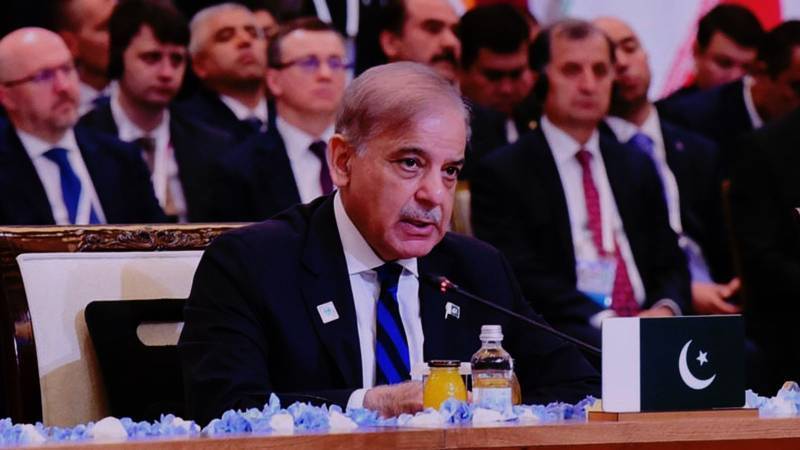
Prime Minister Shehbaz Sharif’s government recently made a controversial decision to block a planned reduction of Rs10 per liter in petroleum prices, despite a decline in global oil prices. Internationally, petrol and high-speed diesel prices had fallen by about six and five dollars per barrel, respectively, over the past two weeks. Yet the government increased the petroleum levy to a record Rs80 per liter. Instead of passing on the relief to the public, it chose to retain higher prices. The justification offered by the government was that the funds raised from this increased levy would be directed toward development work in Balochistan.
This reasoning has caught national attention. The government announced that the funds saved by maintaining high fuel prices would be spent on the long-neglected infrastructure of Balochistan, including the dangerous N-25 Highway and the second phase of the Kachhi Canal, a Rs70 billion irrigation project. These are significant commitments and mark a rare moment when the federal government explicitly links national policy changes to development in the least developed province of the country.
In a meeting of the federal cabinet, the prime minister acknowledged the reputation of the N-25 as a killer highway, a term I have used for years in my reporting. The road, running from Karachi to Chaman, has claimed more than two thousand lives due to its hazardous condition and lack of proper infrastructure. Shehbaz Sharif vowed to turn this treacherous road into a safe, international-standard highway, stating that the government would dualize it and complete the project in two years. He also pointed out that the initial cost of the project in 2022-23 was estimated at Rs214 billion, which has now risen to over Rs300 billion due to inflation and rising construction costs.
If the government is serious about building trust with the people of Balochistan, it must show that the lives and safety of citizens in the province matter as much as those in Punjab or Sindh
The prime minister’s tone suggested urgency and commitment. He framed those who opposed the plan as narrow-minded and unsympathetic to the needs of Balochistan’s people. According to him, equal development across all provinces is not just a political ideal but a national necessity. However, the ground realities paint a different picture.
The plan to dualise the N-25 was initiated by the Pakistan Democratic Movement government in 2022. It was broken down into three components covering a total of 790 kilometers, with an overall projected cost of Rs222 billion. However, until June 2025, only Rs34 billion had been released by the federal government. The project is being funded in small installments each year. At the current pace, it would take over thirteen years to finish the work. Thirteen years is a long time — enough for an entire generation of road users to remain exposed to injury and death simply because they live in Balochistan and travel a highway that successive governments have failed to fix.
Only a few weeks ago, the federal government approved over a dozen major development projects worth Rs1.3 trillion. One of them is the Lahore-Sahiwal-Bahawalnagar Motorway, which spans 295 kilometers and carries a price tag of Rs436 billion. This project is fully funded through the federal Public Sector Development Programme. Meanwhile, the N-25 Highway and other critical road infrastructure in Balochistan received no new allocations.
Even if we accept the government’s explanation that savings from petroleum levies will be used for Balochistan’s development, some important questions remain unanswered. Oil prices are not fixed. They rise and fall based on global supply, political tensions, and market trends. What happens if global oil prices increase again in the next few months? Where will the money for Balochistan’s roads come from then? Will the government abandon the project or slow it down even further? The approach of tying infrastructure funding for a neglected region to a volatile and unpredictable global commodity is not only risky, it is also structurally unsound.
There is also the issue of public fairness. Millions of people across the country are struggling with high living costs, and fuel prices have a cascading impact on food, transport, and overall inflation. By keeping fuel prices high, the government is essentially asking the entire population to pay for one region’s development. While development in Balochistan is a national need and a long-overdue justice, the mechanism chosen to fund it seems arbitrary and impractical. This is not a sustainable model, especially for a country that frequently faces economic shocks and external pressure on its foreign reserves.
A more rational approach would be to use regular budgetary allocations under the Public Sector Development Programme for a critical project like the N-25. The same way the Lahore-Sahiwal-Bahawalnagar Motorway is being funded. If the government really wants to fund development through savings, it can use petroleum fuel levy savings for the new motorway in Punjab instead, and allocate PSDP funds to Balochistan’s killer highway. That would be a fairer, more balanced model that distributes development resources with an eye on equity and safety.
The recognition of the N-25 as a deadly hazard is a good step. The decision to finally complete the Kachhi Canal project will also benefit agriculture and livelihoods in the province. These are welcome signs that the government is at least acknowledging the needs of Balochistan. But ad hoc funding models based on fuel price savings will not provide the certainty required for long-term infrastructure development. Balochistan deserves better than this. It deserves a consistent and fair share of the national budget. Not just words of sympathy or development plans tied to fragile revenue streams.
If the government is serious about building trust with the people of Balochistan, it must show that the lives and safety of citizens in the province matter as much as those in Punjab or Sindh. And that means funding their roads, canals, and schools through the same dependable mechanisms used elsewhere in the country. Only then will development in Balochistan stop being a symbolic gesture and start becoming a reality.