

The year 2025 is witnessing a dramatic increase in Pakistan's geopolitical currency and its relevance in the region and the wider world.
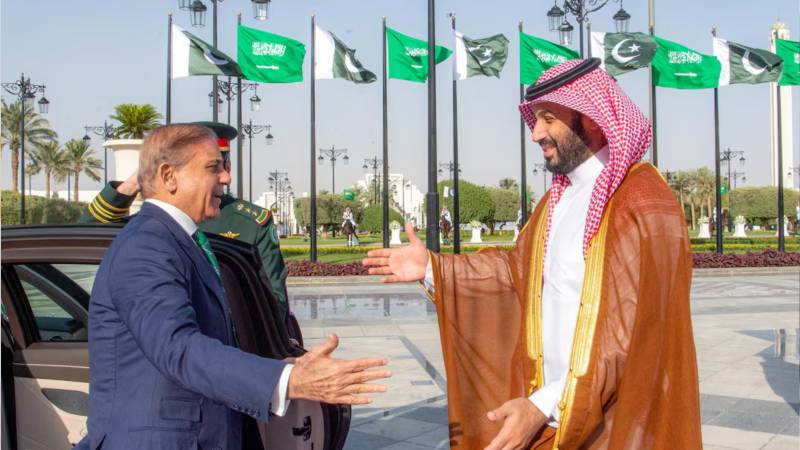
Today’s signing of the defence pact between Pakistan and Saudi Arabia, pledging a joint response to aggression, is yet another example of Pakistan's expanding influence in the wider region due to its effective diplomacy, large military, and status as a nuclear power.
While we do not yet know the details of the defence pact between Saudi Arabia and Pakistan, nor how robust and comprehensive a framework underpins it, the development is very significant.
The pact underscores that despite owning advanced Western military hardware and hosting United States military bases, Gulf Cooperation Council countries such as Saudi Arabia and Qatar feel increasingly vulnerable to Israel after this month’s attack in Doha.
Due to its deep diplomatic, cultural, and military ties, as well as shared religious roots, Pakistan enjoys the trust of most GCC countries.
It is notable that despite Pakistan’s weak economy, years of political instability at home, and serious internal security challenges posed by the Tehrik-i-Taliban Pakistan (TTP) and Baloch militant groups, the country is making an impressive comeback on the world stage.
Allow me to share a few thoughts on what is driving this change, however nascent or short-lived it may prove to be.
It is a combination of reasonable policies and decisions made by Pakistan’s leadership at home during the last few years, and their responses to political events far beyond their shores—whether it be the return of President Trump to the White House or the Indian attack on mainland Pakistan in May.
When it comes to sound policy by the Pakistani government, stabilising the economy is by far the biggest achievement. No doubt the country was on the brink of financial bankruptcy and economic disaster only two years ago. The economy is still not out of the woods; however, independent economists and the reports of international financial institutions paint a much more optimistic picture.
The deft tackling of the political challenge posed by the PTI as the opposition party also makes the military and political leadership appear stronger in the eyes of other states. I must clarify that I condemn the political oppression that the country has witnessed after the incarceration of PTI leader Imran Khan and other party leaders. Yet in realist terms, one could argue that the current government and military leadership have successfully created a cohesive political-military front by controlling the PTI threat, thereby making the state look unified and strong.
The fact that Pakistan could take on a major world power like India and defend itself without overt external support has not gone unnoticed in the Middle East and the rest of South Asia
On the internal security front, the situation has worsened in the last two years, with both the lethality and frequency of terrorist attacks increasing. Despite this alarming deterioration of the security landscape, the state has demonstrated a strong resolve to go after the terrorists and their backers.
Now to the two most important variables, beyond the control of the Pakistani state, that have uplifted the country’s geopolitical potential:
The re-election of President Trump and his positive outlook towards Pakistan, and the limited war with India in May 2025, where Pakistan came out with an upper hand against its much bigger, richer, and diplomatically more popular adversary.
Both factors have been closely intertwined.
While President Trump and his national security team—including the CIA director—have been favourably inclined towards Pakistan since Inauguration Day, partly because the country delivered a notorious ISIS commander responsible for killing US Marines, Pakistan's acknowledgement of the US role in conflict mediation during its stand-off with India has further endeared the current military leadership to President Trump. This led to the rare invitation extended to Pakistan’s Chief of Army Staff, General Asim Munir, to have lunch with the US President.
As for how the May 2025 conflict between India and Pakistan contributed to Pakistan’s comeback on the international stage, and particularly among important Muslim-majority countries, the whole world—especially the Muslim-majority nations—closely watched the Indo-Pak conflict play out in international media, and in the speeches of President Trump. Pakistan held its ground and maintained the initiative throughout the conflict, thanks to the readiness and tactics of its professional Air Force, as well as the use of Chinese military hardware and software. Pakistan also won the information warfare in the international media, as the discourse shifted to the downing of Indian jets, embarrassing Prime Minister Modi and his political party.
The fact that Pakistan could take on a major world power like India and defend itself without overt external support has not gone unnoticed in the Middle East and the rest of South Asia. Consequently, both Arab countries and Bangladesh, for example, are keen to deepen their political and military ties with Pakistan.
It is quite a feat for Pakistan to stage such a comeback. Two years ago, when I was Director of the Pakistan Programme at the US Institute of Peace in Pakistan, regularly convening American diplomats and think-tankers visiting from Washington, one would get the impression that Pakistan had been completely written off by the US Government and policymaking community, and that the country would soon be a pariah state like Iran.
That perception has changed swiftly in the past seven months.
Whether Pakistani policymakers will be able to seize the moment remains to be seen. But the current moment offers every possibility, with circumstances aligning in Pakistan’s favour.