

The issue of Balochistan has multiple dimensions, but two aspects are considered particularly significant. The first is the insurgency that has continued in Balochistan for over two decades and has now evolved into an organised conflict that has drawn international attention. Today, armed groups in Balochistan increasingly target international investments and companies. Projects linked to CPEC have been attacked multiple times, while Saindak and Reko Diq have also come under attacks claimed by Baloch separatist groups (The Balochistan Post, February 25, 2025).
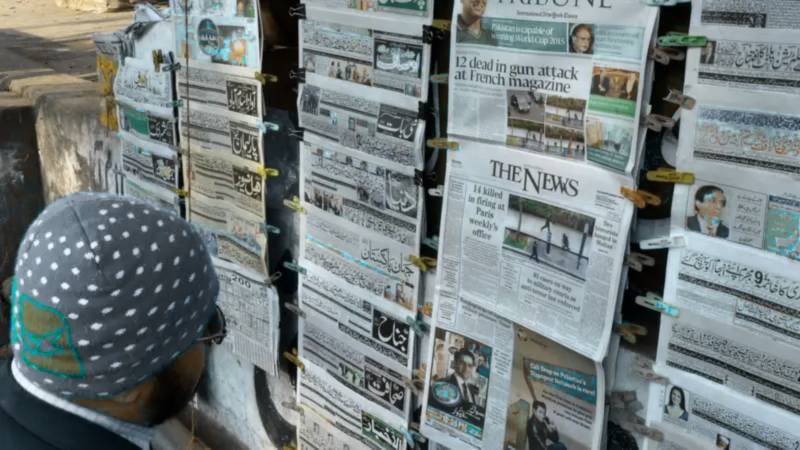
State-backed narrative groups often portray these attacks as an attempt by insurgents to gain visibility in national and international media. On the other hand, Baloch separatist groups consistently state in their press releases and social media news that ongoing investments in Balochistan represent the exploitation and plundering of Baloch resources, which they claim they will not allow under any circumstances. Research shows that social media plays a crucial role in promoting and shaping narratives in the modern era (Role of Social Media in Securitisation of Baloch Conflict, February 2023).
Every conflict is fundamentally a battle of narratives, and each side strives to make its narrative more acceptable and influential in public discourse. The government argues that such attacks are obstacles to development in Balochistan and that these groups are anti-development forces.
In contrast, Baloch armed groups claim that they will resist any investment on Baloch soil that results in the exploitation of Balochistan’s resources or ambitions to turn the Baloch population into a minority through what they describe as a deliberate strategy. According to them, resisting such policies is necessary on every front (Exploitation of Baloch resources).
Through these attacks, these groups also seek to send a message to international actors that any form of development imposed against the will and aspirations of the local population will face opposition in Balochistan. This reflects the competing narratives between the insurgency and the state’s counterinsurgency approach. The state consistently maintains that every armed attack in Balochistan is met with a strong response. “Nobody in Pakistan will be allowed to rationalise violence”, Khawaja Asif, February 02, 2026.
However, an important question arises here: if the conflict is between the state and separatist groups, why are ordinary civilians suffering from both sides? After every incident, civilians travelling through affected areas often face harassment, raids on homes, or mistreatment during the forces' activities.
Such actions only deepen resentment and alienation. It is frequently said that there is widespread anger against security institutions in Balochistan. As a neutral journalist, I would argue that this resentment is largely a reaction to the behaviour and conduct of security structures in the region.
The reality is that many policymakers are direct beneficiaries of the top-down system, and they are unwilling to lose the advantages and influence that come with it
Constant suspicion, unnecessary questioning, and humiliation of ordinary citizens and youth at checkpoints naturally create hostility. It is human nature that if people are made to feel like suspects in their own homeland, an equally strong reaction will emerge. Baloch students are facing similar behaviour in Islamabad (The Diplomat).
The second major concern is mistrust and deprivation. One dimension of the conflict is the separatist movement with its own ideological and political objectives. The other consists of those political parties that seek to remain within the federation while demanding constitutional, civilian supremacy, and human rights.
These parties believe that the people of Balochistan should have the first constitutional and legal right over the province’s resources. These are not forces that ever took up arms or went to the mountains; rather, they remained committed to political struggle within the framework of Pakistan.
Yet the question remains: how were these political stakeholders treated? From allegations of stolen electoral mandates to restrictions on political activities, such policies have deeply affected ordinary people.
Citizens who once remained silent observers between these competing narratives are now increasingly disillusioned. Many now believe that the ruling structures are not genuinely serious about resolving the Balochistan issue. Instead, those who are expected to remain neutral often appear aligned with one side, further increasing mistrust and disappointment.
The issue of deprivation is repeatedly highlighted in discussions about Balochistan. In reality, deprivation is an abstract concept that different people interpret from different perspectives. Some see it as economic marginalisation, others as political exclusion, while many view it through the lens of social injustice. In this context, the concepts of “top-down approach” and “bottom-up approach” become highly relevant.
In Balochistan, policies have historically been implemented through a top-down approach, where decisions are made by policymakers, bureaucracy, and institutions far removed from ground realities. As a result, these policies often fail to reflect the actual needs and experiences of local communities.
Whether in budgeting, Public Sector Development Programme, or policymaking, unless a bottom-up approach is adopted—one that genuinely includes local people, affected communities, and youth in consultation and decision-making—even billions spent on development will fail to produce meaningful results. In many cases, the primary beneficiaries remain political intermediaries, contractors, or non-governmental organisations, while ordinary citizens continue to feel excluded and deprived.
No matter how many assessments, seminars, or reports are produced, meaningful progress will remain impossible unless critical and alternative voices among the youth are included in the process. Visiting universities, colleges, schools, or civil society organisations may create the appearance of consultation and inclusion, but if the intention is merely to fulfil formalities rather than genuinely understand the crisis, such efforts will remain ineffective.
Until governments, non-governmental organisations, state institutions, and policymakers are willing to include critical and dissenting voices in real discourse and dialogue, and sincerely listen to uncomfortable truths, the actual nature of the Balochistan issue cannot be understood.
They use a top-down approach because it allows them to design policies that align with their own preferences, even if they are not practically implementable on the ground. In this way, they continue to indirectly secure their interests and privileges. In contrast, a bottom-up approach is avoided because it requires genuine critical engagement.
There is a fear that if voices from the grassroots level were included in policymaking, those policies would eventually be applied back to the top level as well. The reality is that many policymakers are direct beneficiaries of the top-down system, and they are unwilling to lose the advantages and influence that come with it.
The conflict in Balochistan is not only a war of weapons but also a war of narratives. Every side seeks to establish its narrative as the truth, but ultimately, the narrative that aligns more closely with ground realities will gain greater legitimacy. The real question is not which side spends more resources promoting its narrative, but which side stands closer to the truth and lived realities.
Balochistan’s political and social dynamics are unique. People here often stand with what they perceive as truth and justice rather than with power and resources, while beneficiaries of conflict and privilege have historically aligned themselves with whichever side holds authority.
At the state level, billions of rupees are spent on promoting government narratives, yet ideological and intellectual narratives cannot easily be defeated through resources alone, especially in a politically nationalist environment like Balochistan, where people judge narratives through their lived experiences and ground realities rather than propaganda alone.