

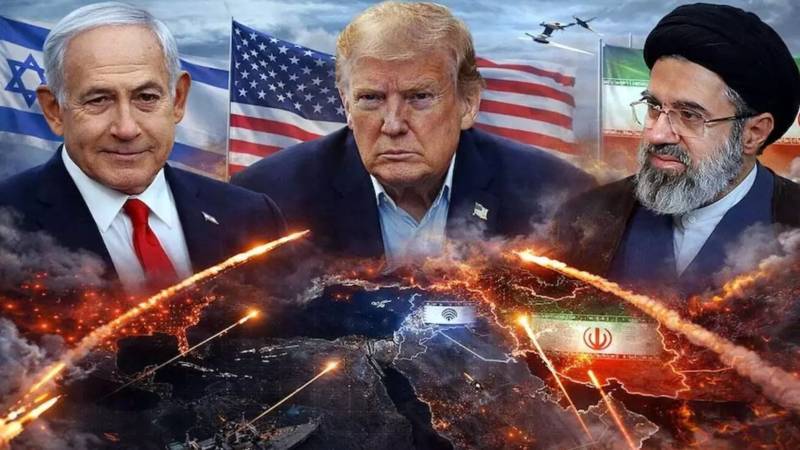
The Operation Epic Fury initially sought a swift conclusion through overwhelming kinetic force and decapitation logic. With the elimination of the Iranian Supreme Leader and the IRGC’s top leadership, some military strategists anticipated a collapse of the revolutionary government. With both Iran and Israel seemingly prepared for a long war, the conflict is already threatening global peace and stability. As per JP Morgan, the conflict’s conclusion will be dictated not by the battlefield but by the “Three M’s”: Munitions, Markets, and Midterms.
Supply issues of munitions form the first “M” that could end the war. While the US and Israel have demonstrated air superiority, the intensity of their strikes has placed an unprecedented strain on Western defence inventories. In the first 24 hours alone, nearly 900 sorties were flown, consuming thousands of precision-guided munitions and Tomahawk missiles.
Unlike the counterinsurgency operations of the previous decade, this is a high-intensity peer-to-peer conflict that requires a large volume of advanced interceptors. The June 2025 Iran-Israel conflict also highlighted this limitation. During this conflict, global supply chains struggled to replace batteries for the Patriot and Iron Dome systems in real time.
Moreover, while Iran’s long-range tempo has declined, the kill chain remains intact. After a significant degradation of its missile-launch capacity in the first week, Tehran has pivoted to asymmetrical swarming tactics. It is now utilising low-cost Shahed loitering munitions to force the aggressors to incur expensive defensive expenditures. This makes the mathematics of the war brutal. A USD 20,000 drone necessitating a USD 2 million interceptor is turning the war into a race towards industrial exhaustion.
The second “M”, Markets, represents the most immediate threat to global stability. The effective closure of the Strait of Hormuz has paralysed roughly 20 million barrels of oil flow per day. Despite early, optimistic projections that the global economy could absorb a brief shock, Brent crude’s surge towards USD 130 per barrel, and Iran’s hopes of pushing it beyond USD 200, are rewriting fiscal policy overnight.
Goldman Sachs and Oxford Economics have warned that a month-long blockade would not only erase the marginal gains of the early-year fiscal stimulus but could push the Eurozone and the UK towards a technical recession
The market’s fear is no longer just about supply. It is equally about the tail risk of permanent infrastructure damage. Iranian strikes on energy facilities in the UAE, Saudi Arabia, and even Azerbaijan have signalled that no regional producer is safe. For the West, the marginal military gain from destroying another IRGC command centre is quickly offset by the prospect of a global recession triggered by USD 7 per gallon petrol and a breakdown in maritime insurance markets.
The war has fundamentally altered the growth trajectory for the G7 and OECD nations. As economies were already struggling to recover from post-tariff conditions, the war has made the recovery more difficult. As a net energy exporter, the US remains relatively insulated from the crisis. However, its European and Japanese allies are facing a sharper contraction.
Projections suggest that if Brent crude remains above USD 120 per barrel, G7 aggregate GDP could decline by 0.25-0.4 per cent over the fiscal year. Goldman Sachs and Oxford Economics have warned that a month-long blockade would not only erase the marginal gains of the early-year fiscal stimulus but could push the Eurozone and the UK towards a technical recession.
Finally, there is the political reality of the Midterms. In the US, military operations cannot be conducted in a vacuum from the electoral cycle. While the initial strikes may have created a euphoria, public patience for forever wars is thinner than ever. With the midterm elections around the corner, the Republicans face a narrowing window, as they have miscalculated the scenario.
If the war transitions into a protracted occupation or a regional conflagration, the political cost will become unbearable for President Trump. The misery index, defined as the combination of high inflation and military casualties, marks the notorious sensitivity of American voters. Thus, the Trump administration needs to wind down the operation and declare victory before the misery index becomes the defining issue of the campaign.
The convergence of these three factors suggests that the war is approaching a point of diminishing returns for the US, which entered the conflict without considering these three critical M’s. Further escalation yields very little gain when the first-tier revolutionary leadership has been eliminated and the military infrastructure has been significantly deteriorated. However, given Iran’s history and geography, the demand for unconditional surrender is very unlikely to be met.
The conclusion to this conflict will likely be a pragmatic off-ramp dictated by the exhaustion of resources and political capital. When the cost of the next missile exceeds the value of the target it destroys, and when the price at the fuel station threatens the seat of power at home, the bombs will stop falling. The Three M’s are not just a forecast. They are the unavoidable boundaries of modern warfare.