

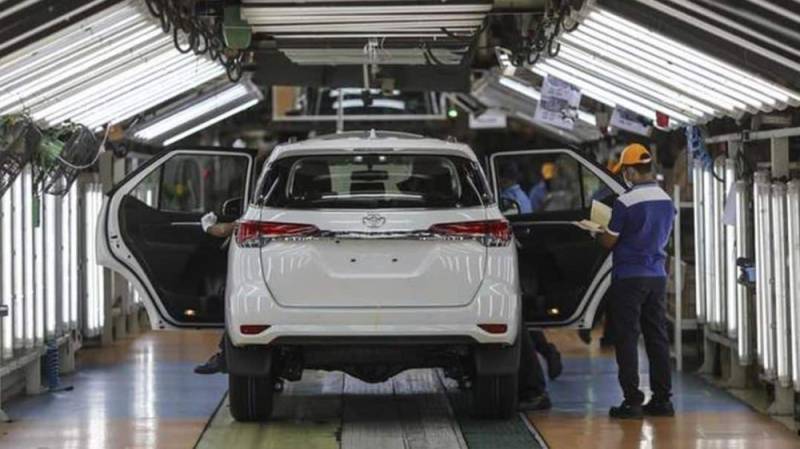
In healthy economies, the auto sector is more than an industry—it is a symbol of national purpose, economic confidence, and policy stability. But in Pakistan, it has become a mirror of institutional chaos. Years of policy distortion, bureaucratic silence, and elite capture have hollowed out what should have been a pillar of industrial progress. We romanticise “local assembly” while punishing real manufacturing. We slash duties for luxury imports while burdening the common citizen’s first vehicle. The result: an auto sector that is neither productive, nor just, nor ready for the future.
Across our borders, the transformation is real. India, Vietnam, Bangladesh—nations once behind us—now design engines, produce parts, achieve localisation rates over 90%, and attract long-term investment. Their interest rates are low, electricity is cheap, and policies are stable. Meanwhile, Pakistan lurches from one erratic decision to the next. Growth is penalised. Innovation discouraged. The wealthy are rewarded; the middle class is taxed into paralysis. And we wonder why industry fails.
Our import policy tells the whole story. The G-Wagon—an icon of excess—gets a tax break worth Rs 10 to 20 million. Meanwhile, a 1000cc family car pays an extra Rs 150,000. This is not economic policy. It is a moral failure. It is a mockery of fairness. We subsidise privilege and suffocate need.
Even the much-hyped entry of Chinese automakers—Changan, MG, DFSK, BAIC—has not fixed the problem. These companies entered with ambition but face the same outdated playbook: no clear localisation targets, no stable localisation policy, no supply chains, no incentives for innovation. We ask for their technology, then hand them confusion.
Pakistan’s engine policy is just as erratic. The world accelerates towards electric, hybrid, and low-emission technologies. We stall. One day, EVs are promoted, the next they are penalised. Across the entire M2 Motorway, only one EV charging station functions—and it is off-route. Highway charging rates range from Rs 110 to Rs 150 per unit, three times higher than residential electricity. This is not policy—it is punishment.
Every car must carry third-party liability coverage. No exception. It is a basic guarantee of public safety
Here, a car is not a tool for mobility. It is an investment asset. Prices rise not with technology, but speculation. Interest rates hover above 15%. “Own money” premiums inflate costs further. This culture must be dismantled—not protected.
Worse still, our roadworthiness system is virtually non-existent. Unlike the UK’s DVLA, we have no legal requirement for vehicle inspections. Rickshaws, buses, and trucks roam with broken lights, leaking engines, and tyres worn to the thread. These are not vehicles—they are public threats. Meanwhile, government fleets—especially police vehicles—spew diesel while officials preach about carbon control. Hypocrisy runs on four wheels.
Reform must be real. Annual fitness checks, run by licensed private workshops, should become law. This would not only enhance safety but also create vocational jobs, regulate standards, and embed compliance in our driving culture.
Likewise, private driving instructors—especially those training women and youth—should be officially recognised, funded, and empowered. They are the front line of a safer, more inclusive road culture.
Consumer rights in the auto sector remain a joke. Advertised features often never arrive. Warranties are ignored. Spare parts are counterfeit, undocumented, and dangerous. A national traceability system is essential. It is not a luxury—it is a necessity for safety, transparency, and industry accountability.
Road safety itself is a forgotten national cause. Children cross six-lane roads without bridges. Rickshaws carry six passengers with no seatbelts. Overloaded trucks navigate narrow streets with zero oversight. This is not oversight—it is cruelty by negligence.
Third-party vehicle insurance remains optional—a policy failure no developing nation can afford. In Saudi Arabia, India, and even parts of Africa, it is mandatory. In Pakistan, it is missing. Every car must carry third-party liability coverage. No exception. It is a basic guarantee of public safety.
Above all, Pakistan lacks a unified national Road Traffic Authority. Licensing is fragmented. Enforcement is weak. Road planning ignores pedestrians. We need an autonomous, centralised body—an RTA—to oversee licensing, inspections, education, infrastructure, and law enforcement. Without it, we govern our roads with guesswork.
Change must begin in schools. Children should learn traffic lights before trigonometry. Like in Denmark, road safety must be part of childhood, not adulthood regret. Until we raise a generation of citizens who respect traffic rules and protect each other’s lives, every reform will be surface-level.
And no reform will matter unless policy survives political cycles. Real investors do not gamble on shifting rules. We need ten-year tax clarity, long-term incentives, and binding roadmaps. Without this, we remain a nation of parking lots—not progress.
Pakistan does not need more auto expos or glossy car ads. It needs moral clarity. Cars must empower—not exploit. Buses must transport—not pollute. Bikes must serve—not slaughter. A schoolchild on foot must be safer than a VIP in a convoy. That is the standard of any civilised state.
It is time to move beyond assembly lines—to vision lines. From engines without direction to leadership with purpose. Pakistan must drive change, not drift into disaster.