

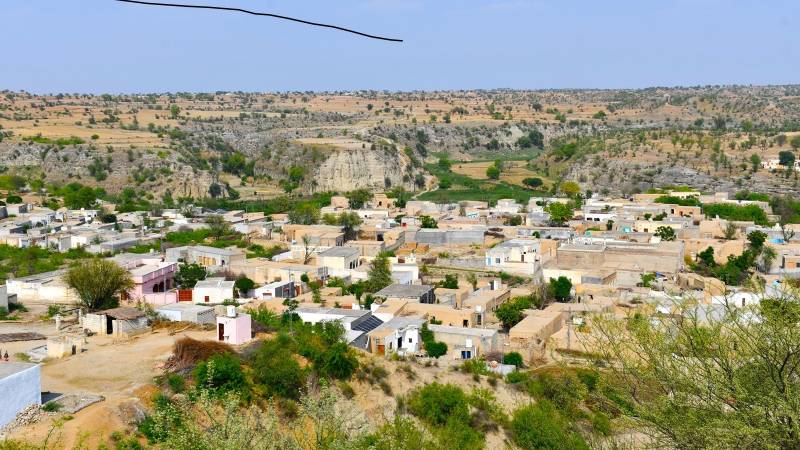
As I traverse the villages and towns of Pothohar, I am struck by the remnants of a stonecraft tradition that is slowly fading from the landscape. Each village in Pothohar bears witness to a craft that was once the heart of local identity, stone-built mosques, temples and mansions that narrate an era when artisans, with their skilled hands, shaped both faith and community. These same craftsmen were also adept woodcarvers, their intricate designs adorning many old houses. These surviving details, weathered yet elegant, stand as a testament to the aesthetic sensibility and cultural pride that once defined Pothohar’s built environment.
I have focused explicitly on the stone-built mosques of Pothohar, a topic that has not been thoroughly studied. My interest in stonemasonry began in 1998 during my visits to various historical towns and villages, where I came across several stone-built mosques.
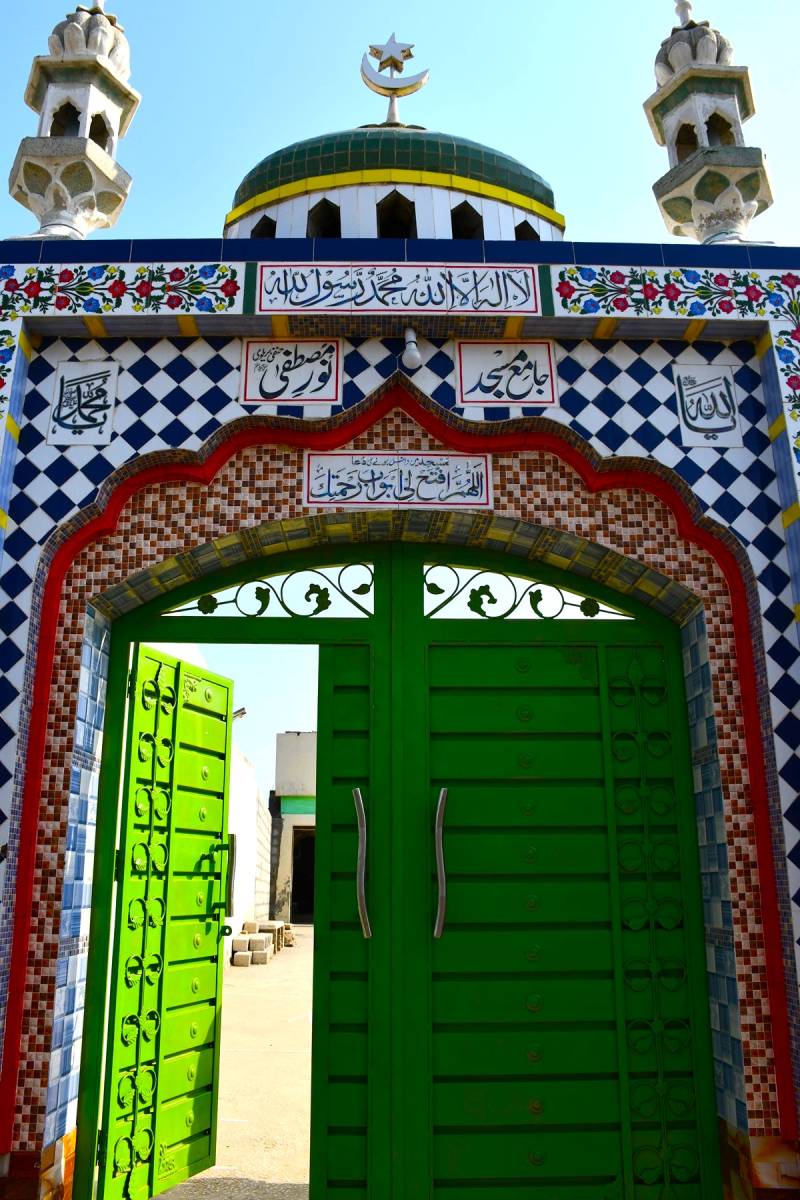
In addition to documenting stone-built mosques in Attock, Rawalpindi, Jhelum, and Chakwal, I paid particular attention to various tehsils in the Rawalpindi division. In 2022 and 2025, I visited several villages in the Talagang and Lawa tehsils to study stone-built mosques.
Recently, I visited Phathar village, located about 33 kilometers from Talagang town. Locals recall that the village was once known as Domel—a name that originated from the meeting of two natural springs nearby. The old settlement of Phathar stood atop a hill to the south of the present village, overlooking the rugged landscape.
A rich tradition of stonemasonry that once defined Pothohar's built environment is now disappearing
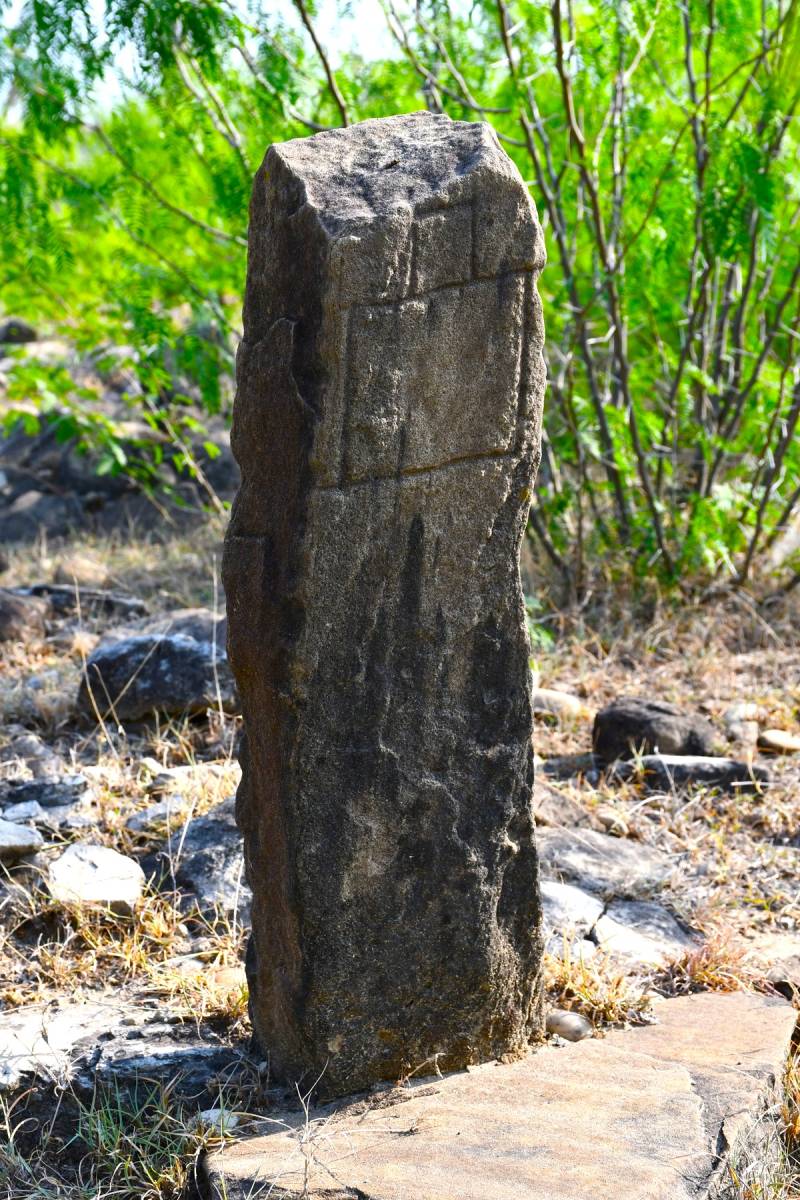
Although the remains of the old village can be seen south of the village, on the way to Phathar, one crosses a hill on the right side of the road marked by a standing stone. This hill is home to the remains of several ancient graves, and potsherds can also be found on the hill top.
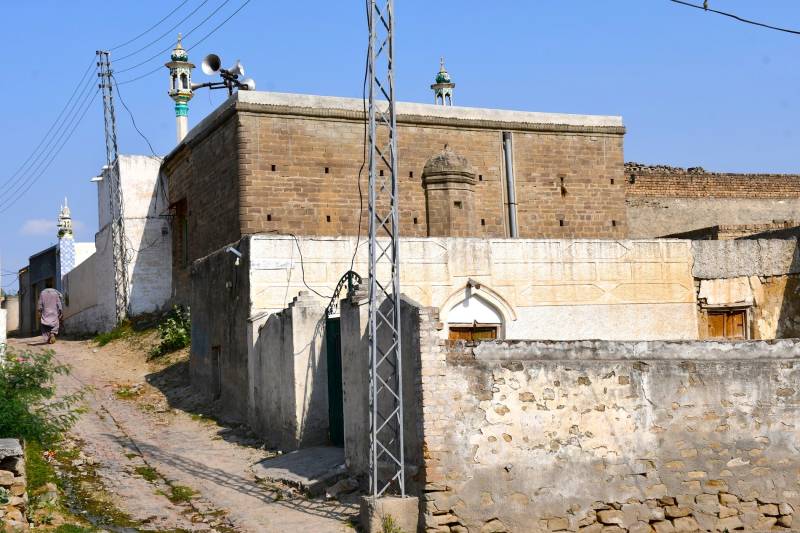
After the destruction of old Phathar, the new village was likely founded in the 16th century according to discussions with local community members. When the village was established, a small mosque was also constructed.
During interviews with local community members, I learned that the mosque was rebuilt in 1965. According to Qari Abdul Malik Mairvi, the Pesh Imam of Jamia Mosque Noor-e-Mustafa, two eminent masons, Ghulam Muhammad and Ghulam Shabbir from Singwala village, constructed the mosque. Singwala village is noted for its beautiful three-domed mosque, which showcases intricate wood carvings and magnificent paintings made by Mistri Sirajuddin of Pichnand in Lawa Tehsil.
The residents of Phathar contributed financially to the reconstruction of the Jamia mosque. Malik Dula Khan, Malik Khan Dara, Malik Haji Fateh Sher, Baba Mian Muahmmad, and others played an important role in the mosque's rebuilding by contributing financially.
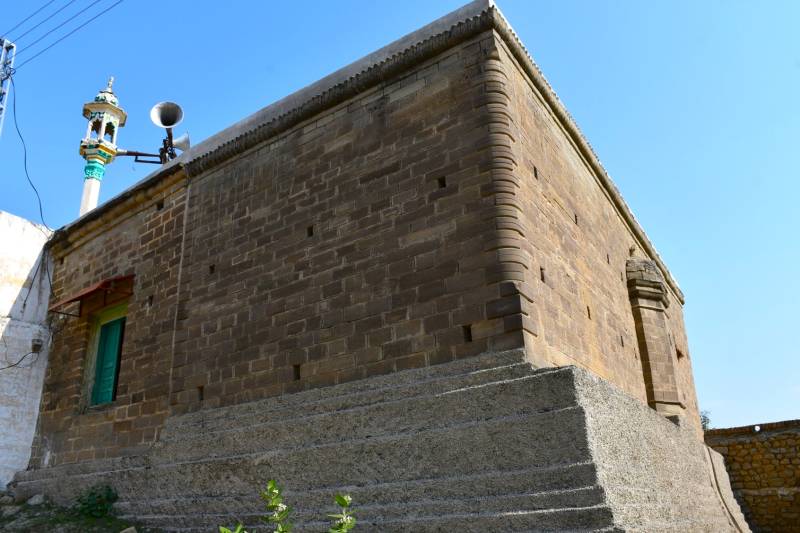
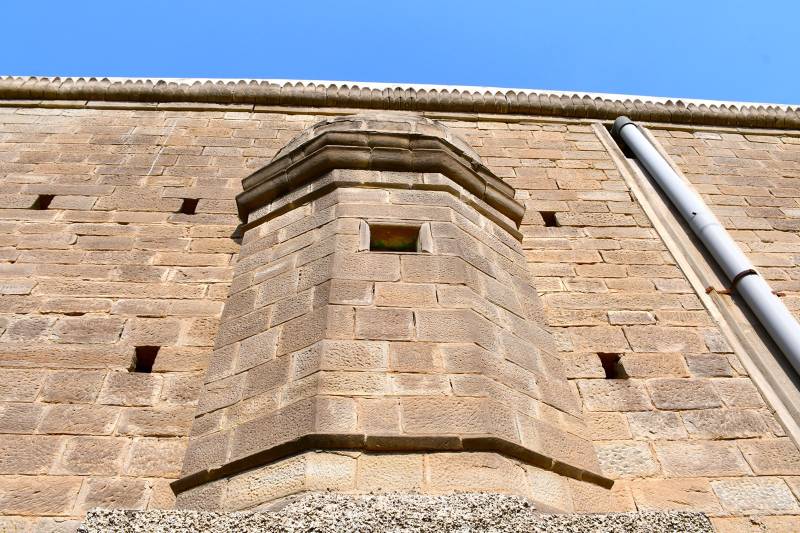
Stone is readily available in Phathar village, so it was sourced from nearby hills and dressed on-site. It took two and a half years to complete the mosque. Dressing the stones was a time-consuming process, and Mistri Ghulam Muhammad and Mistri Ghulam Shabbir invested a great deal of effort to dress the stones and incorporate them into the mosque.
Stone-built mosques are found throughout Talagang and Lawa tehsils. However, in recent years, several mosques have been either rebuilt or renovated, compromising their originality. From Suriali to Dhoke Musa, Chaki Shah Jee, Tamman, Jabbi Shah Dilawar, Leti, Mirjan, to Misrial, one can still see stone mosques reflecting the mastery of the masons from these villages. Although the mosque in Misrial has been rebuilt recently, it retains its exquisitely carved door. Similarly, villages like Patwali, Markhal, Murali, and others also had stone-built mosques that have recently been rebuilt.
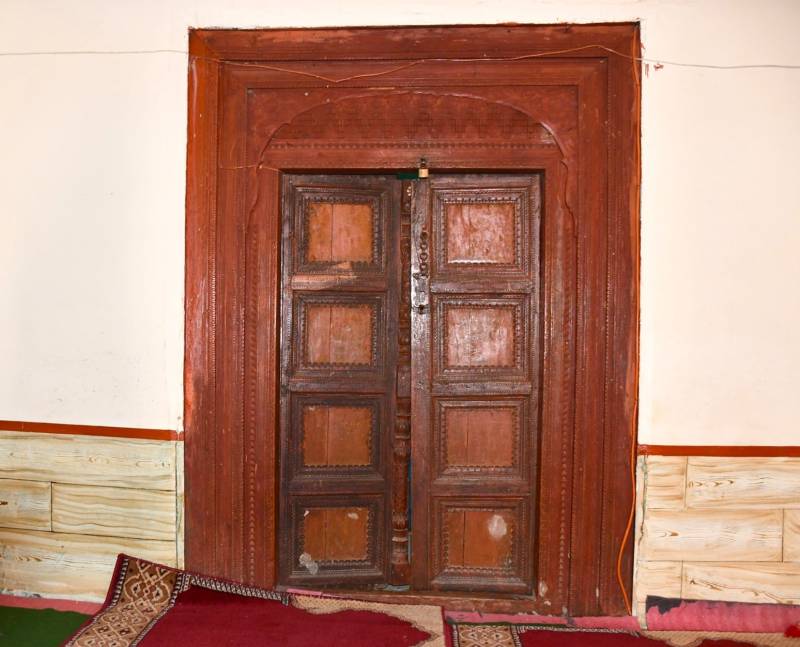
The Jamia Mosque Noor-e-Mustafa in Phathar village is noted for its beautifully wooden door. It is also decorated with merlons that rise from the parapet. Such decorative merlons are not found in any other stone-built mosque in the Talagang tehsil. Recently, a concrete parapet wall has been added over the original stone parapet wall. The lower western and northern parts of the mosque was also renovated in 1992. According to Qari Abdul Malik Mairvi, several notable members of the village played a significant role in the renovation of the mosque, including Haji Hakim Khan, Master Muhammad Nawaz, and Haji Muhammad Yousaf. Master Muhammad Nawaz is especially credited with focusing on religious education in the village.
In 2015, a verandah was added to the mosque. This project was made possible through the efforts of Haji Muhammad Khan, Master Ghaffur, and Qari Abdul Malik Mairvi. Like his predecessors, Noor Gul, Noor Muhammad, and Ustad Mehmood ul Hasan, Qari Abdul Malik Mairvi teaches the Holy Quran to the children of the village. He leads prayers in the Jamia mosque Noor-e Mustafa. He used to teach at the madrasa in Mairvi Sharif. Upon the request of the residents of Phathar, he returned to his village and began leading prayers and teaching children in the mosque.
During interviews with local community members, I learned that the majority of the residents of Phathar village are followers of the Maira Sharif Darbar in Pindigheb. Maira Sharif is known for the Darbar of Khwaja Ahmad Mairvi (d. 1911), who was a deputy of Khwaja Shah Muhammad Suleman, alias Pir Pathan. Many people from Phathar became his disciples, including two prominent figures from the village: Baba Numberdar Fateh Khan and Haji Ahmad Khan.
The disciples of Hazrat Thani, the first Sajjada Nashin of the Darbar of Khawaja Ahmad Mairvi, had several followers in the village. Additionally, Faqir Abdullah Mairvi held a significant following in Phathar. Qari Abdul Malik Mairvi studied under Qari Ghulam Muhammad Chishti at his madrasa in Bakra Mandi, Rawalpindi. Qari Ghulam Muhammad Chishti is originally from Maira Sharif. Qari Abdul Malik took bayat (an oath of allegiance) from Pir Shahzad Mairvi, who is the uncle of Sahibzada Farooq Ahmad Mairvi, the current Sajjada Nashin of the Khawaja Ahmad Mairvi Darbar at Maira Sharif.
Apart from the followers of the Darbar of Maira Sharif, residents of Phathar village are followers of Tanveer Shah Gilani, who is connected to the Darbar of Syed Qasim Ali Gilani Lucknow Wale, alias Haji Pir, popularly known as ‘Ghyarveen Wale Pir’ (Pir of the 11th). Small group of village inhabitants are followers of the Ghamkol Sharif Darbar of Zinda Pir in Kohat. A few others are followers of Syed Baqir Ali Shah, who is associated with the Kot Gulla Darbar of Lawa Tehsil.
Aside from the stone-built mosque, Phathar is well-known for its tombstones that display a variety of symbols. These tombstones can be seen in many historic villages of the Talagang and Lawa tehsils. Some of the tombstones feature images of prayer rugs (Musalla), ewers (lota), and other important symbols. Besides religious motifs, the tombstones also showcase geometric and floral designs.
The tombstones were crafted by the Mistri community of Phathar village, most notably Mistri Ghulam Rasool and others. However, as the stonecraft traditions have faded in the village and the lack of available work persists, the Mistri community has left to seek better opportunities elsewhere.