

The 1994 Tutsi-Hutu conflict in the African nation of Rwanda remains a horrific memory for media professionals worldwide. The footage provided by international newsreels, showing gangs wielding machetes and killing Tutsi minorities on the streets of major cities like Kigali and other urban centers, is forever etched in our minds. It started in 1990 though but attacks on Tutsis in Rwanda by Hutu militiamen, as on 6 April 1994, the deaths of the Presidents of Burundi and Rwanda in a plane crash caused by a rocket attack, ignited several weeks of intense and systematic massacres. The UN report says.
The 1994 Tutsi-Hutu conflict in Rwanda remains one of the darkest moments in human history. The ethnic conflict left an estimated 1 million people lost their lives in the genocide, and between 150,000 to 250,000 women were raped. And the killings were acts of genocide, shocking the international community.
The presidential guard started killing Tutsi civilians in a section of Kigali near the airport, within half an hour of the plane crash, roadblocks were set up by Hutu militiamen, often assisted by paramilitary police or military personnel.
On June 22, the Security Council authorised French-led forces to mount a humanitarian mission, Operation Turquoise, which saved hundreds of civilians in southwest Rwanda. However, the mission also allowed soldiers, officials, and militiamen involved in the genocide to flee Rwanda through the areas under their control. In other areas, killings continued until July 4, 1994, when the RPF took military control of the entire territory of Rwanda.
Thousands of government officials, soldiers, and militia who had participated in the genocide fled to the Democratic Republic of Congo (DRC), then known as Zaire, taking with them 1.4 million civilians, most of them Hutu who had been told that the RPF would kill them.
Today again Tutsi are in the center of the headlines as they are being attacked and killed in DPR Kongo where they had been living since the end of the conflict in 1996.
Approximately 400 academics, researchers, religious leaders, writers, artists, state leaders, journalists, and genocide survivors have signed a letter to the Secretary-General of the United Nations, voicing their opposition to the persecution of Congolese Tutsis
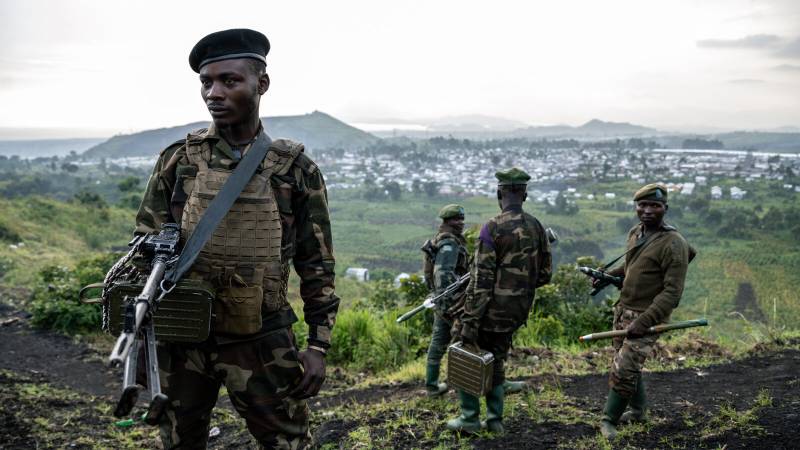
BBC report suggests that The notorious M23 rebel group is wreaking havoc in the eastern Democratic Republic of Congo, seizing the region's two biggest cities in a deadly uprising that has forced hundreds of thousands to flee their homes. At the heart of their campaign is the assertion that ethnic Tutsis living in DR Congo are being persecuted. However, delving into the status of Tutsis in DR Congo and its connection to the M23 uprising is a complex and sensitive issue that raises fundamental questions about identity and citizenship, specifically who is considered Congolese.
The M23 rebel group is a Congolese Tutsi-led paramilitary organisation operating in the eastern Democratic Republic of Congo and is backed by Rwanda primarily both, militarily and financially, particularly in North Kivu province. Rwanda's involvement is largely driven by its strategic interests in the region, including access to natural resources and a desire to maintain influence over the eastern Congo.
The M23's primary objective is to protect the interests of Congolese Tutsis and challenge the authority of the central government in Kinshasa. However, their actions have been marred by human rights abuses, including killings, rapes, and forced recruitment of civilians.
Approximately 400 academics, researchers, religious leaders, writers, artists, state leaders, journalists, and genocide survivors have signed a letter to the Secretary-General of the United Nations, voicing their opposition to the persecution of Congolese Tutsis, which has been overlooked due to a dominant single narrative.
According to the signatories of the Open Letter to the Secretary-General, 'some current Congolese political actors support the eradication of Congolese Tutsi, whose exclusion is ignored by the rest of the world. The authors of the letter urge the United Nations to “take action to prevent a genocide similar to the one that occurred in Rwanda in 1994”, citing the dire situation faced by “Tutsi communities in the eastern Democratic Republic of Congo (DRC). To promote a comprehensive understanding of the crisis, they invite a re-examination of its underlying causes."
Raising serious concerns over killings and human rights violations by the M23 Rebels on the behest of regional players they alarmed that “This present conflict, as abominable as it is, cannot be reduced to a single cause. Rather, it is the result of an explosive and complex mix of political, social, and economic tensions that have gradually crystallised into an identity crisis and armed conflict”.
The content of the letter is devastating and demands urgent attention from the United Nations Security Council and international powers besides African and regional territorial players. It calls for “an immediate ceasefire to preserve human lives and pave the way for a political solution. The best way to achieve this goal is certainly not to fixate on the risk of fragmentation of the DRC, and on the particularly simplistic accusation that Rwanda is supporting the M23 for the sole purpose of exploiting natural resources in DRC”.
Before colonisation, the territory now known as the Democratic Republic of Congo was partially under the control of the Rwandan monarchy, a Tutsi kingdom that had been expanding its borders through East Africa for centuries. The kingdom was home to various ethnic groups, including Tutsis, Hutus, and others, who coexisted since at least the 19th century. However, with the arrival of colonial powers, the kingdom was divided between present-day DR Congo and Rwanda, leading to subsequent waves of Tutsi migration to DR Congo. The mid-20th century saw Belgian colonialists bringing Rwandan workers to staff plantations, while others migrated voluntarily in search of better opportunities.
The Tutsi crisis in the Democratic Republic of Congo is a complex and deeply rooted issue, fueled by historical tensions, colonial legacy, and ongoing conflicts. The persecution of Congolese Tutsis, exacerbated by extremist groups and politico-ethnic divisions, has led to devastating humanitarian consequences. To prevent further atrocities and promote lasting peace, it is essential to address the underlying causes of the crisis, promote inclusive dialogue, and support sustainable solutions that recognise the rights and dignity of all Congolese citizens, regardless of their ethnic background.