

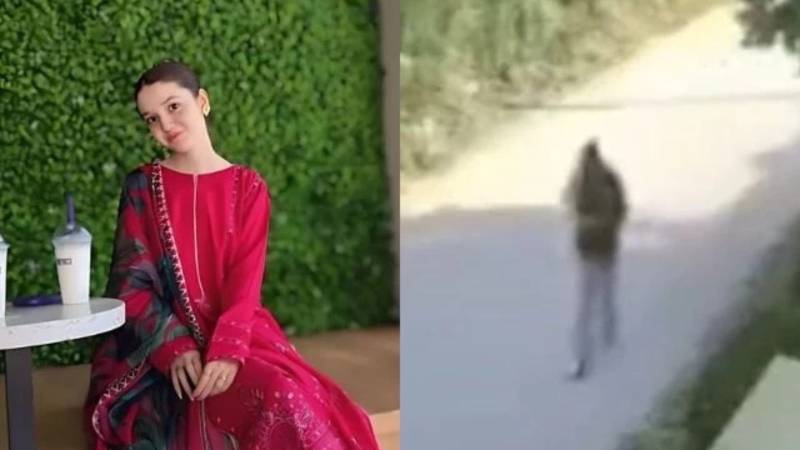
UK Prime Minister Keir Starmer advised people to watch the Netflix series Adolescence. He watched the series with his teenage children and called it “hit home hard.” The series highlighted that toxic digital platforms, emotional neglect, and societal indifference are the causes of violent behaviour in teenage boys. It also reveals how the negligence committed by parents, schools, and society towards fragile minds is easily radicalised by online misogyny and notions of masculinity. The series is a wake-up call for us that such violence is not born in isolation or a vacuum but cultivated by society. As Adolescence exposes, our society is cultivating toxic minds: vulnerable young boys are fed on digital myths of entitlement without emotional intelligence training. They learn to equate rejection with dishonour and, in the case of Sana Yusuf, ownership with murder.
Sana Yusuf was just 17. A girl with laughter and dreams and a future. But she said, “No,” and for that she was brutally murdered. A boy, in the language of an Islamabad police officer, “rejected multiple times,” could not accept her liberty and autonomy. He stalked her, chased her, and finally shot her inside her home in Islamabad. Sadly, this tragedy is not a rare occurrence. It is the manifestation of a deeply rooted problem: a society that nurtures boys' entitlement instead of kindness and empathy, and girls' silence instead of resistance and liberty. After this heinous act, the hours that followed were also disturbing. The media failed her again. Some people and outlets labelled her a “TikToker” as if that explained and justified her death. Others speculated falsely about honour killing and did not treat her as a human, a girl, a daughter, or a sister who was brutally murdered. But once the facts emerged, they were transparently clear: she had simply said “no” and paid for it with her life.
It has spread globally; the 2014 Isla Vista killings are clear examples, where Elliot Rodger murdered six people and injured 14. The motive behind this heinous act was to punish women for rejecting him and take revenge on men he thought of as competition. Similarly, in 2018, Alek Minassian drove a van into a crowd in Toronto, and as a result, he killed 10 people and injured 16. He associated the attack with an act of retribution by the incel movement and cited the above Elliot Rodger as a key influence. Likewise, Scott Beierle murdered two women and injured five others in a yoga studio in Florida. After investigation, it was revealed that he had a history of posting misogynistic YouTube videos, blaming women for his personal failures and loneliness. The most shocking was Jake Davison, who shot and killed five people, including his mother, in the UK. His online posts revealed resentment towards women and a lack of romantic success.
A recent report from the United Nations Population Fund (UNFPA) is a clear manifestation: 28% of women aged between 15 and 49 have experienced physical violence, while 6% have gone through sexual violence
Linking these examples to the Pakistani context is not a difficult task. In the age of constant information flow, toxic ideologies like incel culture travel across borders. The Sana Yusuf murder at her home by a man whose repeated romantic advances she had rejected is a reflection of entitlement, obsession, and deep-rooted misogyny taking a deadly shape.
Patriarchy is a system of male domination. It is unequal power relations, discrimination, and the restriction of women's liberty, rights, and opportunities. It is a Greek word, meaning “rule of the father,” and historically refers to male authority in families and communities. Patriarchy is not merely a biological phenomenon, but it is a result of long-term historical and cultural developments. Literary and archaeological evidence from ancient Hebrew, Mesopotamian, and Greek societies shows how, over time, male dominance became institutionalised, shaped by class and religious structures. Many communities established gender roles based on biological sex, encouraged by religious, moral, and political norms. However, some researchers believe that male motivation to control females has evolutionary roots: dominance and sexual coercion in other primates. But the extent of patriarchy in humans is complex and directed by behavioural flexibility and cultural differences.
In Pakistan, patriarchy is deeply rooted in family structure; it is linked to the language of honour, morality, and even religion. It starts from birth; boys are given more freedom, more forgiveness, and more value. Girls, meanwhile, are instructed to be careful with their dress, their language tone, and even their dreams. “What will people say?” becomes the mantra of their upbringing. Pakistan ranks as the sixth most dangerous country for women. The gender-based violence situation is grim in Pakistan. A recent report from the United Nations Population Fund (UNFPA) is a clear manifestation: 28% of women aged between 15 and 49 have experienced physical violence, while 6% have gone through sexual violence.
If we want a future where girls are not murdered for saying no, then change must start in every layer of society, from our homes to our classrooms, our mosques, our media, our communities, and our courts
A similar picture has been presented by the National Commission for Human Rights Pakistan, that more than 90% of Pakistani women have endured some form of domestic abuse in their lifetime. Moreover, the reports of Human Rights Watch 2024 also highlighted the shocking details about honour killing, child marriage, and low conviction rates for rape. UN Women notes that about 56% of survivors never sought help or expressed and disclosed their abuse. Weighing the burden of this statistic, can we admire our family system or values and lament the West's fractured family system? The reporting data and conviction rate determine the actual scenario of gender-based violence.
Given such a situation in Pakistan, where the murder of a girl over a rejected proposal is not shocking. After the murder, the toxic comments on social media were the depictions of our mental grooming about women. For the sake of showing the mirror of society, some comments are being mentioned.
“Burey kamun ka bura nateeja he niktal hain”—Bad deeds always lead to bad outcomes.
"Zbrdast"—Excellent or Awesome.
"In dunon ne Pakhtun rewayat ko pamal kiya tha"—The two had trampled on the Pashtun traditions.
"Esi trah 10 or 12 or chale jaye tu buhoot sukoon hoga"—If 10 or 12 more leave like this, it would bring great peace.
"Sara mahool ganda kya hain?"—They have completely polluted the environment.
"Bahut khushi ho rahi hai, ahista ahista gand saf ho raha hai." – I'm very happy; gradually, the filth is being cleaned up.
"Alhamdolillah, zbrdast, bhtt acha hua." – Praise be to God, excellent, this is really good.
These individuals live among us, and they share responsibility for what the actual perpetrator did. Through silence and collective indifference, we have allowed this mindset to grow. It is not an isolated act but a symptom of deeply rooted misogyny that has been cultivated over time through systematic methods.
Condemning such crimes is not enough. Mourning her death is not enough. If we want a future where girls are not murdered for saying no, then change must start in every layer of society, from our homes to our classrooms, our mosques, our media, our communities, and our courts. At home, we must teach boys responsibility and accountability, not entitlement; that affection is not owned, and no always means no. On the other hand, we should empower girls to speak up without fear. Our schools must go beyond the circle of academics and include consent, emotional intelligence, and gender equality in the core curriculum. Religious leaders must foster a culture of acceptance of opposite narratives and promote compassion, not control. Laws against such types of crimes must be strictly enforced, and a deterrent must be established.
Media must stop dehumanising humans, and instead of victim-blaming and judgmental labelling, they should report with sensitivity and responsibility. Most importantly, in the digital age, where cyberstalking has become common and precedes physical violence, we need widespread digital literacy for both youth and parents to identify toxicity and threats early. This culture of coercion is not limited to gender-based violence alone; we have seen it silence science too, as a teacher in Bannu was forced to surrender before clergy for teaching Darwin's theory. Real change will not come from a single emotional speech or strict laws, but from reshaping what we teach, what we tolerate, and what kind of human beings we raise.
But here is the simple truth: the soil of the subcontinent, especially in Pakistan, is fertile for change. Our people are not fixed. They are fields. And it is up to us what we cultivate. We have two options: we can choose to grow wild shrubs, minds full of misogyny, entitlement, rage, and violence. Or we can sow the seeds of empathy, justice, and respect and raise the boys who can differentiate liberty from ownership and girls who are safe to say no. The future is not written in blood. It is written in choice. The question is, what kind of society are we fostering today, and who will pay for it tomorrow?