

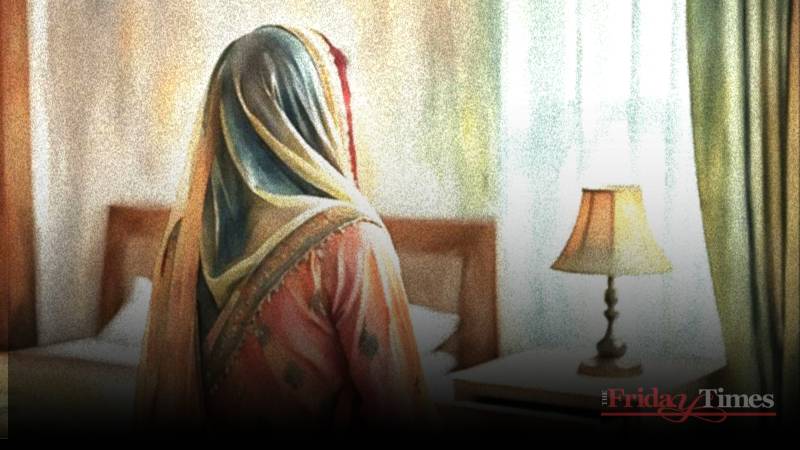
Language is where belonging begins—where relation is not only expressed but shaped. It is, as Heidegger wrote, the house of being, but also the quiet architecture of memory and mutual obligation. In certain words, entire worlds of intimacy and distance are silently preserved.
Kinship and Naming
One of the most revealing distinctions between Western and South Asian cultures lies not in economics or religion, but in language, specifically, kinship terminology. The difference is not merely lexical but philosophical and civilisational.
In Indo-Aryan languages, words like “nand” (husband’s sister) and “bhābhī” (brother’s wife) designate specific relational roles, each carrying unique emotional tones, obligations, and social coordinates. In contrast, languages like English or French offer descriptive phrases—“husband’s sister,” “brother’s wife”—treating these bonds as contextual rather than ontological. In South Asia, kinship is not background—it is structure.
Is this richness merely a by-product of the joint family system? Partly. But even in Western societies where extended families once thrived, relational terminology never acquired such fine-grained specificity. The South Asian model encodes intimacy, deference, and authority into every syllable. Terms like “caccā,” “māmūṅ,” “jījā,” and especially “Āpā” are not neutral labels—they are vessels of cultural sediment.
The Syntax of Āpā, Bājī, Dīdī
Take “sister.” The formal word is “bahn”, but affection fragments this term into “āpā,” “bājī,” “dīdī,” and “bahnā”—each situated in a unique linguistic and emotional ecosystem. Āpā, transcending the Hindi-Urdu binary, evokes warmth and reverence among Urdu speakers. Bājī, with Turkish roots (bacı), retains vibrant currency in Urdu, Punjabi, and several South Asian languages where it has been fully localised. Dīdī, melodious and informal, travels sometimes from Hindi into Urdu-speaking homes via popular culture. One cannot discuss "dīdī" without invoking its unforgettable cinematic moment in the 1994 Bollywood song:
Dīdī, terā dewar dīvāna, kuriyoṅ ko ḍāle dānā!
(Didi, your brother-in-law is a madcap, baiting the girls!)
Here, dīdī is not just an address—it is stagecraft. Language becomes action, kinship becomes theatre. Every syllable of South Asian kinship terminology performs a function—indexing age, intimacy, hierarchy, and affect.
Āpā in Urdu Fiction
This performative richness becomes clearest in Urdu fiction. In Mumtaz Mufti’s searing short story Āpā, the titular character is both invisible and central, burning quietly under domestic silence. The child Badū compares her to a jalā huā ūplā—a scorched cow dung cake: dead on the surface, yet glowing inside. When the man she silently loves marries another, Āpā’s name becomes a requiem for unlived desire. Here, Āpā is not kin—it is ontology, a name carved in suppressed fire.
In Ismat Chughtai’s Beṛiyāṅ (Shackles), Kubrā Āpā appears less as a character than as a living metaphor of entrapment. Reduced to a be-jism makhlūq (bodyless being), she represents the post-marital stagnation. For Jāmilah, Āpā is not kin, but fate—a mirror she must shatter to escape an unlived life.
In Mumtāz Shīrīn’s Angṛāī (A Stretch / A Sensuous Stretching Gesture), Gulnār is called Āpā by younger characters—yet inwardly, she longs for lost passion and repressed desires. The title Āpā becomes her prison: an honorific that demands dignity, maturity, and restraint, even as she burns inwardly for intimacy and recognition. She is torn between the girl who adored Miss Finance and the woman who yearns for Parvez. Āpā, here, is both social armour and psychic constraint.
In A. Ḥamīd’s Shāh Darē kī ek Shām (An Evening at the Royal Gate), Āpā occupies a quieter role—her room becomes the space where the narrator first beholds his beloved Famhīdah, laughing and mimicking her grandmother. She is not the centre, but the stable frame around which memory, love, and loss revolve. Āpā’s domestic inclusion anchors the emotional geography of the story.
“Āpā” is a kinship term softened by affection and hardened by cultural structure
Poetic Lives of Āpā
Urdu poetry also lends quiet but profound space to Āpā.
In Nida Fazli’s compact line:
bhābhī kī chhaṛiyoṅ sā bādal, āpā kī chuṭkī sā chānd
(The cloud is like Bhābhī’s teasing rod, and the moon like Āpā’s finger-snap)
Domestic gestures—light, playful, authoritative—become celestial metaphors. Āpā’s chuṭkī (snap) turns into a mnemonic light: discipline and affection rolled into one luminous motion. The moon is no longer the lover’s symbol—it’s the elder sister’s reminder.
In Akhtarul Imān’s Kal kī Bāt (A Matter of Yesterday), Āpā is etched into memory as part of a household tableau:
baṛī Āpā Shabānā ko liyē,
manjhli Āpā kabhī āti kabhī jātī thī
(Elder Sister took Shabana along
The middle sister would come and go, now and then)
The scene is tender, textured—Āpā embracing, moving, listening. When the story shifts to Partition’s rupture—“yak-bayak shor huā, mulk, nayā mulk banā” (“Suddenly there was an uproar—a new country was made”)—the previously ordinary presence of Āpā acquires emotional luminosity. She becomes a stable emotional axis in a fractured world.
Qatīl Shifāʾī, in Umar Poshī (Concealing One’s Age / Age Concealment), explores the tragedy of masked identity in a brothel:
Munna bolā: bājī bhī to nānī jī ko āpā āpā kehtī hai
(Munna said: Even Bājī calls Grandma Āpā.)
In this world, calling your mother māṅ is obscene. Āpā becomes linguistic camouflage, a euphemism to deny age and kinship. In Shifāʾī’s bitter irony, the child’s innocent speech reveals the violence of an economy allergic to ageing.
Āpā as Cultural and Semantic Shelter
As far as the word “Āpā” (آپا) and its cultural usage are concerned, we begin with a brief lexical note. Platts’ A Dictionary of Urdu, Classical Hindi, and English (1884) provides a succinct entry: An elder sister (used in the North-Western Provinces and Oudh); a respectful term for an elderly or elder sister-like woman. Though brief, this definition encodes the word’s gendered intimacy, its regional specificity, and its honorific dimension. “Āpā” is a kinship term softened by affection and hardened by cultural structure. It denotes not only birth order but the social aura of elder-sisterhood: a figure who is at once nurturing, supervisory, and ethically proximate.
In the context of post-Partition Pakistan, the usage of Āpā travelled with the Muhājir community—Urdu-speaking migrants, primarily from North India, who settled largely in Karachi and other urban centres of Sindh. Initially adopted as a respectful term across linguistic groups (including Punjabi), its connotations began to evolve.
The Ideological Afterlife of “Āpā”
Over time, and through public repetition, the term gradually acquired a second layer of ideological weight, particularly when associated with certain public figures who came to be almost institutionally known as "Āpā."
One such figure was Nisār Fātimah, frequently referred to as Āpā Nisār Fātimah, a politician who rose to prominence in the 1980s during General Zia-ul-Ḥaq’s Islamist regime. A member of the Islamic Ideology Council, she played a decisive role in shaping Pakistan’s anti-blasphemy laws, which would later be weaponised with devastating consequences. Though politically radical in one sense, her involvement with reactionary legal frameworks revealed how religious conservatism could be administered through the ostensibly benign figure of “Āpā.” The term—once redolent of domesticity and warmth—now hovered uncomfortably between state power and moral authoritarianism.
A more culturally resonant instance is that of the writer Bāno Qudsiyā, widely addressed as Bāno Āpā, particularly by devotees of her husband, Ashfāq Aḥmad, a fiction writer turned spiritual-nationalist raconteur. Such was the cultural consolidation of this honorific that even Aḥmad himself, mid-sentence, would refer to his wife as “Āpā,” before correcting himself—“Yours, of course”—as if to acknowledge the symbolic public claim over her persona.
Together, these two women—one in politics, the other in literature—contributed, directly or indirectly, to the ideological flattening of the term. In their later years, both Qudsiyā and her husband wrote and spoke in registers aligned with abstractionist, fatalistic, and state-sanctioned discourses. Qudsiyā, in particular, projected a quasi-spiritual, deterministic worldview, one that often casts women into roles of passive acceptance and moral austerity. Through her, the figure of “Āpā” came to embody not just sisterhood, but a template of womanhood obedient to patriarchal-nationalist ethics.
This trajectory illustrates a broader truth: even innocent or affectionate terms are not immune to ideological capture. In Nazi Germany, for instance, common and cherished words were linguistically and emotionally poisoned by state propaganda—imbued with the nationalist mystique of Blut und Boden (“blood and soil”), where Boden (literally "soil") became a loaded metaphor for ancestral land, purity, and exclusionary belonging. Many such words today lie dormant in German usage, unusable without evoking their sinister histories.
In contemporary Pakistan’s literary culture, we witness a curious revival, if not inflation of the “Āpā” honorific. A growing cohort of ageing or elderly women writers, some ideological heirs to Qudsiyā and Nisār Fātimah, wear the term like a badge of cultural seniority. Some are actively flattered by the title; others are passively absorbed into its legacy. In this sense, “Āpā” risks becoming a linguistic fossil, an honorific that disguises dogma as wisdom, compliance as dignity.
This does not mean the term is beyond salvage. Many who are called “Āpā” today do not subscribe to these ideological lineages. The challenge, then, is twofold:
To resist the uncritical use of titles that carry ideological sediment.
To reclaim the word “Āpā” for those who embody its original spirit—compassion, moral clarity, and intellectual independence.
In doing so, we might liberate this modest and once-innocent term from the shadow cast by its unfortunate public affiliations. Words, like people, deserve a second life—especially when the first has been bent out of shape by power.