

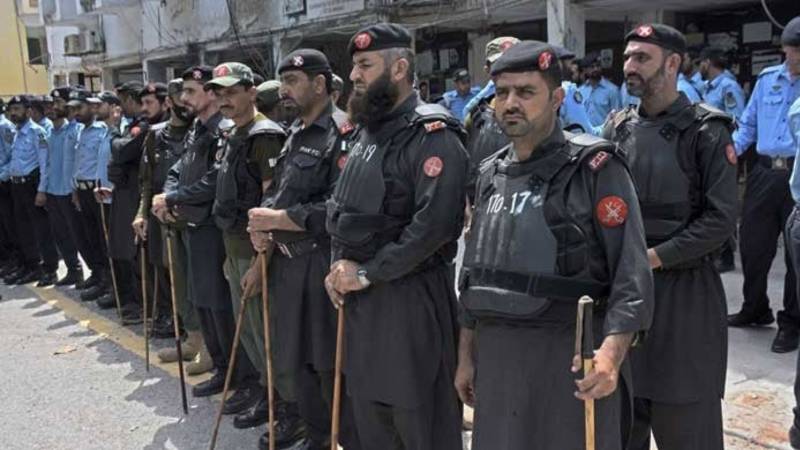
In a country like Pakistan where symbols matter more than speeches and timing speaks louder than legislation, the sudden conversion of Frontier Constabulary into a Federal Constabulary cannot and should not be taken as an ordinary development. This is not simply a change of name or badge or uniform. This is a structural recalibration of internal security doctrine. And what makes it more interesting, more suspicious and certainly more impactful, is that it has arrived through a presidential ordinance and not through parliament. It slipped in quietly but its echoes will roar for a long time.
The Frontier Constabulary has a long and rugged history. Created during British rule to maintain peace between tribal areas and settled regions, it became a force of men who knew their terrain better than they knew their rifles. These were sons of the soil, not mercenaries in state-issued uniforms. They had no helicopters, no air cover, no media praise. They had bullets in their magazines and trust in their mission. Over the years, they have been guarding polling stations in the south and escorting polio teams in the north. In places where law ends and tribal codes begin, they have stood as the state's last visible presence. But today, the force is being reshaped into a national tool with jurisdiction across all provinces. One needs to pause and reflect not just on the intent but on the implications.
First and foremost, the timing. The government has approved this transformation at a moment when political instability is rising. Protests are planned. Public discontent is visible. The opposition is on the streets. Institutions are at loggerheads. To create a new paramilitary force in such circumstances, especially one that can be deployed across the country at the discretion of the centre, invites serious concerns. One has to ask, is this force being prepared for security or is it being prepared for control? Will it safeguard the nation or will it guard the regime?
This leads us to a fundamental question about the soul of the federation. Pakistan is a federal republic. After the eighteenth amendment, provinces were given more authority to manage their internal affairs. Police is a provincial subject. Maintaining law and order is no longer just a central duty. In such a context, when a force that is answerable to the interior ministry can be deployed in Sindh, Balochistan, Punjab or anywhere else without the explicit consent of provincial assemblies, then it is not just a change in security policy. It is a quiet revision of the federal balance. And history tells us that when the centre becomes too powerful, it alienates the provinces. That alienation turns into resistance. Resistance into disobedience. And disobedience into national wounds.
The Federal Constabulary could either become a new dawn or a fresh disaster, for its future depends not on its name but its use
There is also a legal and institutional layer to this debate. Pakistan already has too many security outfits. Rangers. Levies. ASF. Police. FIA. Intelligence agencies. And then the military for extraordinary circumstances. With the creation of Federal Constabulary, yet another layer is being added to this already confused hierarchy. Who will coordinate operations during a protest? Who will decide who leads when law and order breaks down in one city but the provincial government disagrees with the federal one? Will this new force respect provincial police or overstep them? These are not small questions. These are questions that define the line between federalism and centralism.
Supporters of the move argue that Pakistan faces serious internal threats. From TTP’s renewed activities to sleeper cells of sectarian outfits. From rising street crimes in Karachi to Baloch separatist movements in the southwest. And yes, they are not wrong. The state is under pressure. Resources are stretched. Police often lack the training and equipment to tackle modern threats. In this context, a well-trained federal force with access to modern equipment could be an asset. But what use is a new force when the existing ones are either misused or underfunded? Why not reform the current setup instead of expanding it? Reform is difficult. Creating something new is easier. It brings headlines. It creates positions. It offers photo ops. But it does not guarantee results.
Then comes the question of accountability. Who will hold this new force accountable? Will it answer to the parliament? Or just to a ministry? Will it be subject to independent audits? What happens if an innocent protestor is beaten in the streets by a baton-wielding officer of this new force? What happens when this force clashes with a provincial police unit under orders from a chief minister? Without clearly defined boundaries, without strict standard operating procedures and without independent oversight, this force could become the very monster it is claimed to prevent.
This force also brings emotional questions with it. The Frontier Constabulary had a strong cultural identity. It was rooted in the soil of Khyber Pakhtunkhwa. Its personnel came largely from one region. Its traditions were local. Its loyalties were tribal yet constitutional. Now, with its rebranding and nationalisation, that character risks being erased. In a country already suffering from ethnic polarisation and linguistic insecurities, is it wise to dismantle a force that gave a sense of ownership to one of our most volatile regions? Institutions are not just weapons of the state. They are mirrors of the people. When they reflect uniformity instead of diversity, they create resentment.
On the international front, human rights observers are already raising concerns. Pakistan has struggled for decades to balance internal security with civil liberties. If this new force is used to disperse peaceful protestors, suppress opposition rallies or pressure journalists, then the backlash will not be domestic alone. It will hurt Pakistan's standing in global forums. Aid, trade and diplomacy now come with attached conditions of human rights, rule of law and civil freedoms. One wrong baton charge in Islamabad could cost the country millions in international goodwill.
Despite these dangers, there remains a sliver of hope. If the Federal Constabulary is designed properly, if its laws are passed through parliament, if its rules of engagement are transparent and if its leadership is chosen on merit, then perhaps this force could evolve into something Pakistan actually needs. A neutral, disciplined, rapid-response force to handle natural disasters, control riots, protect citizens in emergencies and back up the police when overwhelmed. But this will require political maturity. It will demand that those in power resist the temptation to use this force for political survival.
The public must also stay vigilant. Civil society must ask the tough questions. The media must keep a close eye. The opposition must demand parliamentary debate. For in the end, uniforms can protect only when they are bound by the Constitution. The moment they become tools of political convenience, they stop being shields and start being threats.
Pakistan stands at a crossroads. Its institutions are either evolving or eroding. The Federal Constabulary could either become a new dawn or a fresh disaster, for its future depends not on its name but its use—history shows Pakistan’s greatest threats have come not from across the border, but from within. They have come from within. From the misuse of power. From the arrogance of authority. From the silence of those who knew better but chose to look away.
This is not the time to look away. This is the time to look deeply. And ask the hardest question of all. Who will this force serve? The people or the powerful? The law or the lawmaker? The federation or the government?
Only time will tell. But in our land, time remembers more than we dare to admit.