

All throughout human history, nature has been referred to as ‘Mother Nature’ or sometimes ‘Mother Earth’. The Greeks had ‘Gaia’ as the goddess and Mother Earth. In the Hindu Rig Vedas, the goddess ‘Prithvi’ was Mother Earth. She is also known as ‘Vishvadhaya’ (the all-nourishing). In Sumerian mythology, ‘Ninhursag’, the goddess of fertility, growth and creation, was identified as ‘Mother Earth’. Nature was always referred to as benevolent, giving and nurturing.
The relationship of man with nature until fairly recently had been one of reverence and awe. The earth, sky, stars, volcanoes, but especially the rivers, were associated with or identified as gods and goddesses. The Ganges River in India was believed to be sacred and worshipped by Hindus as the goddess ‘Mandakini’ and ‘Yogini’, the goddess of purification and forgiveness. It was believed that purification of the soul after death was achieved by floating the remains of the dead in the Ganges.
In ancient Egypt too, there is a mythical river depicted in thousands of etchings and murals, which the dead had to cross in order to reach the underworld, salvation and eternal life. As for the River Nile, it was absolutely pivotal to their entire civilisation. Sacrifices were made to the Nile to ensure its steady flow, and the floods were celebrated as the festival of ‘Eid Wafa Un Neel’.
In the Indus civilisation, floods were celebrated as the harbinger of fertility, growth and food security. The floods would inundate the river bed for miles across the basin, spreading rich alluvium, replenishing underground aquifers and ensuring abundant crop yields. All animal, plant and human life – and their food security – depended on the rivers. Throughout the Indus basin, poetry was written and songs sung in praise of the rivers. Hundreds of stories and romantic folk tales associated with the rivers form a major part of the literature of all the languages spoken along their banks.
Nature also invoked awe and fear in man, such as with volcanoes or storms. Stories of severe storms and rains bringing apocalypse on earth are present in many religions. The hazard most feared was drought, and animal sacrifices were offered to the gods to please them so that they would bless the earth with rain.
As man started on his journey to rapid development, food security and dependence on weather and seasons seemed less important, and the attitude towards nature became more and more callous and insensitive
Many ancient societies followed unwritten rules regarding nature and had myths attached to it. It was considered a bad omen to incur the wrath of nature. In the famous poem The Rime of the Ancient Mariner written by Samuel Taylor Coleridge in 1834, he narrates the story of a wretched old mariner who brought the wrath of the gods upon himself and his ship when he deliberately killed a beautiful albatross on impulse – a bird which had followed their ship and was fed and cared for by the crew. All of a sudden the winds ceased to blow, the ship was stranded, the sun became blindingly hot, the crew grew parched with thirst, and they died one by one.
In short, never in the whole history of human civilisation was nature treated with the kind of indifference, disrespect or defiance as we see today. As man started on his journey to rapid development, food security and dependence on weather and seasons seemed less important, and the attitude towards nature became more and more callous and insensitive.
Today, humans are facing severe consequences for disrespecting nature. Most scientists agree that climate change and the rising global temperature are the result of human activities, especially carbon emissions. These impacts are now manifest in the changing weather patterns and severe hazards occurring all over the world.
For several years, Pakistan has been experiencing severe weather events and natural hazards, resulting in annual losses of billions of dollars to its GDP. These mega-disasters pose a threat to national security and have a devastating economic impact. Despite previous floods causing catastrophic losses and severe damage to existing infrastructure, governments have yet to prioritise resilience and disaster prevention, and a "business as usual" approach persists.
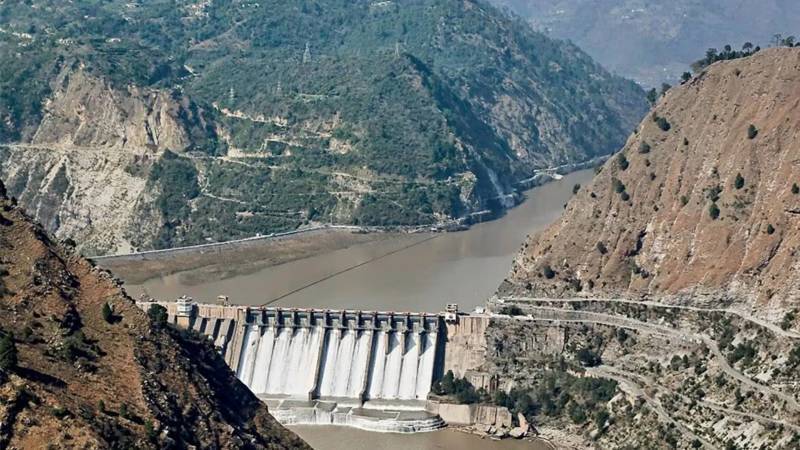
It is shocking and dreadful to see the Prime Minister of Pakistan and Chief Minister of Punjab giving statements about ‘building more dams’ as their solution for adaptation. The floods that have devastated Punjab have come in three eastern rivers, and yet the solution they are announcing is dams in the Indus plains, where none can be constructed. If this is the level of understanding and seriousness of the federal and Punjab governments, then it is not wrong to predict that the next floods will bring the same devastation.
If the Punjab government had made the safety of bunds its priority agenda, we would never have seen this level of devastation
Flood preparedness and management is a technical and scientific task, and it needs experts to find the best course of action. Bureaucrats – not trained for that – can neither manage it on their own, nor do the rains and rivers follow their plans. There are tried and tested methods and strategies that can reduce the impacts of climate change, build resilience, reduce risks and manage floods. But, as usual, there was a complete lack of preparedness before this year’s floods.
The Punjab government allowed the construction of housing societies right inside the bed of the River Ravi without proper risk assessment. The bunds and spurs on all three rivers – Ravi, Chenab and Sutlej – were totally inadequate, and they burst at hundreds of places, inundating thousands of acres and drowning hundreds of villages. A timely survey, planning and works on spurs and bunds could have prevented billions of dollars in damages. The Punjab Irrigation Department was repeatedly warned by the Federal Flood Commission to complete the survey of bunds, identify the vulnerable sections before the floods and submit the report – which they failed to do. The Met Department reassured the Federal Flood Commission in their pre-monsoon planning that this year there would actually be less rain and a low risk of floods.
But the floods came as never before and demonstrated yet again that the rivers follow their natural paths, and whenever any river comes into high flood, the way to manage it is to be fully prepared with reinforced spurs and bunds, clearing the path of floodwaters, saving lives and livestock through early warnings, and having strong contingency planning for the post-flood situation.
No dam, barrage or canal can contain a river in high flood. The river must be allowed to flow securely in its path. If the Punjab government had made the safety of bunds its priority agenda, we would never have seen this level of devastation.
These floods are a final wake-up call for governments in Pakistan. If there are no efforts to bring a radical shift in policy, then another disaster is certain.
The real challenge today is to change the entire attitude towards nature and adapt to live with the rivers. If encroachment on rivers is allowed to continue, the entire country will pay the price for the greed of a few. Repeated devastation by floods will result in food shortages, destroyed coastal cities, climate migrations and conflicts.