

Both India and Pakistan have eventually found an off-ramp after a short but intense military engagement that gripped both countries for about 96 hours. The region is still clouded with the fog of war; therefore, the claims of attacks and objectives achieved by both sides are yet to be confirmed to put nuts and bolts in place to make sense in detail of what has happened and its ramifications. Nonetheless, the four-day crisis brings us down to two brass tacks.
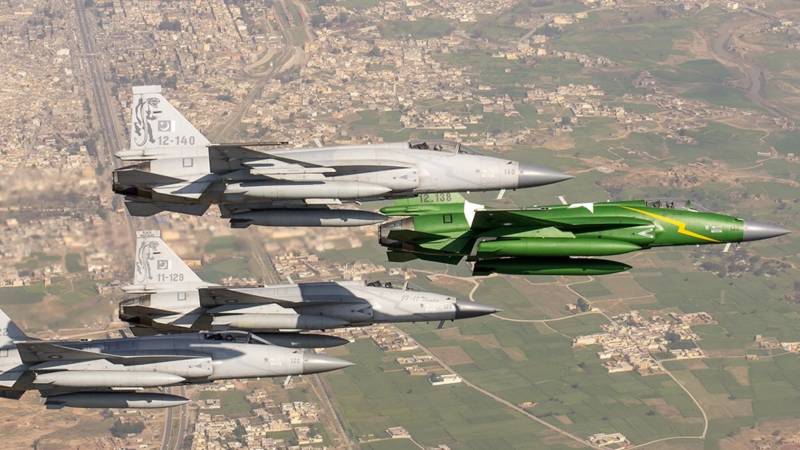
One, the crisis demonstrated a transformed version of a dogfight. It wasn’t just a dogfight featuring highly dynamic and risky air-to-air engagement relying on pilots’ decision-making; rather, it was a transformed dogfight characterised by a large number of modern aircraft capable of conducting electronic warfare and equipped with advanced long-range radars and beyond visual range (BVR) missiles. As a result, the Pakistan Air Force, using Chinese-made J-10C multirole aircraft, hit an Indian French-made multirole Rafale with a PL-15 missile (Chinese-made) during a high-altitude long-range engagement. This shot fired from more than 100 km away confronted Rafale’s superior manoeuvrability and advanced close-combat survivability.
With unique credos, both aircraft with their ammunitions modelled air combat, never seen before. Besides its twin engines, turbofans, and delta wings that boost its multirole performance at Mach 1.8 with a combat radius of more than 1,850 km, the Rafale’s key features are its sensors and survivability system. The radar (RBE2-AA AESA radar) and electronic warfare measures (SEPCTRA) are capable of detecting threats and offering countermeasures at 360 degrees. However, it was challenged by single-engine multirole and lightweight J-10C aircraft that can reach up to Mach 2. The key features of the J-10 are its radar (KLJ-7A AESA) and digital fly-by-wire system. Moreover, the Meteor BVR missile that Rafale was carrying is one of the latest lethal missiles with a range of over 150 km and an expansive no-escape zone. On the other hand, the PL-15 missile’s reported range is over 200 km and is designed to target advanced electronic countermeasures and aerial platforms, including AWACS and tankers.
India deployed drones in support of modern traditional platforms such as missiles and aircraft to threaten and inflict punishment intended to give more vocal support to Modi’s jingoistic narrative
This dogfight has regional as well as beyond-regional implications. At the regional level, this encounter demonstrated Pakistan’s tactical air superiority and, through its electronic warfare tactics, radar play and missile range, challenged the Indian Air Force, which is not only numerically superior but is equipped with diverse modern aircraft such as Rafales, MiG-29s, Su-30MKIs, Mirage 2000s (bought from different buyers) and Tejas fighters. An asymmetry has handsomely paid off. And the downing of the Rafale dented the modernisation of the Indian Air Force. At a global level, the neutralisation of one of the advanced aircraft like Rafale by a new Chinese-made J-10C is going to be an event that Western powers will embrace with shock and awe.
Two, the use of drones demonstrated how the use of new and emerging technologies can drive and shape escalation in South Asia. Escalation, as scholars like Herman Kahn, Robert Jervis, Barry Posen, Richard Smoke, and Nina Tannenwald conceptualised, is an action-reaction response in which perceptions of decision-makers about threshold-crossing, in terms of certain targets or use of weapons, instrumentalise moves and responses, taking them to a higher level. In South Asia, escalation has always been linked/studied in relation to the nuclear dimension of the conflict, but this crisis brought emerging technologies into effect to drive and shape escalation, where new technologies such as drones and cyberspace are not only used for signaling. The deployment of these technologies (especially drones) raised a key question: how is remote warfare affecting escalation decision-making during the crisis?
The adversaries initiate and sustain hostilities when technology at hand tends to reduce the costs and risks of military operations. Building on this line of argument, the uninhabited platforms, like drones, are less costly as compared to traditional assets such as troops, aircraft, and missiles, therefore enabling leaders to readily deploy remote-controlled aerial vehicles. We have recently seen the deployment of drones on a wide scale during different conflicts, such as the Russia-Ukraine war and Middle Eastern crises, both in combat, support, and surveillance modes. Two key arguments are relevant to assess the role of drones in crisis escalation.
One, drones tend to increase conflict initiation because the relatively less costly deployment of drones makes them a rational choice for states to initiate conflict. For instance, the Harop drone costs about $70,000 per unit, which is far less than the Rafale, which costs about £288 million. The financial consideration is undoubtedly important, but the concern that weighs more is the nature of the target(s) and, more importantly, the casualties. In the case of remote-controlled operations, the drowning of Harpoon drones is less likely to trigger retaliatory behaviour instigated by emotions of anger, aggression, and risk acceptance; instead, it triggers restraint. Indian drones in Pakistan crossed the threshold; however, their destruction by Pakistan did not meet Indian, what Richard Smoke called, the “saliency criterion” – the threshold criterion that separates actions that justify escalation through retaliation from the actions that do not. In this way, drones can mould crisis escalation, but the loss of traditional platforms such as Rafale alongside could trigger emotional retaliatory behaviour. Furthermore, the loss of drone(s) could lead to escalation, whereas it normally does not, given the fact that drones are remote fighters.
Two, drones have a deterrent effect as well. The “deterrence by detection” model argues that the use of drones tends to stabilise crises by reducing information asymmetries that are key to the initiation and escalation of conflict and retaliation. If successfully conducted without a loss, the drones tend to help gather information about the adversary’s mobilisations to inform one’s posturing and deter the adversary. Moreover, the UAVs provide real-time and persistent surveillance and tend to reduce the time between target identification and the decision to strike. The reported use of a swarm of drones by India and Pakistan inside each other’s territory, besides destruction, could have gathered intelligence and tested air defences. This information could have guided the four-day escalation spiral in South Asia.
Both sides mediated the effects of technology on the escalation rung, and the way technologies were deployed and responded to shaped the spiral of crisis escalation. This crisis reinforces the significance of technology to the conduct of hostilities, and technology remained key in inflicting not only damage but also remained instrumental in leaving indelible marks on the regional strategic landscape. A notable takeaway for India: India deployed drones in support of modern traditional platforms such as missiles and aircraft to threaten and inflict punishment intended to give more vocal support to Modi’s jingoistic narrative; however, the resulting retaliation through new and traditional platforms working in a network dumped the idea of carrying out military strikes against your neighbour on the pretext of uncharted non-state actors’ activities.
In addition, Modi needs to revisit his understanding of escalation and learn how to respond to Pulwama-like and Pahalgam-like daunting situations by understanding the indigenous factors instigating those attacks instead of recklessly reacting against Pakistan because his reckless reaction is now going to trigger an escalation spiral in a transformed battlefield that is characterised by networks. However, this would unleash aggressive arms racing and posturing in South Asia.