

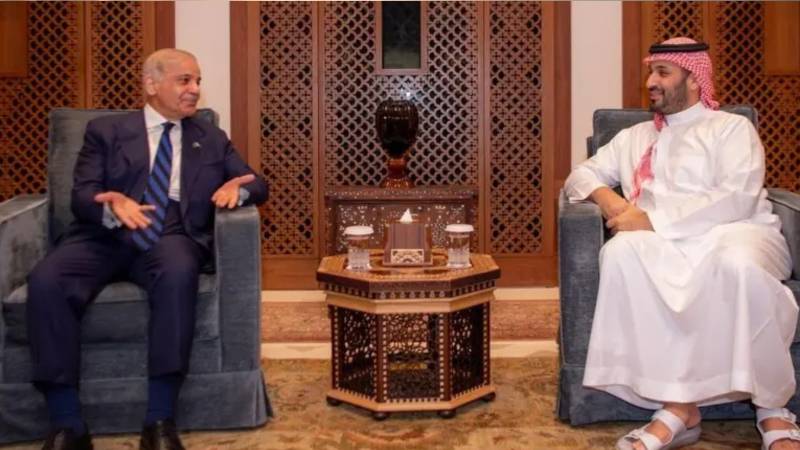
In a region where alliances shift faster than desert sands in a storm, Pakistan has adopted a stance that could politely be called “neutral with flair.” The country has condemned Israel’s actions against Tehran with unambiguous vigour and offered respectful condolences on the passing of Iran’s Supreme Leader, using language clearly designed to resonate with Tehran while stopping short of deploying the same trenchant rhetoric against Washington.
This is not mere semantic juggling. It reflects a carefully rehearsed balance between principle and pragmatism, allowing Pakistan to signal concern without entangling itself in the escalating conflict.
The contrast becomes clearer when regional relationships are laid side by side. Ties with New Delhi are overtly hostile, shaped by decades of wars, skirmishes, and persistent mistrust, whereas Beijing serves as a friendly anchor, strengthened by deep economic and strategic cooperation through the China–Pakistan Economic Corridor.
The United States and Iran occupy the middle ground, neither outright adversaries nor consistent allies. Pakistan’s engagement with Washington dates back to the 1950s, with formal security arrangements and strategic cooperation, even as the relationship has weathered its ups and downs.
Relations with Tehran draw on shared cultural, religious, and regional interests, punctuated by occasional border tensions that were resolved through diplomacy rather than sustained conflict. Islamabad’s posture is a practised art of diplomatic acrobatics, setting the stage for a deeper examination of its historic ties with both Washington and Tehran and how it navigates the current crisis.
The mood on the ground in Pakistan, particularly within certain communities, has been sympathetic and supportive towards Iran following the assassination of the Ayatollah. Demonstrations erupted across the country the following day, including protests outside the United States consulate and chants directed at Israel, with some reports of unrest and isolated violence.
Public sentiment does not always align neatly with official foreign policy, yet Pakistan’s handling of the situation is noteworthy for its careful reading of the mood and measured response, avoiding a blatantly partisan stance. Islamabad has issued measured statements expressing support for Tehran while criticising Israel in relatively strong terms, reflecting the widespread perception that Israel is a principal actor in the current escalation.
By navigating between the expectations of domestic constituencies and the imperatives of regional diplomacy, Pakistan is performing a delicate balancing act that satisfies many observers at home. This careful calibration of public sentiment and strategic restraint sets the stage for understanding how Pakistan’s emerging partnership with Saudi Arabia fits into its broader approach to regional security.
Pakistan will be hoping that there is no direct conflict between Saudi Arabia and Tehran, because if Riyadh invokes the terms of the Strategic Mutual Defence Agreement signed on 17 September 2025, Islamabad would be obliged to respond under what diplomats describe as a collective security commitment
Pakistan and Saudi Arabia have shared a long history of military and strategic cooperation dating back to the 1960s, with Pakistani forces training thousands of Saudi troops and conducting joint exercises over the decades. Their ties are built on shared religion, strategic interests, and economic cooperation.
On 17 September 2025, the two countries signed a strategic mutual defence agreement, under which an attack on one is considered an attack on both, echoing the collective defence principle familiar from NATO’s Article 5. The agreement’s text was not published, but officials have emphasised that its purpose is deterrence rather than automatic military intervention.
In the context of the current Middle East crisis, with Iran reportedly targeting United States bases across the Gulf, the pact places Pakistan in a delicate position. While the agreement signals solidarity with Riyadh, there is no public indication that Pakistan would be bound to militarily intervene, especially considering Saudi Arabia’s limited involvement in conflicts such as Afghanistan. Islamabad’s careful wording suggests it aims to maintain stability and credibility without being drawn into open confrontation, leaving observers to wonder how far Pakistan will go if Riyadh’s security is ever directly threatened.
Pakistan’s foreign minister, however, recently made clear in parliament that Islamabad had informed Tehran that it was bound by the 17 September 2025 strategic defence agreement with Riyadh if Saudi Arabia were to invoke it, reminding Iran of the pact’s core obligation to treat any aggression against one party as aggression against both, a principle inspired by the collective defence concept familiar from NATO’s Article 5.
In the current crisis, this warning appears to have had a strategic effect, with reports suggesting that Saudi Arabia has seen fewer direct strikes compared with some of its neighbours, possibly because Tehran has been cautious in order to avoid triggering the defence clause. Islamabad has also publicly condemned attacks on Middle Eastern countries more broadly, reinforcing its desire to avoid escalation while signalling solidarity with Gulf states.
Whether this is the result of careful coordination between Pakistan, Riyadh, and Tehran or simply prudent diplomacy, it underscores the delicate calibration Islamabad is attempting. The broader question now is whether other Middle Eastern capitals, watching this dynamic unfold, might seek similar defence arrangements with Pakistan to deter aggression, potentially reshaping regional security patterns.
Pakistan will be hoping that there is no direct conflict between Saudi Arabia and Tehran, because if Riyadh invokes the terms of the Strategic Mutual Defence Agreement signed on 17 September 2025, Islamabad would be obliged to respond under what diplomats describe as a collective security commitment, in which aggression against one state is treated as aggression against both.
This is a carefully calibrated form of diplomacy, signalling solidarity without rushing headlong into war. Those advocating a military leap into confrontation should note that during Pakistan’s recent engagement with India, Tehran did offer to mediate diplomatically but did not intervene militarily, highlighting that Islamabad is now assuming a more hands-on role in Gulf affairs.
Pakistan is quietly maintaining its ties with Tehran, Riyadh, and Washington all at once, proving that it can, like India once claimed about itself, pursue an independent foreign policy, but with arguably greater influence and higher stakes in the Gulf. In that sense, Islamabad’s measured balancing act places it in a central role in regional security, demonstrating skilful management of competing alliances while maintaining credibility with global partners.
Pakistan continues to maintain its ties with Washington while carefully balancing Riyadh and Tehran, signalling restraint without abandoning its strategic interests. So far, this measured approach appears to have helped temper escalation, and if sustained, Islamabad may yet play a quietly influential role in de-escalating tensions across the Gulf.